
The Ultimate Guide to Tax Preparation in New Haven: Everything Small Businesses Need to Succeed in 2026
DATELINE: NEW HAVEN, CT
ORGANIZATION: JOSE’S TAX SERVICE
DATE: APRIL 18, 2026
Small business ownership in New Haven is a rewarding venture, but the complexity of tax compliance can become a significant hurdle without a clear roadmap. As we navigate the 2026 tax season, the landscape has shifted. New federal thresholds for reporting, evolving state-level requirements in Connecticut, and the rise of advanced concierge tax services mean that "business as usual" is no longer enough.
I’m Jose Morales, CEO of Jose's Tax Service. My goal is to ensure that every entrepreneur from Wooster Square to Westville has the tools to maximize tax refund opportunities while staying firmly within the lines of IRS and state regulations. This guide provides the technical framework necessary for small business tax preparation in New Haven.
Understand Your Filing Requirements!
Before you can file, you must identify the correct federal forms based on your business structure. The IRS treats different entities with varying levels of scrutiny. Failure to use the correct form can lead to immediate rejection or automated penalties.
- Sole Proprietorships and Single-Member LLCs: Use Schedule C (Form 1040). Your business income is reported on your personal return. You are also required to file Schedule SE to calculate self-employment tax.
- C Corporations: Use Form 1120. These entities are taxed at the corporate level, separate from the owners.
- S Corporations: Use Form 1120-S. This is a "pass-through" entity. You must also issue a Schedule K-1 to each shareholder.
- Partnerships: Use Form 1065. Like S-Corps, partnerships do not pay income tax but must provide Schedule K-1 to all partners.
In Connecticut, small businesses must also remain mindful of the Pass-Through Entity (PTE) Tax. If your business is a partnership or an S-Corp, you may be required to file Form CT-1065/CT-1120SI.

Key Changes for the 2026 Tax Year!
The 2026 tax year introduces specific updates that New Haven business owners must address immediately. The most notable change involves the reporting threshold for non-employee compensation.
1099-NEC and 1099-K Thresholds
For the 2026 calendar year, the IRS has finalized the transition for Form 1099-K reporting. If your business accepts payments via credit cards or third-party apps (like Venmo or PayPal), expect a 1099-K if your gross payments exceed $2,000. Additionally, the threshold for Form 1099-NEC (Non-Employee Compensation) remains strict. You must issue a 1099-NEC to any service provider whom you paid $600 or more during the year.
The Section 179 Deduction
For 2026, the Section 179 deduction remains a powerful tool for New Haven businesses looking to purchase equipment. You can elect to deduct the full purchase price of qualifying equipment: such as computers, office furniture, or vehicles: purchased or financed during the tax year.
Action Step: Review your capital expenditures from 2025 and 2026. Ensure all receipts are digitized and categorized. Use the Secure Tax Vault to organize these documents safely.
The Ultimate Preparation Checklist!
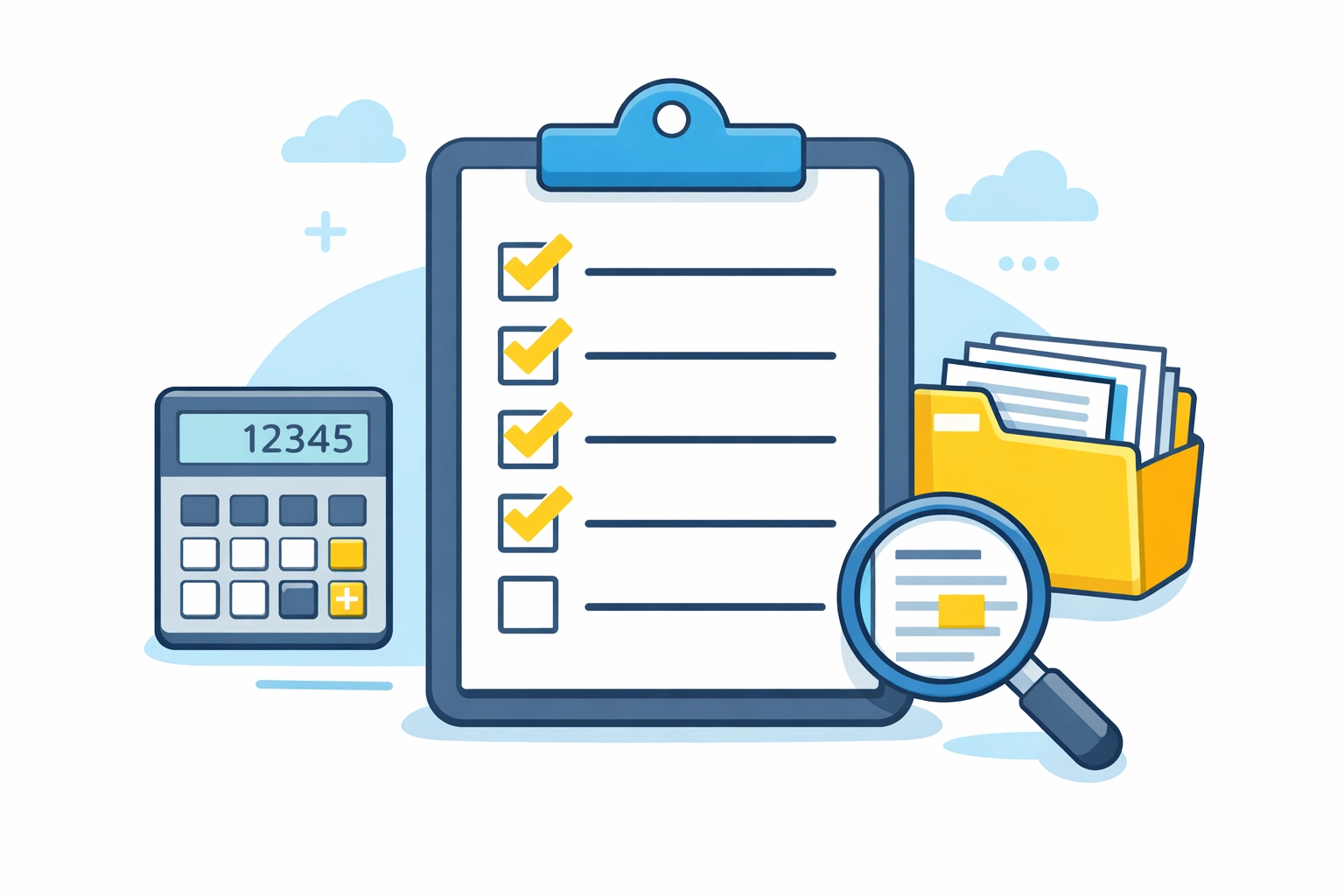
Effective tax preparation in New Haven requires more than just a shoe box of receipts. Use this instructional checklist to prepare your files for your concierge tax pro.
- Federal Tax ID (EIN): Ensure your Employer Identification Number is accurate on all forms.
- Previous Year Returns: Keep copies of your 2024 and 2025 returns. These are essential for tracking carryover losses or depreciation schedules.
- Income Records: Consolidate your general ledger, gross receipts, and sales records.
- Expense Records: Categorize expenses into buckets: Advertising, Rent, Utilities, Insurance, and Professional Fees.
- Employment Records: Gather all W-2s for employees and W-9s for contractors.
- Inventory Valuations: If you sell physical goods, perform a year-end inventory count. This is required to calculate the Cost of Goods Sold (COGS).
How to Maximize Your Tax Refund in 2026!
Every dollar kept in your business is a dollar available for growth. To maximize tax refund outcomes, you must look beyond standard deductions.
The Home Office Deduction
Many New Haven entrepreneurs operate from home. To claim this, the space must be used regularly and exclusively for business. You can use the simplified method ($5 per square foot up to 300 square feet) or the regular method (calculating the actual percentage of home expenses).
Marketing and Professional Fees
Costs associated with promoting your New Haven business: social media ads, local sponsorships, and website maintenance: are fully deductible. Furthermore, the fees you pay for professional tax preparation in New Haven are themselves a deductible business expense.
Retirement Contributions
Contributing to a SEP-IRA or a Solo 401(k) allows you to reduce your taxable income while building long-term wealth. For 2026, the contribution limits have been adjusted for inflation. Consult with a professional to determine which plan fits your cash flow.
Warning: Missing these deductions or incorrectly calculating them may lead to penalties or an audit. If you are unsure, request a Tax Quote to see how a professional can help.
Why a Concierge Tax Pro Beats DIY Software
While DIY software claims to be easy, it often misses the nuances of Connecticut tax law and specific industry deductions. A concierge tax pro provides a higher level of service that software cannot replicate.
- Audit Protection: If the IRS questions your return, a concierge service stands by your side.
- Strategic Planning: Software looks at the past; a pro looks at the future. We help you structure your 2027 payments today.
- Local Expertise: We understand the specific tax incentives available to businesses located in New Haven’s Enterprise Zones.

Critical Deadlines for New Haven Businesses!
Mark these dates in your calendar. Missing a deadline can result in a failure-to-file penalty, which is often much higher than the failure-to-pay penalty.
- January 31, 2026: Deadline to mail W-2s to employees and 1099-NECs to contractors.
- March 15, 2026: Deadline for S-Corporation (Form 1120-S) and Partnership (Form 1065) returns.
- April 15, 2026: Deadline for C-Corporation (Form 1120) and Sole Proprietorship (Schedule C) returns.
- Quarterly Estimated Payments: Due April 15, June 15, September 15, and January 15.
Note: If you cannot meet these deadlines, you must file for an extension. An extension to file is not an extension to pay. Estimated taxes must still be paid by the original deadline to avoid interest charges.
Take Action Today!
Tax season doesn't have to be a period of stress for New Haven small business owners. By following a structured approach to documentation and leveraging the expertise of a concierge tax pro, you can secure your financial future.
- Download our Checklist for small business owners.
- Organize your digital files in a centralized location.
- Schedule a consultation to review your 2026 strategy.
Don't wait until the last minute. Start your journey toward a stress-free tax season by visiting our Start Page to begin the intake process.
Jose's Tax Service is here to ensure that New Haven’s small business community remains strong, compliant, and profitable in 2026 and beyond.
Categories: news, tax planning
Tags: tax preparation new haven, small business tax, IRS Form 1040, Form 1120, Form 1065, Connecticut taxes, 2026 tax season, Jose's Tax Service, maximize tax refund, concierge tax pro.
Leave a Reply
You must be logged in to post a comment.