
Maximizing Deductions for Remote Workers in Connecticut: What You Need to Know
NEW HAVEN, CT – March 6, 2026 – Jose's Tax Service
The landscape for remote work in Connecticut has shifted significantly as we enter the 2026 tax season. For professionals working from home in New Haven, Bridgeport, Hartford, or anywhere across the Nutmeg State, understanding the specific interplay between federal updates and state-specific regulations is the only way to effectively maximize tax refund potential. Tax laws regarding remote employment are no longer "new," but they are increasingly complex.
At Jose's Tax Service, we recognize that remote workers often leave money on the table because they rely on outdated advice. Whether you are a full-time W-2 employee for a tech firm or a 1099 independent contractor, your filing strategy must adapt to the 2026 mandates to ensure compliance and financial efficiency.
The 2026 Tax Landscape for Connecticut Residents!
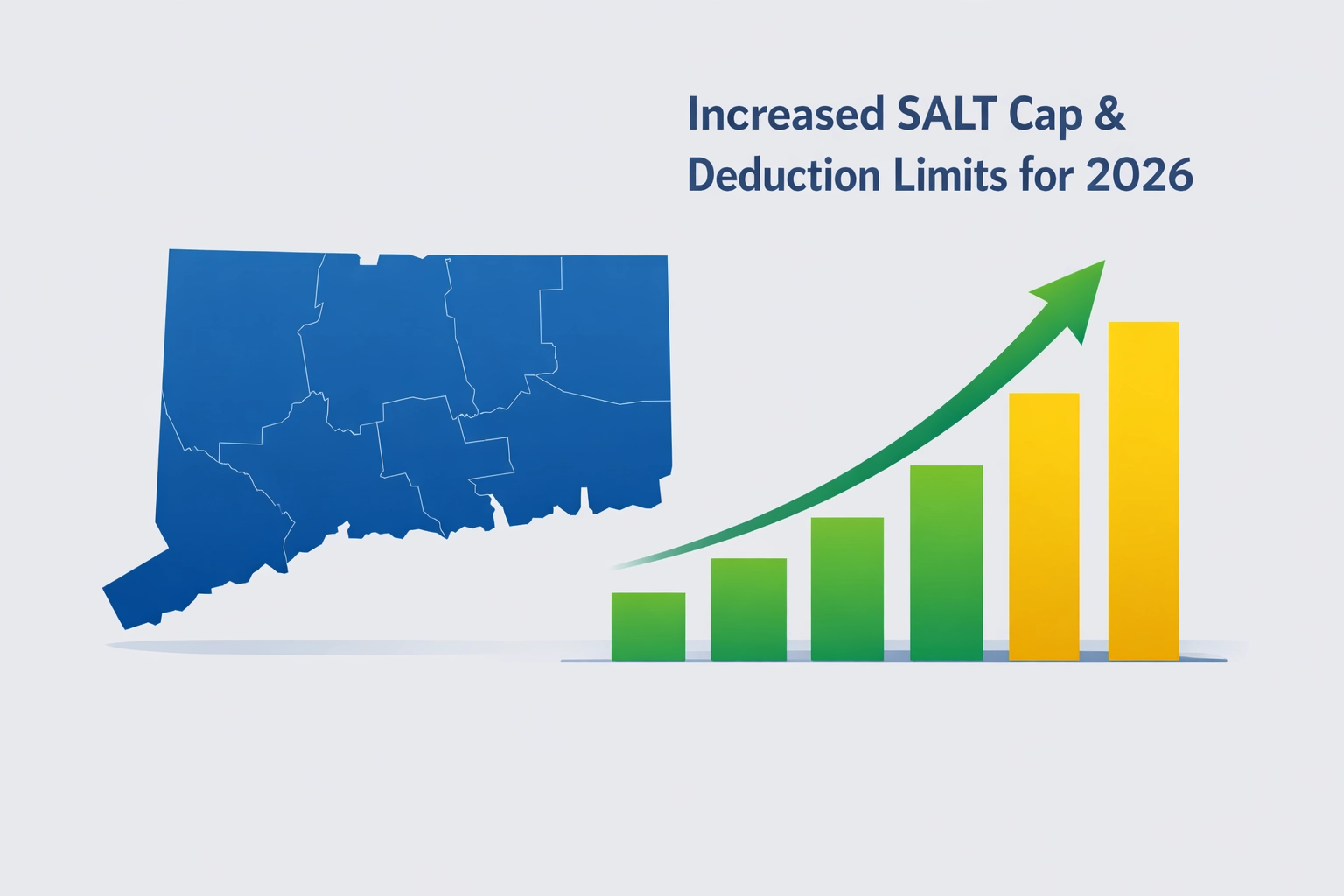
Current federal tax law has introduced several pivotal changes that directly impact Connecticut residents. As of the 2025 tax year (filing in 2026), the State and Local Tax (SALT) cap has been increased to $40,000. For a high-tax state like Connecticut, this change is a major victory for taxpayers who choose to itemize. Previously, the $10,000 cap severely limited the ability of homeowners to deduct their property taxes and state income taxes.
Additionally, the standard deduction has been adjusted for inflation. For the current filing period, the standard deduction is:
- $16,100 for single filers.
- $32,200 for married couples filing jointly.
Deciding whether to take the standard deduction or to itemize is a core component of professional tax planning. If your total itemizable expenses: including mortgage interest, charitable gifts, and state taxes (now up to the $40,000 cap): exceed these amounts, itemizing is the superior path to maximize tax refund results.
Understanding the "Convenience of the Employer" Test!
Connecticut applies a strict "convenience of the employer" rule. This is a critical area where many remote workers encounter filing errors. If you are a nonresident employee working for a Connecticut-based employer from a remote location in another state, Connecticut will treat your income as Connecticut-sourced unless your remote work is for the necessity of the employer rather than your own convenience.
Conversely, if you live in Connecticut but work remotely for an employer based in a state like New York or Massachusetts, you may face "double-taxation" concerns. You must file Form CT-1040, Schedule 2 to claim a credit for income taxes paid to another jurisdiction.
Instructional Step: Use Form CT-W4 to ensure your employer is withholding the correct amount of Connecticut state income tax. Failure to adjust your withholding after transitioning to a permanent remote role can lead to underpayment penalties.
Deductions for W-2 Remote Employees: The Schedule 1-A Updates!
It is a common misconception that W-2 employees can deduct home office expenses. Under current IRS regulations, the home office deduction remains unavailable for W-2 employees, even if remote work is a requirement of your job. However, the 2026 tax year introduces new opportunities via Schedule 1-A that remote workers must not overlook.
1. Overtime Compensation Deductions
If your remote role requires significant overtime, you may be eligible for a new federal deduction. You can deduct up to $12,500 annually ($25,000 for married filing jointly) of overtime compensation.
- Requirement: The overtime must be "premium pay" as defined by the Fair Labor Standards Act (FLSA).
- Action: Ensure your employer has specifically designated these amounts on your W-2.
2. Car Loan Interest
In a shift for 2026, certain provisions now allow for the deduction of interest paid on car loans, even for W-2 employees, provided the vehicle is used for business-related travel (excluding your primary commute).
3. Qualifying Tips
For those in remote service or support roles that receive tips, the first $25,000 of qualifying tips are now deductible, provided they come from recognized service occupations.

1099 Contractors and Self-Employed Remote Workers!
If you are classified as an independent contractor or run a small business from your home in New Haven, your deduction opportunities are much broader. Professional tax preparation New Haven services focus heavily on these three areas for 1099 workers:
The Home Office Deduction
Unlike W-2 employees, 1099 workers can deduct expenses related to the portion of their home used exclusively and regularly for business.
- Direct Expenses: Repairs or painting specifically for the office.
- Indirect Expenses: A percentage of your mortgage interest, insurance, utilities, and real estate taxes based on the square footage of your office relative to the whole house.
- Simplified Option: You may choose the simplified method, which allows a deduction of $5 per square foot (up to 300 square feet).
Qualified Business Income (QBI) Deduction
The 20% QBI deduction is now a permanent fixture of the tax code. This allows eligible self-employed individuals to deduct up to 20% of their qualified business income from their total taxable income. This is a powerful tool in tax planning that can significantly lower your effective tax rate.
Bonus Depreciation
For 2026, 100% Bonus Depreciation remains available for equipment purchases. If you upgraded your home server, purchased new specialized workstations, or bought office furniture, you can likely deduct the entire cost in the first year rather than depreciating it over several years.
Warning: Mixing personal and business use for equipment can lead to the disqualification of these deductions. Maintain rigorous logs of equipment usage to defend these claims during an audit.

Critical Documentation and Filing Requirements!
To protect your deductions, you must maintain an "audit-ready" digital or physical file. Jose's Tax Service recommends the following record-keeping standards:
- Home Office Proof: Take a photograph of your dedicated workspace. Keep a copy of a floor plan or a simple sketch showing the square footage calculations.
- Utility Logs: Keep all 12 months of utility bills (electricity, water, gas, internet) if you are claiming the actual expense method for a home office.
- Form CT-W4 and Form CT-1040: Always cross-reference your federal return with your Connecticut state filing. Use the official Connecticut tax portal or consult our Small Business Learning Center for updated forms.
- Communications: Save any emails or memos from your employer that mandate remote work or specify overtime requirements.
Why Professional Tax Planning is Essential in New Haven!
Tax laws are not static. The shift in the SALT cap and the permanence of QBI deductions mean that strategies used even two years ago are now obsolete. For remote workers in Connecticut, the goal is not just to file, but to file strategically.
At Jose's Tax Service, we specialize in identifying the nuances between "standard" filing and "optimal" filing. Our team in New Haven is dedicated to ensuring you don't pay a penny more than what is legally required. Whether you are navigating the "convenience of the employer" rule or trying to calculate your 2026 overtime deductions, professional oversight is your best defense against IRS inquiries and the best way to maximize tax refund totals.
Action Steps to Take Today:
- Review your classification: Confirm with your HR department if you are W-2 or 1099.
- Calculate your SALT: Total your property taxes and state income tax to see if you exceed the $16,100/$32,200 standard deduction thresholds.
- Gather Receipts: Especially for home office improvements or equipment purchases if you are self-employed.
- Contact a Pro: Schedule a consultation for tax preparation New Haven to review your specific situation before the April deadline.
For more information on how to navigate the complexities of the 2026 tax season, visit our blog or contact us directly to speak with a tax professional.
Deadline Reminder: Federal and Connecticut state income tax returns are due by April 15, 2026. Extensions may be filed, but remember that an extension to file is not an extension to pay. Calculate your estimated liability early to avoid late payment penalties.

About Jose's Tax Service:
Located in the heart of Connecticut, Jose's Tax Service provides expert tax preparation, financial planning, and business consulting services. Founded by Jose' Morales, we are committed to helping our community navigate the complexities of the tax code with professional, reliable, and personalized service. Visit us at josestaxservice.com to learn more about our services.

Leave a Reply
You must be logged in to post a comment.