
The SALT Cap Explained: Why New Haven Homeowners Need a 2026 Strategy
NEW HAVEN, CT – JOSE’S TAX SERVICE – MARCH 6, 2026
The landscape of federal tax law has undergone a significant transformation for the 2026 tax year. For homeowners in high-tax jurisdictions like New Haven, Connecticut, these changes represent the most substantial opportunity for tax savings in nearly a decade. At the center of this shift is the State and Local Tax (SALT) deduction cap. Understanding the mechanics of the new $40,400 limit is essential for any resident looking to maximize tax refund results and protect their household wealth.
As of March 2026, the Internal Revenue Service (IRS) has implemented the expanded SALT deduction, which previously sat at a restrictive $10,000. This increase is not merely a technical adjustment; it is a strategic window that requires immediate tax planning. Failure to adjust your filing strategy this year could result in overpaying federal taxes by thousands of dollars.
The New SALT Limit Defined!
The SALT deduction allows taxpayers who itemize their deductions on Schedule A (Form 1040) to deduct certain taxes paid to state and local governments from their federal taxable income. For the 2026 tax year, the SALT deduction cap is $40,400.
This figure represents a 304% increase from the $10,000 limit that governed tax returns from 2018 through 2025. This deduction includes:
- State and Local Income Taxes: The taxes withheld from your paycheck or paid via estimated payments to the State of Connecticut.
- State and Local Property Taxes: Real estate taxes paid on your primary residence and any other real property you own.
- Personal Property Taxes: Taxes paid on vehicles or other personal property.
For New Haven homeowners, the combination of Connecticut’s income tax rates and local property tax assessments frequently exceeds the old $10,000 limit. Under the new rules, you can now capture a much larger portion of these expenses to lower your Adjusted Gross Income (AGI).

Why New Haven Homeowners Must Pivot!
Connecticut remains one of the highest-tax states in the country. In the Greater New Haven area: including Hamden, West Haven, and East Haven: mill rates are significant. When property tax bills on a modest family home often range between $6,000 and $12,000, and state income tax obligations add several thousand more, the $10,000 cap acted as a "tax penalty" for New Haven residents.
By increasing the cap to $40,400, the federal government has effectively re-opened the door to itemization. However, taking advantage of this requires more than just showing up at a tax office in April. It requires a 2026 strategy that integrates your property tax payments with your overall financial goals.
Check your 2025 records immediately. If your combined state income and property taxes were $25,000 last year, you were only allowed to deduct $10,000. In 2026, you may be able to deduct the full $25,000. This change alone could reduce your taxable income by an additional $15,000, leading to a significantly higher refund depending on your tax bracket.
The 2026 Standard Deduction vs. Itemization!
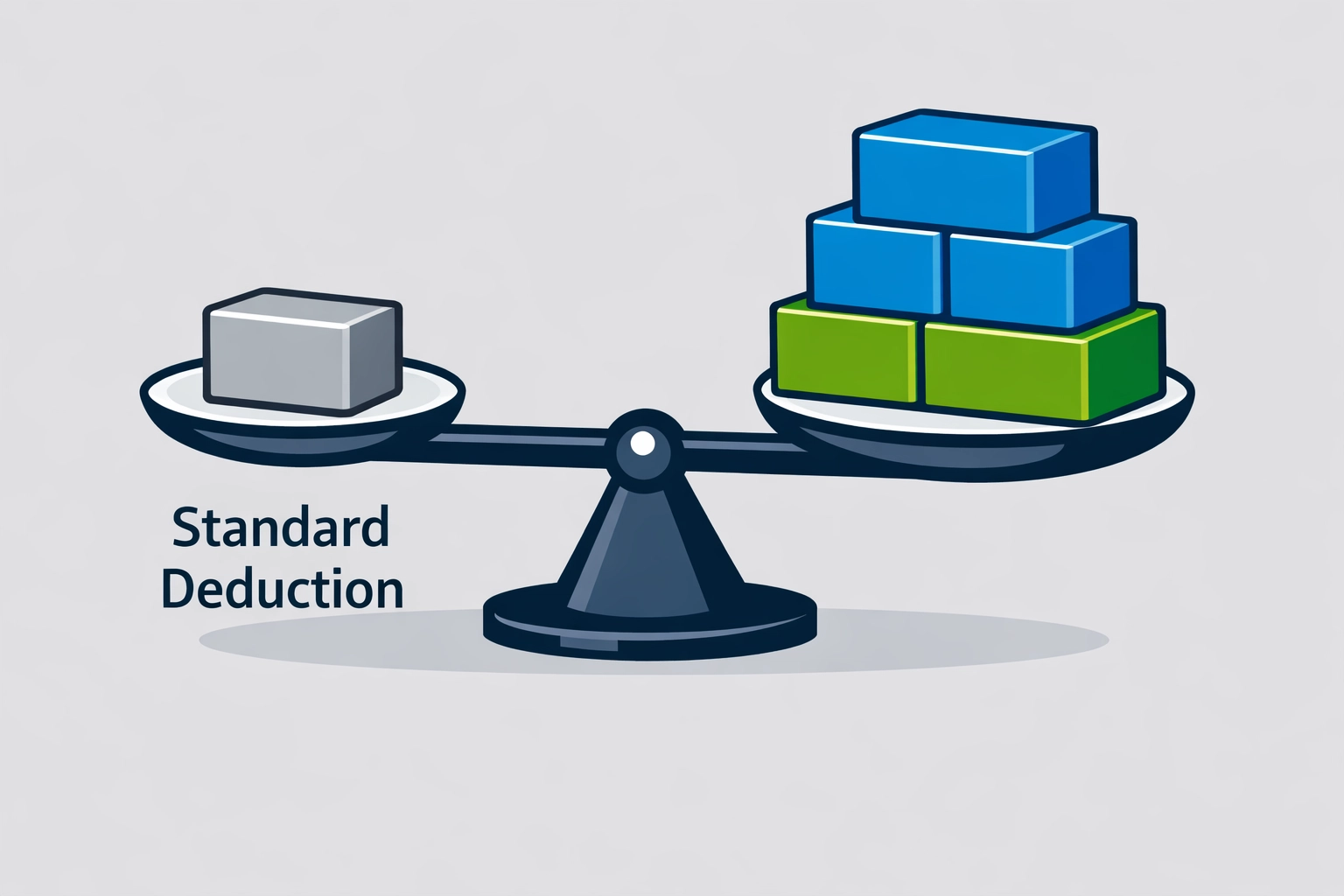
To benefit from the SALT cap increase, your total itemized deductions must exceed the 2026 standard deduction. The IRS has set the 2026 standard deduction at the following levels:
- Single Filers: $16,100
- Married Filing Jointly: $32,200
- Head of Household: $24,150
If you are a married couple filing jointly in New Haven, you need more than $32,200 in total deductions (SALT, mortgage interest, charitable contributions, and medical expenses) to make itemizing worthwhile.
With the SALT cap now at $40,400, a couple paying $15,000 in property taxes and $10,000 in state income taxes already has $25,000 toward that goal. Add in a mortgage interest deduction of $10,000, and you are at $35,000. This exceeds the standard deduction of $32,200. By itemizing, you reduce your taxable income by an extra $2,800 compared to the standard deduction.
At Jose’s Tax Service, we emphasize that tax preparation New Haven residents rely on must involve a side-by-side comparison of these two methods. We do not guess; we calculate both scenarios to ensure you keep the maximum amount of your hard-earned money.
Income Phaseout Rules (MAGI)!
While the $40,400 cap is a boon for most, the IRS has implemented "Phaseout" rules for high-income earners. It is vital to monitor your Modified Adjusted Gross Income (MAGI) to determine if your deduction will be limited.
- The Threshold: The full $40,400 SALT deduction is available if your MAGI is $505,000 or less for the 2026 tax year.
- The Reduction: If your MAGI exceeds $505,000, the deduction is reduced by 30 cents for every dollar earned over the limit.
- The Floor: Regardless of how high your income rises, the SALT deduction will not fall below $10,000.
If you anticipate your income approaching or exceeding the $505,000 mark, you must engage in aggressive tax planning. Strategies such as maximizing 401(k) contributions, utilizing Health Savings Accounts (HSAs), or deferring bonuses can lower your MAGI and preserve your SALT deduction.
Strategic Planning Steps for 2026!
To ensure you are prepared for the 2026 filing season, follow these mandatory commands:
- Consolidate Property Tax Receipts: Gather all 2026 property tax bills from the City of New Haven or surrounding towns. Ensure you have proof of payment for taxes paid in both the January and July installments.
- Track State Tax Withholding: Review your paystubs to ensure your Connecticut state income tax withholding is accurately reflected. If you are self-employed, maintain meticulous records of your quarterly estimated payments.
- Review Mortgage Interest Statements: Check your Form 1098 from your lender. Mortgage interest remains a primary driver for itemization alongside the SALT deduction.
- Audit Charitable Contributions: Since the SALT cap increase makes itemizing more likely, every dollar given to 501(c)(3) organizations now has a direct impact on your tax liability. Maintain receipts for all cash and non-cash donations.
- Calculate Your MAGI: Use your prior-year return as a baseline to project your 2026 income. If you are near the $505,000 threshold, consult with a tax professional immediately.

Tax Planning for the 2030 Reversion!
Taxpayers must recognize that the current $40,400 SALT cap is a temporary measure. Current legislation dictates that the cap will revert to the $10,000 limit starting in 2030. Between 2026 and 2029, the cap will only increase by approximately 1% annually for inflation.
This creates a four-year "Window of Opportunity." If you have been considering major financial moves: such as selling a secondary property or realizing significant capital gains: doing so during this high-SALT-cap period may be more tax-efficient. Consult the Small Business Learning Center for more insights on how business owners in particular can navigate these shifting laws.
Personalized Care at Jose’s Tax Service!
Navigating the complexities of the SALT cap and Schedule A itemization requires more than just software; it requires a local expert who understands the New Haven tax environment. Jose Morales, CEO and Tax Pro, provides the personalized care that big-box tax franchises simply cannot match.
We don't just "input numbers." We look at your entire financial picture to ensure every possible deduction is captured. Whether you are a first-time homeowner in East Rock or a long-term resident of Westville, our goal is to maximize tax refund opportunities through precise, professional tax preparation New Haven services.
We invite you to visit our About Us page to learn more about our commitment to the community. Tax laws change, but our dedication to your financial health remains constant.
Actionable Next Steps!
- Schedule a Consultation: Don't wait until the April deadline. Contact us today to begin your 2026 tax planning.
- Review Official Resources: For a deeper dive into IRS categories and taxonomies, you can view our Category Sitemap.
- Stay Informed: Visit our Blog regularly for updates on Connecticut-specific tax news and federal legislative changes.
Practical Reminder: The deadline for first-quarter estimated tax payments is often the same as the tax filing deadline. If you are self-employed, ensure you are accounting for the new SALT cap in your 2026 projections to avoid underpayment penalties.
Jose’s Tax Service
Professional Tax Preparation with Personalized Care
New Haven, CT
https://josestaxservice.com

Leave a Reply
You must be logged in to post a comment.