
7 Mistakes You’re Making with Payment Apps (and How Your Concierge Tax Pro Can Fix Them)
DATELINE: April 8, 2026
ORGANIZATION: Jose’s Tax Service
LOCATION: New Haven, Connecticut
In the age of instant gratification, sending money is as easy as a double-tap on your smartphone. Whether you are splitting a pizza on Whalley Avenue or paying a local contractor for a quick repair, apps like Venmo, PayPal, Cash App, and Zelle have become the lifeblood of the New Haven economy. However, as your dedicated tax preparation New Haven expert, I’ve seen these digital conveniences turn into high-stakes nightmares once tax season rolls around.
The IRS has pivoted hard toward digital transaction tracking. By now, in 2026, the reporting thresholds for 1099-K forms are no longer "new" news: they are the law of the land. If you aren't careful, the money you sent for a birthday gift might look exactly like taxable income to the federal government.
Here are the seven most common mistakes New Haven taxpayers are making with payment apps, and how a concierge tax pro at Jose’s Tax Service ensures you don't overpay the IRS.
1. The "Fat-Finger" Fiasco: Sending Funds to the Wrong User!
It happens in a flash. You’re in a rush, you type in a username that looks mostly right, and you hit send. If you accidentally send $500 to @PizzaLover123 instead of your actual landlord, that money might be gone forever. Most Peer-to-Peer (P2P) apps offer very little recourse for "authorized" mistakes.
The Tax Consequence: If that payment was for a business expense you intended to deduct, losing the funds is only half the battle. Without a confirmed receipt to the correct entity, your paper trail for tax planning purposes is shredded.
The Fix: Always send a $1 test transaction first. More importantly, as your concierge tax pro, I advise clients to use the "Business" profile features within these apps. This creates a more robust digital receipt that we can use to maximize tax refund outcomes by proving legitimate business deductions during an audit.
2. The 1099-K Nightmare: Mixing Business and Pleasure!
This is the "big one." If you use your personal Venmo account to occasionally sell old furniture or take payments for your side hustle, you are playing a dangerous game with the IRS. In 2026, the IRS is receiving 1099-K forms for almost any commercial activity over the established threshold.
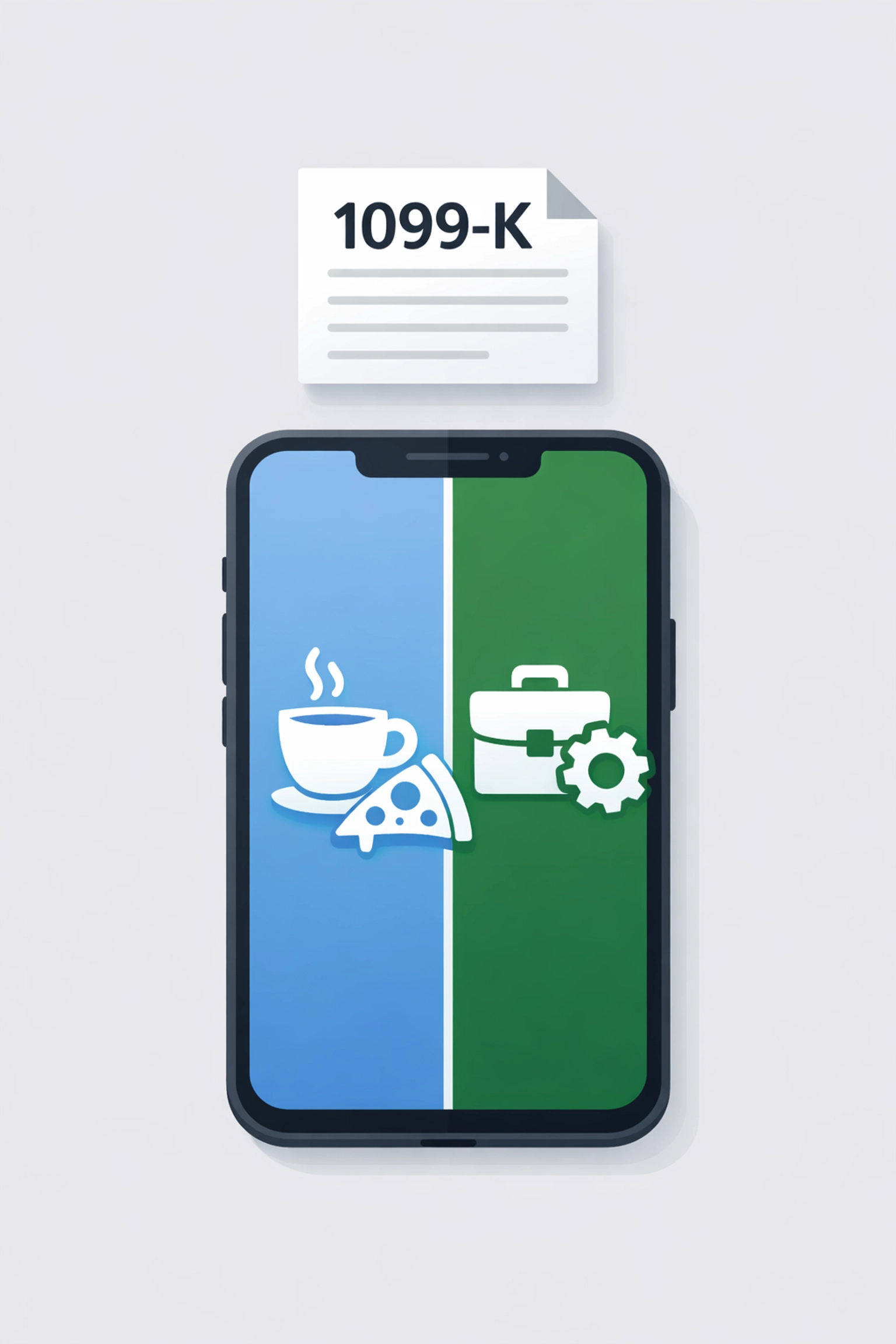
The Tax Consequence: If the IRS sees $15,000 in P2P transfers and you haven't categorized them, they may assume the entire amount is taxable income. You could end up paying self-employment tax on money that was actually just your roommates' share of the electric bill.
The Fix: At Jose’s Tax Service, we perform a "transactional scrub." We help you reconcile your 1099-K against your actual bank statements to ensure that personal "reimbursements" are clearly separated from business "revenue." If you're overwhelmed, schedule your tax appointment with ease and let us do the heavy lifting.
3. Trusting "Payment Screenshots" Blindly!
Scammers have become incredibly sophisticated at faking "Payment Sent" screens. If you are a small business owner in New Haven, accepting a screenshot as proof of payment is a recipe for a deficit.
The Tax Consequence: You might record a sale in your books that never actually hit your bank account. This leads to "phantom income": money you’re paying taxes on but never actually received.
The Fix: Never assume a payment is complete until you see the funds reflected in your "available balance" or receive a notification within the app itself. Our small business learning center provides resources on how to set up secure payment gateways that integrate directly with your bookkeeping software.
4. Sharing OTPs and PINs (The Security Breach)!
No legitimate bank or payment app will ever call you and ask for your One-Time Password (OTP) or your PIN. Yet, phishing scams are at an all-time high in 2026.
The Tax Consequence: If your account is compromised and emptied, you aren't just losing cash; you’re losing your financial records. The IRS requires you to maintain records for at least three years. If a hacker wipes your transaction history, you are defenseless in an audit.
The Fix: Enable Multi-Factor Authentication (MFA) on every financial app you own. If you suspect your data has been compromised, contact us immediately. We can help you document the loss for a potential casualty loss deduction, though the rules are strict and require a professional touch.
5. Using P2P Apps for "Big Ticket" Business Purchases!
Using Zelle to buy a $10,000 piece of equipment for your New Haven business? Think again. Most P2P apps do not offer the same consumer protections as credit cards or traditional wire transfers.
The Tax Consequence: If the equipment is never delivered, you’ve lost the money. From a tax planning perspective, you’ve also lost a major Section 179 depreciation deduction.
The Fix: Use the right tool for the job. Use P2P for small, low-risk transactions. For major business assets, use a method that provides a formal invoice and purchase agreement. We can help you track these assets in your JTS Capital Dashboard to ensure they are depreciated correctly on your 2026 return.
6. Ignoring the "Friends & Family" vs. "Goods & Services" Toggle!
Many users select "Friends & Family" to avoid the small transaction fee. While this saves a few pennies, it creates a massive headache for tax preparation New Haven.
The Tax Consequence: When you pay a contractor via "Friends & Family," you are essentially telling the IRS the payment is a gift. This makes it much harder to justify the expense as a business deduction. Conversely, if a friend pays you back for dinner using "Goods & Services," the app will trigger a 1099-K, making it look like you’re running an unlicensed restaurant out of your kitchen.
The Fix: Be honest with the toggle. The small fee is worth the price of having a clean, audit-ready record. If you’ve already made this mistake, don’t panic. We can use "Schedule 1" on your tax return to adjust for incorrectly reported 1099-K income.
7. Record-Keeping Roulette: Deleting the App!
Some people think that if they delete their Cash App or Venmo account, the history disappears. It doesn't. It just becomes harder for you to access it.
The Tax Consequence: If the IRS comes knocking two years from now asking about your 2026 filings, you’ll need those records. If you can’t log in, you can’t prove your deductions.
The Fix: Download your transaction history every quarter. Store it in a secure digital vault or bring it to your appointment at Jose’s Tax Service. We maintain a "concierge" file for all our clients, ensuring that even if an app goes bust, your tax records are safe.
Why a Concierge Tax Pro is Essential in 2026
The "old way" of doing taxes: dropping a box of receipts on a desk once a year: is dead. In the digital age, you need a pro who understands the intersection of technology and Treasury regulations.
At Jose’s Tax Service, we don't just file your forms; we provide a tax update for your entire digital life. We look at your payment apps, your crypto wallets, and your traditional bank accounts to build a comprehensive strategy that maximizes your tax refund.
Our 2026 Concierge Services Include:
- 1099-K Reconciliation: We sort the "gifts" from the "growth."
- Audit-Ready Digital Folders: We help you organize your P2P exports.
- Strategic Deductions: We identify business expenses hidden in your Venmo feed.
- Fast Direct Deposit Setup: As discussed in our Day 1 post, we ensure your refund goes directly to your secure account, bypassing the risks of paper checks.
Immediate Action Items for New Haven Taxpayers:
- Open your payment apps today and check your 2025/2026 year-to-date summaries.
- Separate your accounts. If you have a business, open a dedicated business profile on your preferred app.
- Review the Privacy Policy of these apps to see how they share your data with the IRS.
- Book a Consultation. Don't wait until April 14th to find out your Cash App history is a mess.
Jose’ Morales and the team at Jose’s Tax Service are here to ensure your New Haven business or household stays on the right side of the law while keeping more of your hard-earned money.
Visit us at:
https://josestaxservice.com
Request a Quote Form
Stay tuned for Day 3 of our 2026 Tax Series: "2026 Tax Planning Moves to Maximize Your Refund Before April 15!"
Categories: news, tax planning
Tags: New Haven, Tax Preparation New Haven, 1099-K, Venmo Tax, PayPal Tax, IRS Update 2026, Maximize Tax Refund, Jose’s Tax Service, Small Business Tax, Connecticut Tax Filers, Form 1040, Schedule C.

Leave a Reply
You must be logged in to post a comment.