
Your Quick-Start Guide to Year-Round Tax Planning: Do This First
DATELINE: NEW HAVEN, CT : April 9, 2026
ORGANIZATION: Jose's Tax Service
AUTHOR: Jose' Morales, CEO & Tax Pro
Most folks in New Haven think that once April 15th passes, tax season is officially in the rearview mirror. I’m here to tell you as the owner of Jose’s Tax Service: if you want to maximize tax refund results for next year and minimize the headache of the 2026 filing season, the work starts right now.
Waiting until January to think about your taxes is like waiting until it’s snowing on I-95 to buy winter tires. It’s stressful, expensive, and usually too late to do much good. Effective tax planning is a year-round discipline. This guide outlines the immediate steps you must take to stabilize your financial position and prepare for a successful 2026 tax year.
1. Audit Your Filing Status Immediately!
Your filing status is the foundation of your entire tax return. It dictates your standard deduction amount, your tax brackets, and your eligibility for various credits. If your life changed between January and today, your filing status likely changed too.
Identify your correct status from the following IRS categories:
- Single: Generally for those who are unmarried, divorced, or legally separated.
- Married Filing Jointly (MFJ): For married couples who combine income and deductions.
- Married Filing Separately (MFS): Often used in specific legal or financial situations.
- Head of Household (HOH): For unmarried individuals who pay more than half the cost of keeping up a home for a qualifying person.
- Qualifying Surviving Spouse: For those who meet specific criteria following the death of a spouse.
Action Step: Use the "Interactive Tax Assistant" on the IRS website to confirm your status if you have had a major life event like a marriage, divorce, or the birth of a child. If you’ve moved or changed your name, ensure these updates are reflected with the Social Security Administration (SSA) to avoid processing delays.
2. Execute a W-4 Mid-Year Correction!
The biggest mistake I see at Jose’s Tax Service is "Withholding Shock." This happens when a taxpayer realizes they have either given the government a massive interest-free loan (a huge refund) or, worse, they owe thousands because they didn't withhold enough.
Review your tax update needs by examining your most recent pay stub. Are you withholding enough to cover your projected 2026 liability?
- Step A: Gather your most recent pay stubs and your 2025 tax return.
- Step B: Access the IRS Tax Withholding Estimator tool.
- Step C: Enter your current income and deduction data to see your projected outcome.
- Step D: File an updated Form W-4 (Employee's Withholding Certificate) with your employer if the estimator shows a significant gap.
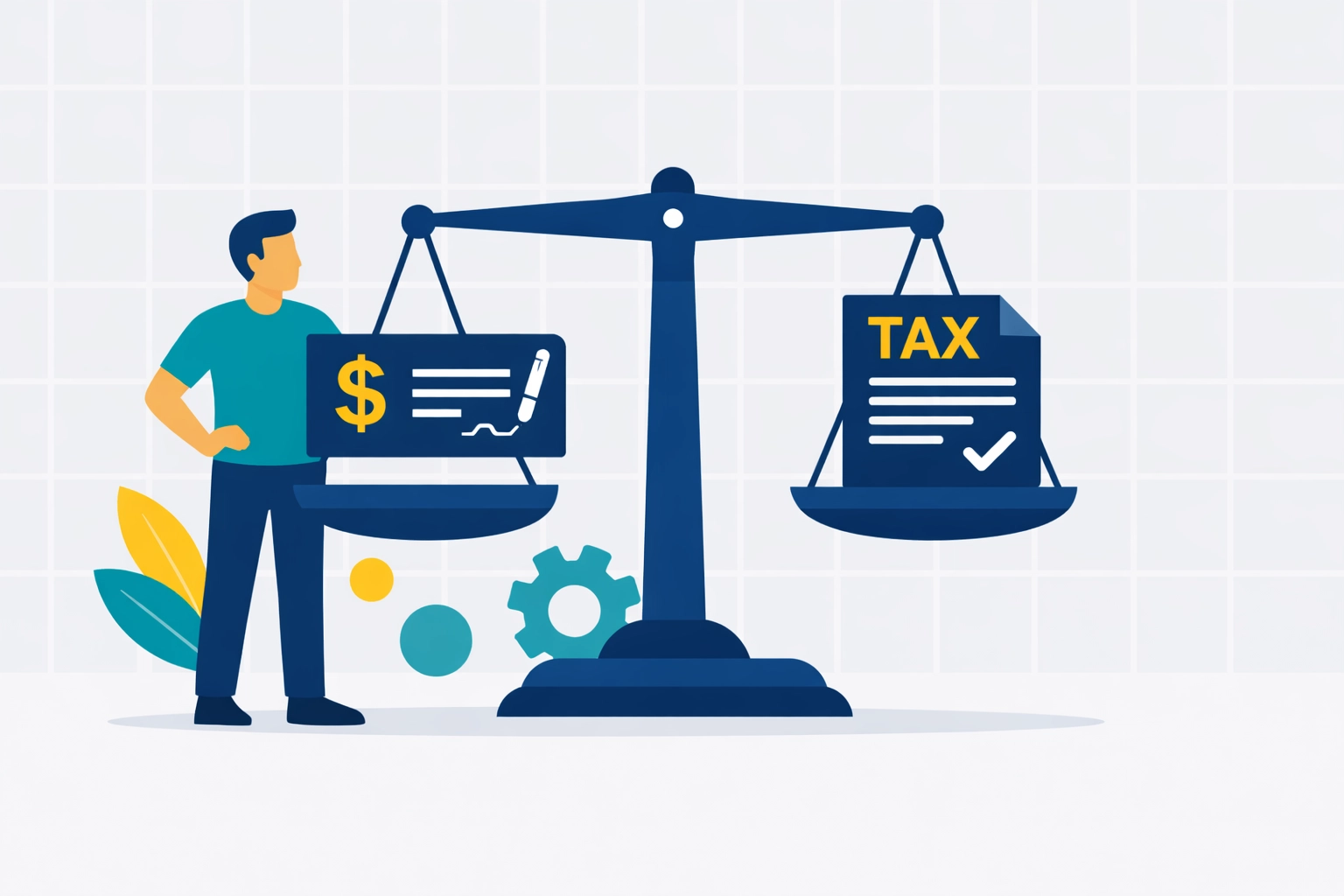
3. Implement a Digital Document Retention System!
Stop using the "Shoebox Method." It is inefficient and leads to missed small business deductions and lost credits. To achieve professional-grade tax preparation in New Haven, you need a system that captures data in real-time.
Mandatory record-keeping categories:
- Income Records: W-2s, 1099-NEC, 1099-K (crucial for side hustles), and 1099-INT.
- Expense Receipts: Specifically for business owners and those itemizing deductions.
- Charitable Contributions: Keep receipts for every donation over $250.
- Healthcare Documentation: Records of 1095-A forms if you are on the exchange.
Use a dedicated mobile app or a cloud-based folder system (like Google Drive or Dropbox). Scan every receipt the moment you receive it. This ensures that when we meet for your tax planning session, we have every cent accounted for. For historical context on how record-keeping has changed, you can see some of our previous advice from September 2020 regarding documentation.
4. Understand Your Marginal Tax Bracket and AGI!
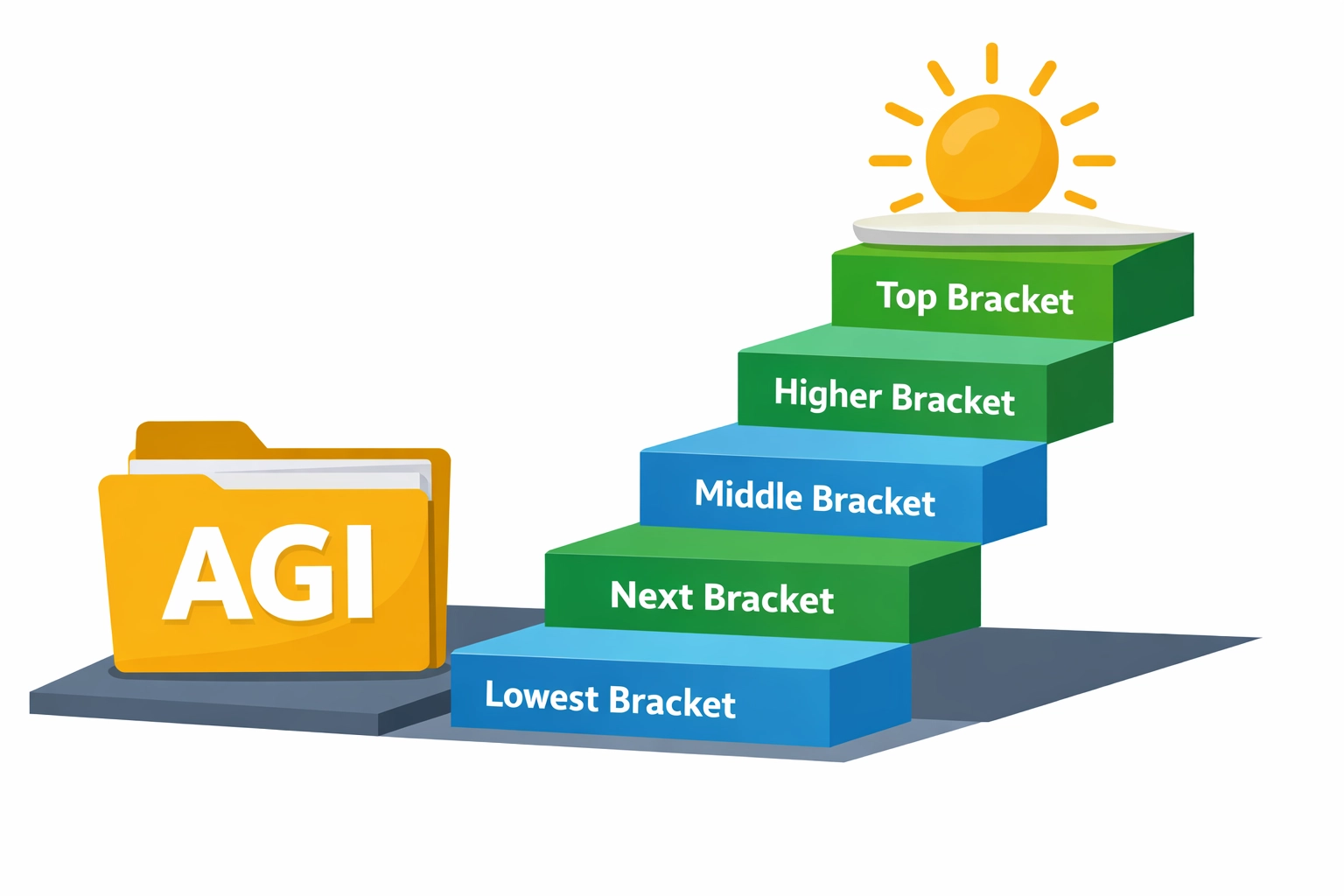
You cannot plan if you do not know the "rules of the road." The federal income tax system is progressive, meaning different portions of your income are taxed at different rates. For 2026, there are seven federal tax brackets: 10%, 12%, 22%, 24%, 32%, 35%, and 37%.
Knowing your Adjusted Gross Income (AGI) is even more critical. Your AGI is your total income minus specific adjustments (like student loan interest or IRA contributions). Many tax credits in Connecticut and at the federal level "phase out" based on your AGI.
Instructional Command: Look at your 2025 Form 1040, Line 11. That is your AGI. If you expect your income to rise in 2026, you may be pushed into a higher bracket or lose eligibility for credits like the Earned Income Tax Credit (EITC). You should consult with us to see if contributing more to a 401(k) or traditional IRA can lower your AGI enough to qualify for these benefits.
5. Local New Haven Tax Strategy!
Living and working in New Haven, CT, means dealing with specific state-level nuances. Connecticut has its own income tax rates and property tax credits that need to be managed.
- Property Tax Credit: Ensure you are keeping records of property taxes paid on your primary residence or motor vehicle.
- CHET Contributions: If you are saving for college using Connecticut’s Higher Education Trust (CHET), those contributions may be deductible on your state return.
- Estimated Payments: If you are self-employed in the Elm City, do not forget your quarterly estimated payments. Missing these can lead to underpayment penalties from both the IRS and the CT Department of Revenue Services (DRS).
For more localized tips on navigating the CT tax landscape, you can check out our previous updates from April 2022 which detail specific local filing requirements.
6. Small Business and Side-Hustle Deductions!
The "gig economy" is booming in New Haven. Whether you’re driving for a ride-share service or selling crafts online, you are a small business owner in the eyes of the IRS.
Use these imperative steps to protect your profits:
- Separate Bank Accounts: Never mix personal and business funds. This is a red flag for audits.
- Track Mileage: Use an app to log every business mile driven. The standard mileage rate is a powerful deduction.
- Home Office Deduction: If you use a portion of your home exclusively for business, calculate the square footage now.
Failure to track these items accurately throughout the year can lead to penalties or a significantly higher tax bill than necessary. You can refer to our June 2023 blog post for a deeper dive into maximizing business expenses.

7. Strategic Retirement Contributions!
One of the most effective ways to maximize tax refund potential is to pay your future self. Contributions to a traditional 401(k) or 403(b) are typically made "pre-tax," meaning they reduce your taxable income dollar-for-dollar.
Contribution Limits Reminder:
- For 2026, ensure you are aware of the updated contribution limits for IRAs and employer-sponsored plans.
- If you are over age 50, utilize "catch-up" contributions to further shield your income from taxation.
Making these adjustments in April 2026 gives you eight full months to distribute the contributions across your remaining paychecks, making the financial impact much easier to manage than a lump-sum contribution in December.
Summary of Immediate Actions
To summarize, your "Do This First" list for year-round planning is:
- Verify your filing status for 2026.
- Adjust your W-4 using the IRS Estimator.
- Digitalize your receipt tracking system.
- Calculate your projected AGI to avoid credit phase-outs.
- Schedule a mid-year check-up with Jose’s Tax Service.
Tax planning isn't just about the numbers; it's about the strategy you use to keep more of your hard-earned money. By taking these steps today, Thursday, April 9, 2026, you are setting yourself up for a stress-free tax season next year.
Practical Reminder: The next quarterly estimated tax payment for the 2026 tax year is due on June 15, 2026. Mark your calendars now to avoid late-filing consequences.
If you need help navigating these steps or want a professional eyes-on review of your current withholdings, come see us at Jose's Tax Service. We've been helping the New Haven community since the beginning, and we’re ready to help you too. You can look back at our July 2023 archives to see how we've handled similar mid-year shifts in the past.
Categories: news, tax planning
Tags: tax planning, tax update, tax preparation new haven, maximize tax refund, IRS, Form W-4, New Haven, small business deductions, 2026 tax season

Leave a Reply
You must be logged in to post a comment.