
Year-End Tax Planning: 7 Mistakes Small Businesses Make in December (And How to Fix Them)
December is crunch time for small business tax planning. While many business owners scramble to organize their finances before year-end, critical mistakes made during this period can cost thousands in penalties, missed deductions, and unnecessary tax burden.
The IRS processes over 160 million individual tax returns annually, and small businesses account for a significant portion of compliance issues. Avoid these seven costly December mistakes to protect your bottom line and ensure a smooth tax filing season.
Mistake #1: Waiting Until December to Start Tax Planning!
The Problem:
Procrastinating on tax planning until the final month of the year eliminates most strategic opportunities. By December, you cannot implement major tax-saving strategies like retirement plan contributions, equipment purchases with bonus depreciation, or business structure changes that require months of preparation.
The Fix:
Schedule your year-end tax planning consultation by December 1st. Contact your tax professional immediately to review your current tax position and identify remaining opportunities. While some strategies require earlier action, several moves can still be executed before December 31st.
Key actions to take now:
- Review your projected income and expenses for the year
- Calculate estimated tax liability to avoid underpayment penalties
- Identify equipment purchases eligible for Section 179 deduction
- Accelerate business expenses into the current tax year
- Defer income to the following year when beneficial
Consequences of Inaction:
Missing the December planning window can cost small businesses an average of $3,000-$8,000 in additional taxes and penalties according to IRS data.

Mistake #2: Ignoring Quarterly Estimated Tax Payment Deadlines!
The Problem:
Small businesses and self-employed individuals must make quarterly estimated tax payments when expecting to owe $1,000 or more in taxes. The fourth quarter payment for 2025 is due January 15, 2026. Missing this deadline triggers underpayment penalties and interest charges that compound quickly.
The Fix:
Calculate your fourth quarter estimated tax payment immediately. Use Form 1040ES to determine the required payment amount based on your actual 2025 income, not last year’s figures.
Essential steps:
- Gather profit and loss statements through November 30th
- Project December income and expenses
- Calculate total tax liability for 2025
- Subtract taxes already paid through withholding and previous quarterly payments
- Submit remaining balance by January 15, 2026
Safe Harbor Rule:
Pay 100% of last year’s tax liability (110% if your prior year AGI exceeded $150,000) to avoid underpayment penalties, regardless of current year income fluctuations.
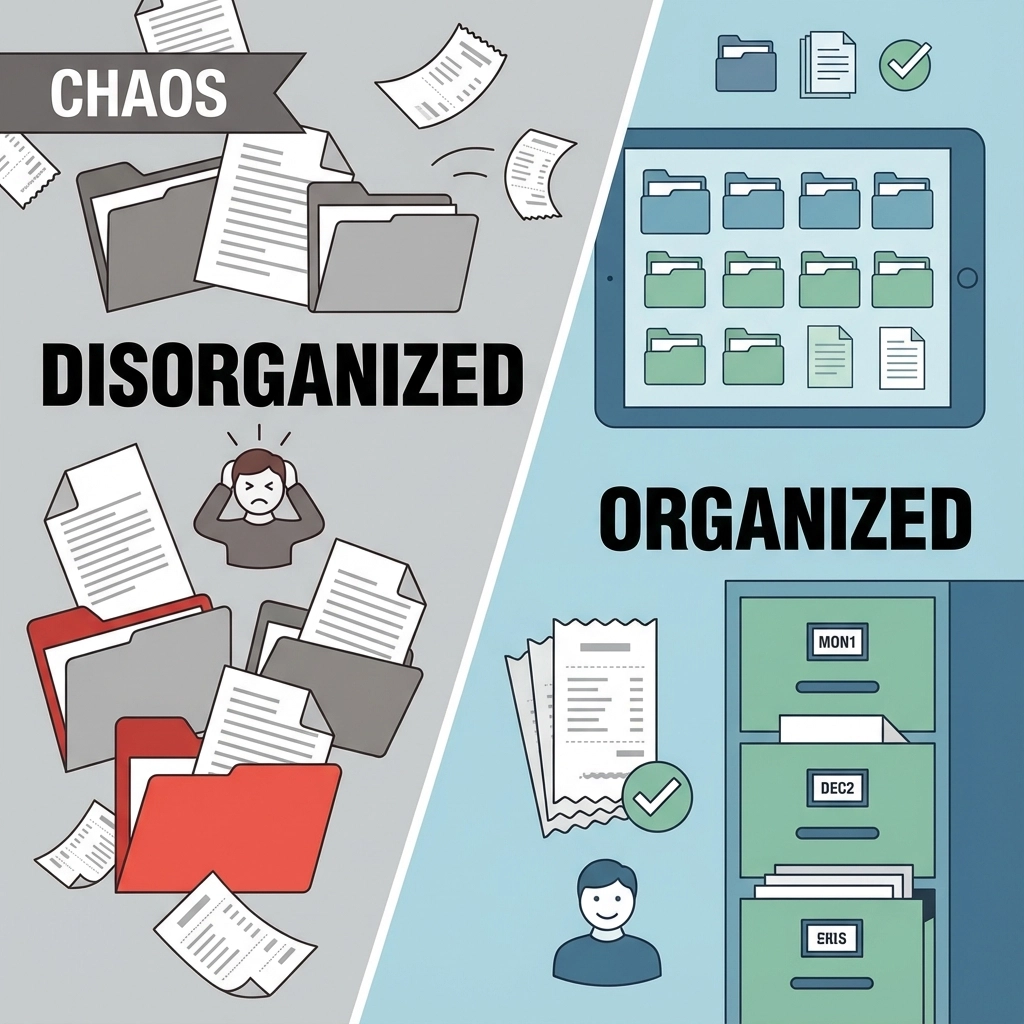
Mistake #3: Maintaining Disorganized Financial Records!
The Problem:
Poor record-keeping creates massive problems during tax preparation. Disorganized receipts, missing documentation, and inconsistent bookkeeping lead to filing errors, missed deductions, and potential audit triggers.
The Fix:
Organize all business financial records before December 31st. Implement a systematic approach to document management that will serve your business year-round.
Critical organization tasks:
- Reconcile all bank and credit card statements
- Categorize business expenses properly
- Gather receipts for all business purchases
- Separate business and personal transactions
- Update depreciation schedules for equipment and assets
- Compile 1099 information for contractors and vendors
Use accounting software like QuickBooks to maintain consistent records. If your bookkeeping is significantly behind, hire a professional bookkeeping service immediately: the cost is tax-deductible and will save money on preparation fees.
Mistake #4: Mixing Business and Personal Expenses!
The Problem:
Combining business and personal finances creates compliance nightmares and audit red flags. The IRS requires clear separation between business and personal expenses. Mixed accounts make it impossible to accurately track deductible expenses and can invalidate legitimate business deductions.
The Fix:
Establish complete separation between business and personal finances immediately. Open dedicated business accounts if you haven’t already, and stop using personal accounts for business transactions.
Implementation steps:
- Open a dedicated business checking account
- Apply for a business credit card
- Transfer all business transactions to business accounts
- Review mixed transactions from 2025 and properly categorize them
- Reimburse yourself properly for business expenses paid with personal funds
- Maintain separate accounting records for business activities
Legal Protection:
Proper separation also protects LLC and corporate legal status. Mixing funds can “pierce the corporate veil” and expose personal assets to business liabilities.
Mistake #5: Overlooking Available Business Deductions!
The Problem:
Small businesses frequently miss valuable deductions worth thousands of dollars. Common oversights include home office expenses, vehicle usage, professional development, business meals, and equipment purchases that qualify for immediate expensing.
The Fix:
Conduct a comprehensive deduction review before year-end. Focus on expenses you can still incur in December to reduce 2025 taxable income.
Commonly missed deductions include:
- Home office expenses (if you work from home regularly)
- Business use of personal vehicle (mileage or actual expense method)
- Professional memberships and subscriptions
- Business insurance premiums
- Office supplies and equipment
- Professional development and training costs
- Business meals (50% deductible for client entertainment)
- Technology and software purchases
December Acceleration Opportunities:
- Purchase necessary equipment before December 31st
- Pay outstanding professional service bills
- Stock up on office supplies and business inventory
- Prepay business insurance premiums for early 2026
- Make charitable contributions on behalf of your business

Mistake #6: Missing State Tax Compliance Requirements!
The Problem:
Small businesses often focus exclusively on federal taxes while ignoring state tax obligations. Each state has different filing requirements, due dates, and penalties. Multi-state businesses face even more complex compliance burdens that can result in costly violations.
The Fix:
Review all state tax obligations for jurisdictions where your business operates. This includes states where you have physical presence, employees, or significant sales activity.
State compliance checklist:
- Confirm business registration status in all applicable states
- Review state income tax filing requirements
- Verify sales tax registration and remittance obligations
- Check employment tax requirements for states with employees
- Ensure compliance with state-specific business licenses
- Review nexus requirements for e-commerce activities
Multi-State Considerations:
If your business operates in multiple states, consult with a tax professional familiar with interstate commerce regulations. State tax compliance errors can be more expensive and difficult to resolve than federal issues.
Mistake #7: Failing to Optimize Business Structure for Tax Efficiency!
The Problem:
Many small businesses operate under suboptimal entity structures that cost thousands in unnecessary taxes. As businesses grow and evolve, the original structure may no longer provide the best tax treatment. Changes must be implemented before December 31st to affect current year taxes.
The Fix:
Evaluate whether your current business structure aligns with your tax planning goals. Different entity types offer varying tax advantages depending on income level, growth plans, and operational requirements.
Structure optimization considerations:
- Sole Proprietorship: Simple but subjects all income to self-employment tax
- LLC: Flexible structure with pass-through taxation options
- S-Corporation: Can reduce self-employment taxes on distributions
- C-Corporation: May provide benefits for retained earnings and employee benefits
Important Deadline:
Any business structure changes must be completed and filed before December 31, 2025, to apply for the current tax year. Consult with both legal and tax professionals before making entity changes.
Take Action Before December 31st!
These seven mistakes cost small businesses millions in unnecessary taxes and penalties each year. The key to avoiding these pitfalls is taking immediate action rather than waiting until the last minute.
Contact Jose’s Tax Service today to schedule your year-end tax planning consultation. Our experienced team will review your specific situation, identify remaining tax-saving opportunities, and ensure full compliance with all federal and state requirements.
Don’t let December mistakes derail your business’s financial success. Professional guidance during this critical period can save thousands in taxes and position your business for a strong start to 2026.
Time is running out: schedule your consultation now at josestaxservice.com or call our office directly. Your year-end tax planning cannot wait until January.

Leave a Reply
You must be logged in to post a comment.