
The Ultimate Guide to Small Business Tax Preparation in New Haven: Everything You Need to Succeed in 2026
DATELINE: NEW HAVEN, CT – February 25, 2026
ORGANIZATION: Jose’s Tax Service
Tax season is officially in full swing. For small business owners in the Elm City, 2026 brings a unique set of challenges and opportunities. Between shifting federal regulations and Connecticut-specific tax updates, simply "getting it done" isn't enough anymore. If you want to maximize your tax refund and keep more of your hard-earned revenue, you need a proactive strategy.
I’m Jose Morales, CEO of Jose’s Tax Service. We’ve seen too many New Haven entrepreneurs hand over thousands of dollars to the IRS simply because they lacked a cohesive plan. This guide is designed to break down the technicalities of tax preparation in New Haven into actionable steps that protect your bottom line.
Choose the Right Business Entity for Maximum Protection!
The foundation of your tax savings starts with how your business is structured. If you are operating as a sole proprietorship, you may be overpaying on self-employment taxes.
- Sole Proprietorships: Income is reported on Schedule C of your Form 1040. You are liable for the full 15.3% self-employment tax.
- Limited Liability Companies (LLC): These provide liability protection but are taxed as "pass-through" entities by default.
- S-Corporations (S-Corp): This is often the "sweet spot" for profitable small businesses. By paying yourself a "reasonable salary" and taking the rest as a distribution, you can significantly reduce self-employment tax liabilities.

Master the Connecticut Pass-Through Entity Tax (PTET)!
In New Haven, savvy business owners utilize the Connecticut Pass-Through Entity Tax (PTET). This is a critical strategy to bypass the federal $10,000 State and Local Tax (SALT) deduction cap.
- File Form CT-1065/CT-1120SI: Partnerships and S-Corps can pay tax at the entity level.
- Generate a Federal Deduction: The entity pays the state tax, which reduces the taxable income reported on your federal return.
- Receive a Credit: You receive a credit on your Connecticut individual income tax return for the taxes paid by the business.
Failure to elect PTET correctly can result in "trapped" state tax payments that provide no federal benefit. Consult with a concierge tax pro to ensure your entity is registered and reporting correctly under these guidelines.
Claim 100% Bonus Depreciation on New Assets!
One of the most powerful tools for 2026 is the ability to deduct the full cost of qualifying business equipment. Under current regulations, business owners can deduct 100% of the cost of qualifying assets: both new and used: placed in service after January 19, 2025.
- Eligible Assets: Vehicles with a GVWR over 6,000 lbs, machinery, computers, and office furniture.
- Immediate Impact: Instead of depreciating a $50,000 piece of equipment over five to seven years, you can take the full $50,000 deduction on your 2025/2026 return.
- Warning: Taking full depreciation now means you will have no depreciation deductions for that asset in future years. Balance your current high-income years against projected future growth before committing.

Navigate the 1099-K Reporting Requirements!
If you accept payments via Venmo, PayPal, Square, or credit cards, the IRS is watching closer than ever. For the 2025 tax year (filing in 2026), the reporting threshold has remained a point of high scrutiny.
- Form 1099-K: You will receive this form if your gross payments exceed the IRS threshold.
- Reconcile Your Books: Ensure your internal bookkeeping matches the totals on your 1099-K. Discrepancies between reported 1099-K income and your tax return are a primary trigger for IRS automated underreporter (AUR) notices.
- Separate Personal and Business: Never use a personal Venmo or PayPal account for business transactions. This creates a nightmare during tax preparation in New Haven and makes it difficult to defend your deductions during an audit.
Essential Small Business Tax Deductions You Often Miss!
To maximize your tax refund, you must look beyond the obvious expenses like rent and payroll.
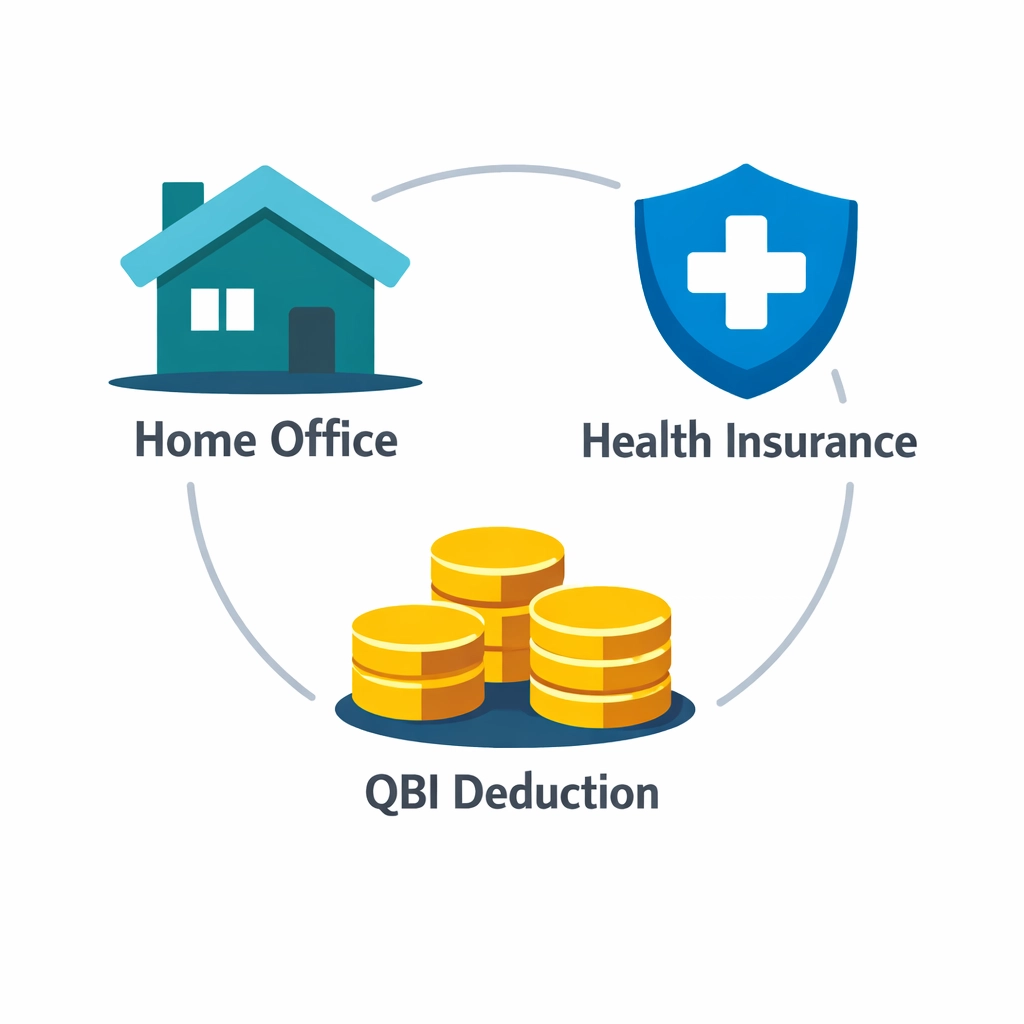
1. The Home Office Deduction (Form 8829)
If you use a portion of your home exclusively and regularly for business, you can deduct a percentage of your mortgage interest, utilities, and repairs. Use the Simplified Method ($5 per square foot up to 300 sq ft) for ease, or the Actual Expenses Method for potentially higher savings.
2. Section 199A Qualified Business Income (QBI) Deduction
Most small business owners can deduct up to 20% of their qualified business income from their taxable income. This is a "below-the-line" deduction, meaning it reduces your taxable income even if you don't itemize.
3. Health Insurance Premiums
If you are self-employed and have a net profit, you can typically deduct 100% of the health insurance premiums paid for yourself, your spouse, and your dependents. This is an adjustment to income on Form 1040, Schedule 1.
Concierge Tax Preparation vs. DIY Software: Which is Better?
While DIY software like TurboTax is available, small business taxes in New Haven require a level of nuance that algorithms often miss.
- Software Limitations: DIY software is reactive. It asks questions about what happened in the past. It does not provide the proactive "what if" scenarios that a concierge tax pro offers.
- Local Expertise: Software doesn't understand New Haven’s specific economic climate or the latest Connecticut Department of Revenue Services (DRS) updates.
- Audit Support: If the IRS sends a notice, software provides a help article. A concierge service like Jose's Tax Service provides a human being to represent you.
Your 2026 Small Business Tax Checklist
Use this list to gather your documents before your appointment at our New Haven office.
- Trial Balance or Profit & Loss Statement: Exported from QuickBooks, Xero, or your bookkeeping software.
- Form 1099-NEC/1099-MISC: Income received from clients.
- Form 1099-K: Income from payment processors.
- Payroll Records: Form 941 (Quarterly Federal Tax Return) and Form 940 (Annual Unemployment Tax).
- Bank and Credit Card Statements: For the full year of 2025.
- Asset Purchases: Receipts for any equipment, vehicles, or technology purchased for the business.
- Mileage Logs: Precise records of business miles driven (commuting from home to your primary office is NOT deductible).
Crucial Deadlines for New Haven Small Businesses!
Mark your calendars. Missing these dates leads to expensive failure-to-file and failure-to-pay penalties.
- March 16, 2026: Deadline for S-Corp (Form 1120-S) and Partnership (Form 1065) returns.
- April 15, 2026: Deadline for Sole Proprietors (Schedule C), C-Corporations (Form 1120), and individual returns.
- April 15, 2026: Deadline for 1st Quarter 2026 Estimated Tax Payments.
If you cannot file by these dates, you must file an extension (Form 7004 for businesses or Form 4868 for individuals). Note: An extension to file is NOT an extension to pay. You must estimate your tax liability and pay at the time of extension to avoid interest.

Final Practical Reminders
Small business tax success isn't about what you do in April; it's about what you do all year long.
- Keep digital copies: The IRS accepts digital receipts. Use apps like Hubdoc or Dext to scan receipts immediately.
- Review your entity: If your business grew significantly in 2025, it may be time to switch from an LLC to an S-Corp for the 2026 tax year.
- Don't ignore the "Nanny Tax": If you have household employees, ensure you are filing Schedule H.
At Jose's Tax Service, we specialize in helping New Haven businesses navigate these complexities. We don't just fill out forms; we build financial roadmaps. Whether you need a full tax plan or just a professional review of your current filing, we are here to help.
Ready to maximize your tax refund? Stop by our New Haven office or book a virtual consultation today. Let’s make 2026 your most profitable year yet.
Additional Resources:

Leave a Reply
You must be logged in to post a comment.