
The Ultimate 2026 Tax Planning Guide: Everything New Haven Taxpayers Need to Succeed
Critical Alert: New Haven Property Tax Deadlines Have Passed!
New Haven taxpayers face immediate action requirements. The second installment of property taxes became delinquent on February 2, 2026. Unpaid taxes now accrue interest retroactive to January 1, 2026.
Property owners must address delinquent payments immediately. The Tax Collector's office enforces strict collection procedures, and delays increase your financial burden through accumulating interest charges.
Understanding New Haven's 2026 Property Tax Structure
The mill rates for the 2024 Grand List establish your baseline tax obligation:
- Real Estate: 39.40 mills
- Personal Property: 39.40 mills
- Motor Vehicle: 32.46 mills
Calculate your property tax obligation using this formula: Pay $1 for every $1,000 of assessed value. A property assessed at $100,000 generates a $3,940 annual tax bill for real estate.
Payment Processing Rules You Must Know
Submit payments through approved channels, but understand the processing timeline. Personal checks: whether submitted online, in person, or by mail: trigger an automatic five-day business hold. ACH transactions incur a 0.75% transaction fee plus the same five-day processing hold.
Plan payment submissions to account for these processing delays. Late payments accrue interest regardless of when you initiated the transaction.
Federal Tax Changes That Increase Your 2026 Refund
The 2026 filing season introduces retroactive tax changes effective January 1, 2025. These changes apply to your 2025 tax return filed in 2026, potentially generating substantial refunds.
Standard Deduction Increases
Federal standard deductions increased significantly:
- Single filers: Save $75–$278 in federal taxes
- Married filing jointly: Save $150–$555 in federal taxes
These increases reduce taxable income automatically, requiring no additional documentation or qualification.
New Deductions Available for 2025 Returns
Claim these newly available deductions when filing your 2025 tax return:
Income exclusions:
- Tips received from employers
- Overtime income from eligible employment
- Auto loan interest payments (subject to limitations)
Age-based benefits:
- Up to $6,000 additional deduction for taxpayers ages 65 and older
SALT deduction expansion:
- State and local tax deductions now exceed the previous $10,000 cap that limited deductions from 2018–2024
Child Tax Credit expansion:
- Up to $200 additional per qualifying child
Federal estimates project $91 billion in retroactive tax relief, with $60 billion distributed as refunds. Average refunds may increase substantially compared to prior years.

Connecticut State Tax Relief Proposals for 2026
Governor Ned Lamont proposed a one-year $500 million sales tax rebate program. Eligible taxpayers would receive:
- Individuals earning less than $200,000: $200 rebate
- Married couples earning less than $400,000: $400 rebate
Monitor Connecticut Department of Revenue Services announcements for implementation details and distribution timelines.
Connecticut-Specific Tax Changes Beginning in 2026
Charitable giving limitations:
- New 0.5% adjusted gross income floor requirement
- 35% deduction cap for high-income earners
Estate tax exemption increase:
- Connecticut estate tax exemption rises to $15 million
- Reduces estate tax burden for qualifying estates
Action Steps to Maximize Your 2026 Tax Refund
Follow these procedures to ensure you capture all available deductions and credits:
1. Gather documentation for new deductions
Compile records proving:
- Tip income reported on W-2 forms
- Overtime wages clearly identified on pay stubs
- Auto loan interest statements from lenders
- State and local tax payments exceeding $10,000
2. Review age-based deduction eligibility
Taxpayers who turned 65 during 2025 qualify for enhanced deductions. Verify your birthdate documentation matches IRS records to prevent processing delays.
3. Calculate SALT deduction benefits
New Haven taxpayers who previously hit the $10,000 SALT cap can now claim higher deductions. Total your property taxes, state income taxes, and eligible sales taxes. Itemizing may now exceed standard deduction benefits.
4. Document Child Tax Credit eligibility
The expanded credit provides $200 additional per child. Confirm each dependent's Social Security number, residency status, and age qualification.
5. Organize business expense records
Small business owners must separate personal and business expenses. Track:
- Marketing expenses (digital advertising, printed materials, website costs)
- Home office deductions (if you maintain dedicated workspace)
- Vehicle mileage for business purposes
- Professional development and licensing fees
Why Professional Tax Preparation New Haven Services Deliver Superior Results
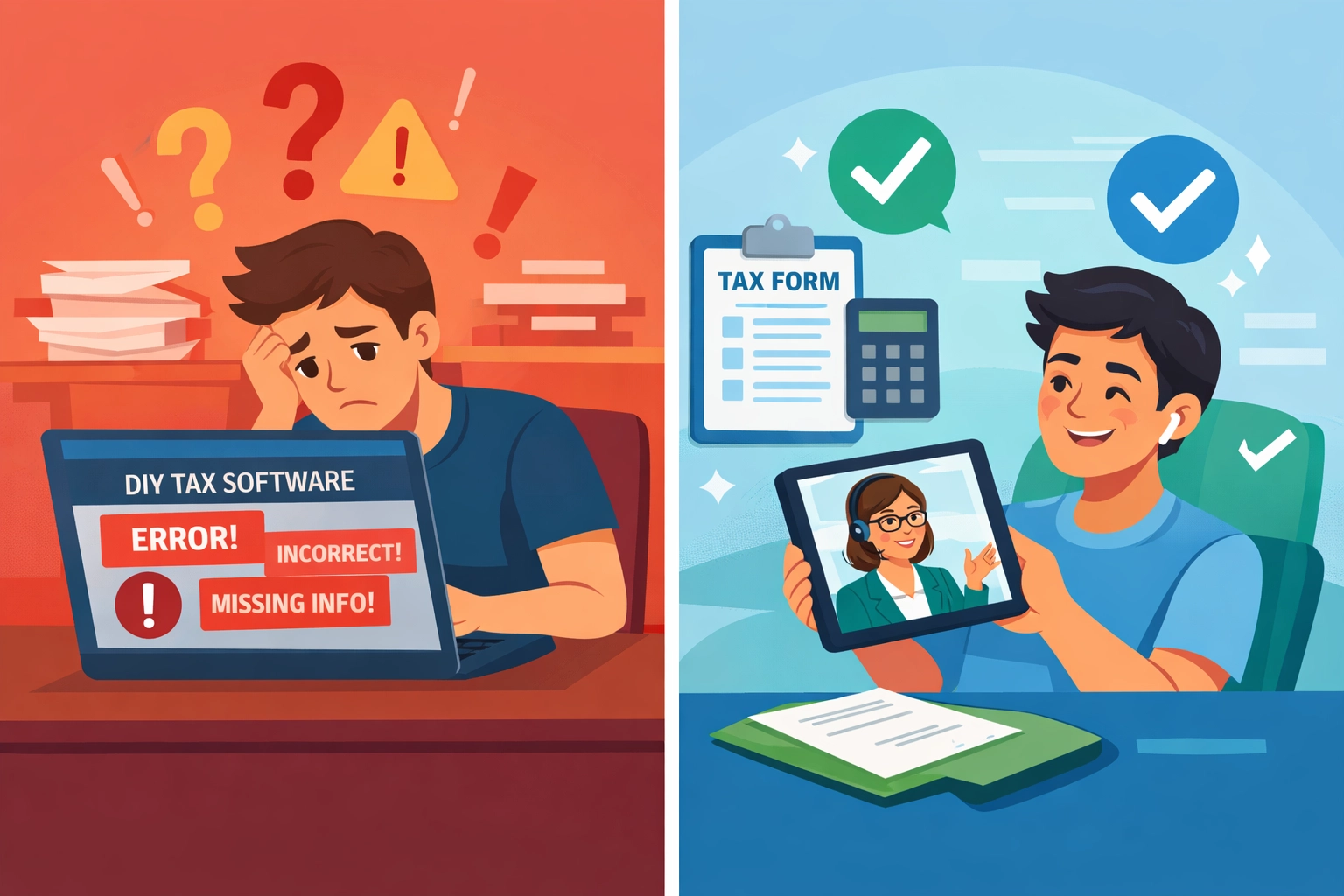
DIY tax software cannot adapt to complex situations requiring professional judgment. Consider the value a concierge tax pro provides:
Retroactive tax law expertise:
The 2026 filing season includes unprecedented retroactive changes. Tax professionals track legislative updates and apply them correctly to your specific situation.
Deduction optimization:
Average taxpayers miss deductions worth hundreds or thousands of dollars annually. Professional review identifies overlooked opportunities in:
- Mixed-use property situations
- Self-employment income and expenses
- Investment income and losses
- Education expenses and credits
Audit risk reduction:
Improperly claimed deductions trigger IRS examination procedures. Professional preparation ensures documentation standards meet IRS requirements and substantiation rules.
Year-round planning:
Strategic tax planning reduces liabilities before the tax year ends. Quarterly consultations position you to maximize tax refund opportunities through timely adjustments.
Distribution of Federal Tax Benefits Across Income Levels
Federal tax cuts do not distribute equally across all income brackets. Tax policy analysis reveals:
- Nearly 50% of households receive income tax cuts below $100
- Approximately 20% of households receive cuts exceeding $1,000
- Upper-middle income ranges capture disproportionate benefit shares
Understand where your household falls in this distribution. Professional tax analysis clarifies your specific benefit level and identifies strategies to optimize your position.
Small Business Tax-Ready Checklist for 2026
New Haven small business owners must maintain rigorous record-keeping systems. Complete these tasks immediately:
Monthly procedures:
- Reconcile business bank accounts
- Categorize business expenses using consistent classification systems
- File quarterly estimated tax payments by due dates
- Review accounts receivable aging reports
Annual requirements:
- Issue 1099 forms to contractors and service providers by January 31
- Reconcile payroll tax deposits with Form 941 submissions
- Calculate depreciation on business assets
- Document inventory valuations using acceptable methods
Deductible marketing expenses:
- Website development and hosting fees
- Social media advertising costs
- Print advertising and promotional materials
- Networking event attendance
- Business card and branding expenses

Managing 1099-K Forms for Side Hustle Income
The IRS modified reporting thresholds for third-party payment processors multiple times. For 2025 returns filed in 2026, confirm the current threshold with your tax preparation New Haven professional.
Report all income regardless of whether you receive a 1099-K form. The IRS matches income reports against tax returns using automated systems. Unreported income triggers notices and potential penalties.
Side hustle expense documentation:
- Maintain separate business checking accounts
- Photograph receipts immediately after purchase
- Use mileage tracking apps for vehicle expenses
- Store digital copies of all business-related documents
Avoid Underpayment Penalties Through Estimated Tax Compliance
Taxpayers who owe $1,000 or more in taxes after withholding and credits must pay estimated taxes quarterly. Due dates for 2026 estimated tax payments are:
- April 15, 2026
- June 16, 2026 (June 15 falls on Sunday)
- September 15, 2026
- January 15, 2027
Calculate estimated taxes using Form 1040-ES. Base payments on either:
- 90% of current year tax liability, or
- 100% of prior year tax liability (110% if adjusted gross income exceeds $150,000)
Safe harbor provisions protect you from penalties when you meet these thresholds, even if your actual tax liability increases.
Virtual Tax Preparation: Secure Filing from Anywhere
Modern tax preparation New Haven services offer secure virtual consultations. Cloud-based systems provide:
- Encrypted document upload portals
- Video conferencing for complex situations
- Real-time collaboration on tax forms
- Secure electronic signature capabilities
Virtual preparation eliminates travel time while maintaining service quality. Tax professionals review your documents with the same thoroughness as in-person appointments.

Final 2026 Tax Planning Action Items
Execute these steps before April 15, 2026:
- Schedule your tax preparation appointment before March 15 to avoid the April rush
- Organize all tax documents using a checklist provided by your tax professional
- Review prior year returns to identify carry-forward items and recurring issues
- Calculate estimated quarterly payments for 2026 to prevent underpayment penalties
- Document all new deductions introduced by 2025 tax law changes
- Establish bookkeeping systems for ongoing business expense tracking
Don't leave money on the table. The combination of retroactive federal changes, Connecticut state proposals, and local New Haven tax considerations creates complexity requiring professional expertise. A concierge tax pro at Jose's Tax Service analyzes your complete financial situation, identifies every available deduction, and maximizes your tax refund while ensuring full compliance with all filing requirements.
Contact a tax preparation New Haven professional today to begin your 2026 tax planning process. The deadline approaches rapidly, and proper preparation requires adequate time for document review, calculation verification, and strategic planning discussions.

Leave a Reply
You must be logged in to post a comment.