
The New “No Tax on Tips” Rules Explained in Under 3 Minutes
NEW HAVEN, CT – JOSE’S TAX SERVICE – MARCH 20, 2026
Recent legislative changes have fundamentally altered how service industry professionals report and pay federal income tax on gratuities. The "No Tax on Tips" provision, effective for the 2025 through 2028 tax years, offers significant relief for eligible workers. To ensure you maximize tax refund opportunities and remain compliant with the Internal Revenue Service (IRS), a thorough understanding of these complex regulations is required.
This guide provides an authoritative breakdown of the eligibility requirements, deduction limits, and filing procedures associated with the new rules. For personalized assistance, consulting a concierge tax pro is recommended to navigate individual financial circumstances.
THE QUICK SUMMARY: WHAT YOU NEED TO KNOW NOW!
For those requiring the essential facts immediately, the following points summarize the new legislation:
- The Deduction: Eligible workers may deduct up to $25,000 in qualified tips from their federal taxable income.
- Timeline: This provision is active for tax years 2025, 2026, 2027, and 2028.
- Occupation Restriction: Only individuals in "customarily tipped" roles as of December 31, 2024, qualify.
- Income Caps: The deduction phases out for single filers earning over $150,000 and joint filers earning over $300,000.
- Tax Types: The deduction applies ONLY to federal income tax. Social Security, Medicare, and state taxes still apply to all tip income.

IDENTIFY ELIGIBLE OCCUPATIONS!
The IRS has established strict criteria regarding who may claim the "No Tax on Tips" deduction. To qualify, a taxpayer must be employed in an occupation that "customarily and regularly received tips" prior to the cutoff date of December 31, 2024. This restriction is designed to prevent industries from reclassifying standard wages as tips to avoid taxation.
Qualifying roles typically include:
- Wait staff and servers in the food and beverage industry.
- Bartenders and barbacks.
- Hair stylists, barbers, and estheticians.
- Valet parking attendants and bellhops.
- Taxi, rideshare, and delivery drivers (provided tipping is customary in their specific platform or region).
- Caddies and other personal service providers in the hospitality sector.
If your occupation is not on the IRS-maintained list of eligible service roles, you cannot claim this deduction. It is essential to verify your status before filing to avoid common tax return mistakes that can cost taxpayers. You can review the full list of eligible roles by visiting our guide on gathering year-end income documents.
UNDERSTAND THE $25,000 DEDUCTION LIMITS!
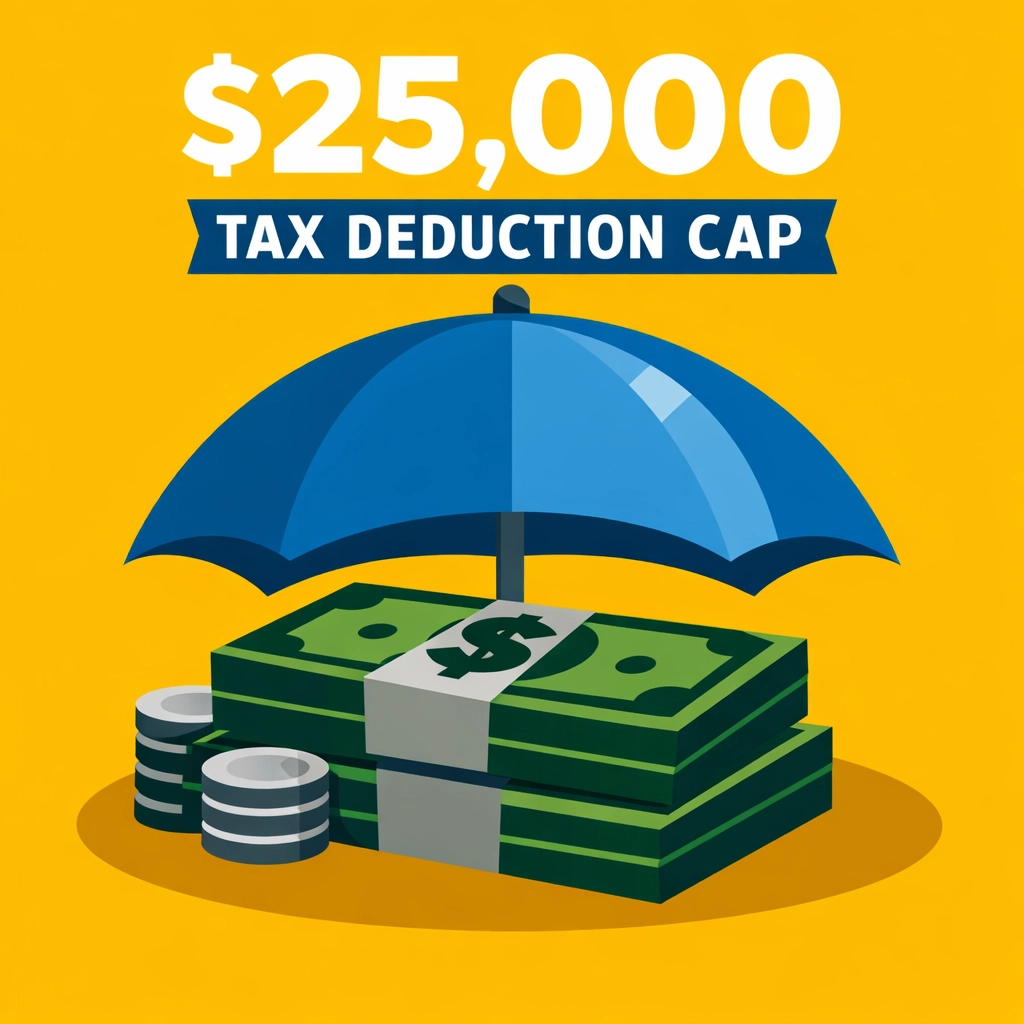
The centerpiece of the new rule is the ability to deduct up to $25,000 in qualified tips from your federal taxable income. However, this is not a universal flat deduction; it is subject to Modified Adjusted Gross Income (MAGI) limitations.
The Phase-Out Thresholds:
- Single Filers: The deduction begins to phase out once MAGI exceeds $150,000.
- Married Filing Jointly: The deduction begins to phase out once MAGI exceeds $300,000.
- Married Filing Separately: Taxpayers using this filing status are generally ineligible for the deduction.
If your income exceeds these thresholds, the $25,000 deduction is reduced proportionally until it is eliminated entirely. This makes tax planning essential for high-earning service professionals. To ensure you are utilizing the most beneficial filing status, consider what to expect when you give us a call at Jose’s Tax Service.
DIFFERENTIATE BETWEEN VOLUNTARY TIPS AND SERVICE CHARGES!
A critical distinction in the new law is the definition of a "qualified tip." Only voluntary tips qualify for the deduction.
Voluntary Tips (Qualified):
- Cash tips left by customers.
- Tips added to a credit card or debit card payment by the customer's choice.
- Tips received through tip-sharing or tip-pooling arrangements among employees.
Service Charges (Non-Qualified):
- Automatic gratuities added to large parties (e.g., an 18% charge for parties of 6 or more).
- Mandatory "service fees" or "hospitality fees" charged by the establishment.
- Contractual amounts that the customer did not have the right to determine.
The IRS explicitly excludes these service charges from the deduction. Even if an employer distributes these fees to the staff, they are legally classified as wages, not tips. Misclassifying service charges as tips on your return may lead to penalties or audit flags. For professional tax preparation New Haven residents trust, our office can help clarify these distinctions.
FOLLOW THE MANDATORY FILING PROCEDURES!
To claim the deduction, taxpayers must adhere to specific reporting requirements. Failure to follow these steps can delay processing or lead to the adjustment of refunds.
1. Report Total Compensation:
Report all income, including both hourly wages and the total amount of tips received, on your Form 1040.
2. Use Schedule 1-A:
The IRS has introduced Schedule 1-A (Tax-Free Tip Income). You must enter your deductible tip amount in Part II of this form. This amount is then transferred to your main 1040 to reduce your adjusted gross income.
3. Maintain Daily Logs:
Taxpayers must keep a daily record of tips. Use IRS Form 4070A (Employee’s Daily Record of Tips) or a similar reliable written statement. Precise record-keeping is the only way to defend your deduction in the event of an inquiry.
4. Choose Between Standard or Itemized Deductions:
The "No Tax on Tips" deduction is an "above-the-line" adjustment. This means you can claim it in addition to the standard deduction or your itemized deductions.
AWARENESS OF PAYROLL AND STATE TAX OBLIGATIONS!
It is a common misconception that "No Tax on Tips" means zero taxes are owed on that income. This is incorrect. The law only eliminates Federal Income Tax on the first $25,000 of qualified tips.
You still owe the following:
- Social Security Tax (6.2%): You must pay your portion of FICA taxes on all tip income.
- Medicare Tax (1.45%): This remains mandatory for all earned income, including tips.
- State and Local Income Taxes: Connecticut and other states have not yet moved to exempt tips from state income tax. You must report and pay state taxes according to local regulations.
Failing to account for these taxes during the year can result in a surprise balance due in April. Proactive end-of-the-year tax planning is the best way to manage these liabilities.
AVOID AUDIT TRIGGERS AND ERRORS!
The IRS has indicated it will closely monitor the "No Tax on Tips" claims to prevent fraud. To protect yourself, follow these commands:
- FILE your returns electronically to reduce mathematical errors.
- ENTER tip amounts that exactly match the records provided to your employer.
- USE professional software or a certified tax preparer to calculate the phase-out if your income is near the $150,000/$300,000 limits.
- DOUBLE-CHECK that you are not attempting to claim the deduction for "service charges."
Errors in these areas can delay processing or adjust refunds significantly.
MAXIMIZE YOUR REFUND WITH JOSE’S TAX SERVICE!
Navigating the transition to the new tip laws requires precision and up-to-date knowledge of the tax code. At Jose’s Tax Service, we provide the expertise of a concierge tax pro to ensure you are not leaving money on the table. Whether you are a bartender in downtown New Haven or a stylist in the surrounding area, our tax preparation New Haven services are designed to provide you with peace of mind.
We offer comprehensive reviews of your income documents to ensure every "voluntary tip" is accounted for under the new $25,000 deduction rule. Don't risk an audit or a missed deduction by filing alone. See what to expect in step 2 of our process and get started today.
Practical Reminders:
- The deadline for 2025 tax filings is April 15, 2026.
- Keep all records of tips for at least three years after filing.
- Report tips over $20 per month to your employer by the 10th of the following month.
For more information on the latest news and tax planning strategies, visit our office or contact us through our website. We are committed to helping our clients navigate the ever-changing financial landscape with professional, accurate, and efficient service.

Tags: tax planning, news
Keywords: maximize tax refund, concierge tax pro, tax preparation new haven

Leave a Reply
You must be logged in to post a comment.