
Tax Planning in 2026: Why Everyone in New Haven Is Switching to Year-Round Strategies (And You Should Too)
The traditional approach to taxes, waiting until March or early April to gather receipts and scramble for deductions, no longer works in 2026. With major federal law changes, understaffed IRS operations, and Connecticut-specific requirements, taxpayers who wait until the last minute are leaving significant money on the table and risking costly penalties.
Here's what's changed and why year-round tax planning is now essential for New Haven residents and business owners.
IRS Staffing Crisis Creates New Urgency!
The IRS is operating with 27% fewer employees in 2026 compared to previous years. This creates substantial delays in phone support, in-person assistance, and processing corrections. When you encounter issues or questions during tax season, expect extended wait times that can stretch weeks or months.
The practical impact: You cannot rely on last-minute IRS assistance. Error prevention through advance planning becomes critical. Taxpayers who file accurately the first time avoid the delays that plague those requiring amended returns or IRS correspondence.
Major Tax Law Changes You Must Know About
The One Big Beautiful Bill Act (OBBBA) introduced significant deductions retroactive to 2025 that require strategic documentation throughout the year:
New Deduction Opportunities:
- Senior deductions up to $12,000
- Overtime pay deductions up to $25,000
- Tip income deductions up to $25,000
These deductions require proper documentation and qualification planning. You cannot retroactively create the records needed to claim these benefits in April. Strategic year-round tracking ensures you maximize these opportunities without triggering audit flags.
Self-Employed and Freelance Workers: Critical Planning Requirements
If you operate a business or work as an independent contractor in New Haven, year-round tax planning directly impacts your bottom line.
Qualified Business Income (QBI) Deduction: Self-employed individuals can deduct up to 20% of qualified business income. This requires systematic income tracking and expense categorization throughout the year. The deduction phases out at higher income levels, making quarterly income projections essential for optimization.
Self-Employment Tax: You face a 15.3% self-employment tax rate for 2026. Strategic retirement planning offers the most powerful offset:
- SEP-IRA contributions up to $70,000
- Solo 401(k) plans up to $77,500 with catch-up contributions for those 50 and older
These contributions reduce adjusted gross income, affecting eligibility for additional credits and deductions. Maximum benefit requires systematic quarterly contributions rather than year-end scrambling.

Quarterly Estimated Tax Payments: Non-Negotiable Deadlines
You must make quarterly estimated tax payments if you expect to owe $1,000 or more in taxes. Missing these deadlines triggers penalties that accumulate throughout the year.
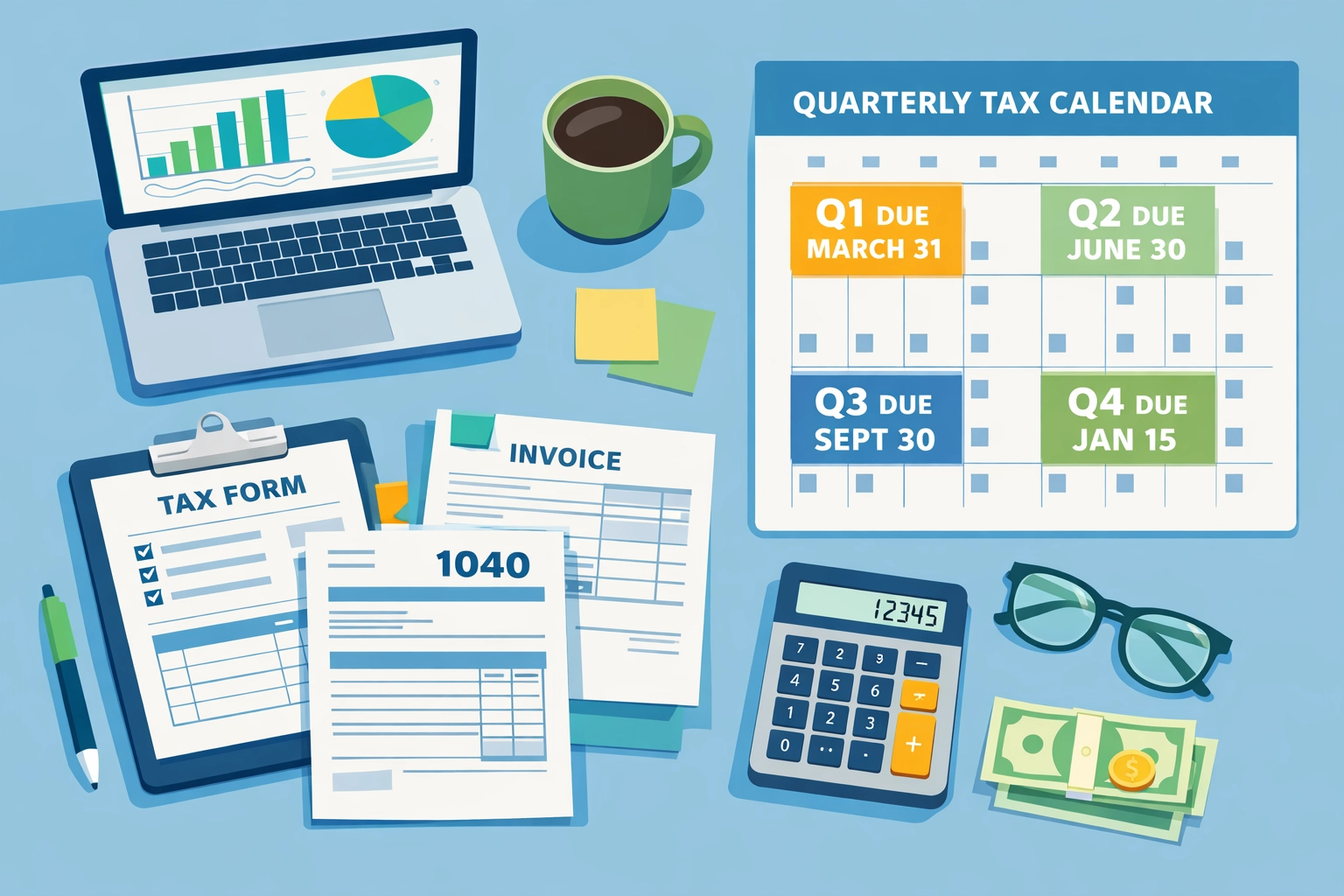
2026 Quarterly Payment Schedule:
- Q1: April 15, 2026
- Q2: June 15, 2026
- Q3: September 15, 2026
- Q4: January 15, 2027
Calculate estimated payments by projecting annual income and applying current tax rates. Underpayment results in penalties plus interest. Overpayment ties up cash flow unnecessarily. Year-round planning with quarterly adjustments optimizes both tax liability and business liquidity.
Health Insurance and Retirement: Compound Benefits Through Strategic Planning
Self-employed taxpayers can deduct 100% of health insurance premiums without itemizing. This includes coverage for yourself, your spouse, and dependents. The deduction requires that you show a net profit for the year and that the insurance plan is established under your business.
Retirement contributions create a compounding benefit structure. Lower adjusted gross income from retirement contributions can increase eligibility for:
- Earned Income Tax Credit (EITC)
- Child Tax Credit
- Premium tax credits for marketplace health insurance
- Saver's Credit for retirement contributions
These interdependencies cannot be optimized through last-minute planning. Strategic quarterly adjustments maximize available credits and deductions.
Connecticut-Specific Requirements for New Haven Taxpayers
Connecticut imposes additional complexity that requires year-round attention:
State Quarterly Estimated Taxes: Connecticut requires quarterly estimated tax payments using Form CT-1040ES if you expect to owe more than $1,000 in state income tax. The deadlines mirror federal dates. Calculate state estimated taxes separately from federal obligations.
Estate and Gift Tax Considerations: Connecticut remains the only state with a state-level gift tax. Estate tax exemptions increased to $15 million per person in 2026. For high-net-worth New Haven families, strategic wealth-transfer planning requires year-round coordination with tax and estate planning professionals.
Pass-Through Entity Tax (PTET): Connecticut business owners with S-corporations or partnerships should evaluate PTET elections. This workaround for the $10,000 state and local tax (SALT) deduction cap requires annual election and strategic planning.
Practical Year-Round Strategy Implementation
File Early: Electronic filing in February or early March avoids peak-season IRS processing delays. Refunds typically arrive within 21 days for error-free electronic returns. April filers face extended processing times due to volume overload.
Continuous Documentation: Organize receipts, invoices, and financial records monthly rather than annually. Digital tools and apps simplify this process. Proper documentation supports the new OBBBA deductions and prevents the errors that trigger IRS correspondence when the agency lacks staff to provide timely assistance.
Quarterly Tax Meetings: Schedule quarterly consultations with your tax professional. Review income projections, adjust estimated payments, optimize retirement contributions, and ensure qualification for available deductions. Quarterly meetings cost less than correcting errors after filing.

Real-World Impact: Case Study Results
A Connecticut business owner implemented year-round tax planning in 2025 rather than traditional April filing. Through proper documentation of the new OBBBA deductions, strategic retirement contributions, and optimized quarterly estimated payments, they achieved $12,400 in tax savings. The professional fee for year-round service was $3,500, representing a 3.5x return on investment in the first year alone.
The savings continue to compound. Strategic planning creates baseline systems that improve efficiency each subsequent year.
Take Action Now!
Year-round tax planning no longer represents optional optimization for high earners. The combination of IRS operational limitations, significant law changes, and Connecticut-specific requirements makes continuous strategic planning essential for all New Haven taxpayers.
Immediate Action Steps:
- Schedule a tax planning consultation for February or early March
- Gather 2025 documentation to evaluate qualification for new OBBBA deductions
- Calculate 2026 quarterly estimated tax obligations for federal and Connecticut
- Review retirement contribution opportunities before Q1 deadlines
- Implement monthly documentation systems for receipts and business expenses
The taxpayers who benefit most from the 2026 tax environment are those who plan continuously rather than reactively. The cost of waiting: in penalties, missed deductions, and IRS processing delays: far exceeds the investment in year-round strategic planning.
Contact Jose's Tax Service to schedule your 2026 tax planning consultation. Our New Haven team specializes in the federal and Connecticut requirements that affect your specific tax situation.

Leave a Reply
You must be logged in to post a comment.