
Tax Planning Alert: 3 Things New Haven Filers Should Do This Week (February 23, 2026)
New Haven, CT : February 23, 2026
Tax season 2026 is in full swing, and New Haven filers have exactly 51 days until the April 15 federal and state income tax filing deadline. Several critical deadlines have already passed this month, including the February 2 property tax deadline and the February 17 W-4 exemption renewal date. This week presents a crucial window to address missed deadlines and position yourself for a smooth tax preparation experience.
The actions you take this week can directly impact your refund amount, prevent costly penalties, and reduce last-minute filing stress. Follow these three priority items to maximize your tax refund and ensure compliance with both federal and Connecticut state requirements.
1. Gather and Organize All Tax Documents NOW!
The April 15, 2026 deadline for filing your 2025 tax return is approaching faster than you think. Start collecting your tax documents this week to avoid the end-of-March scramble that leads to missed deductions and filing errors.
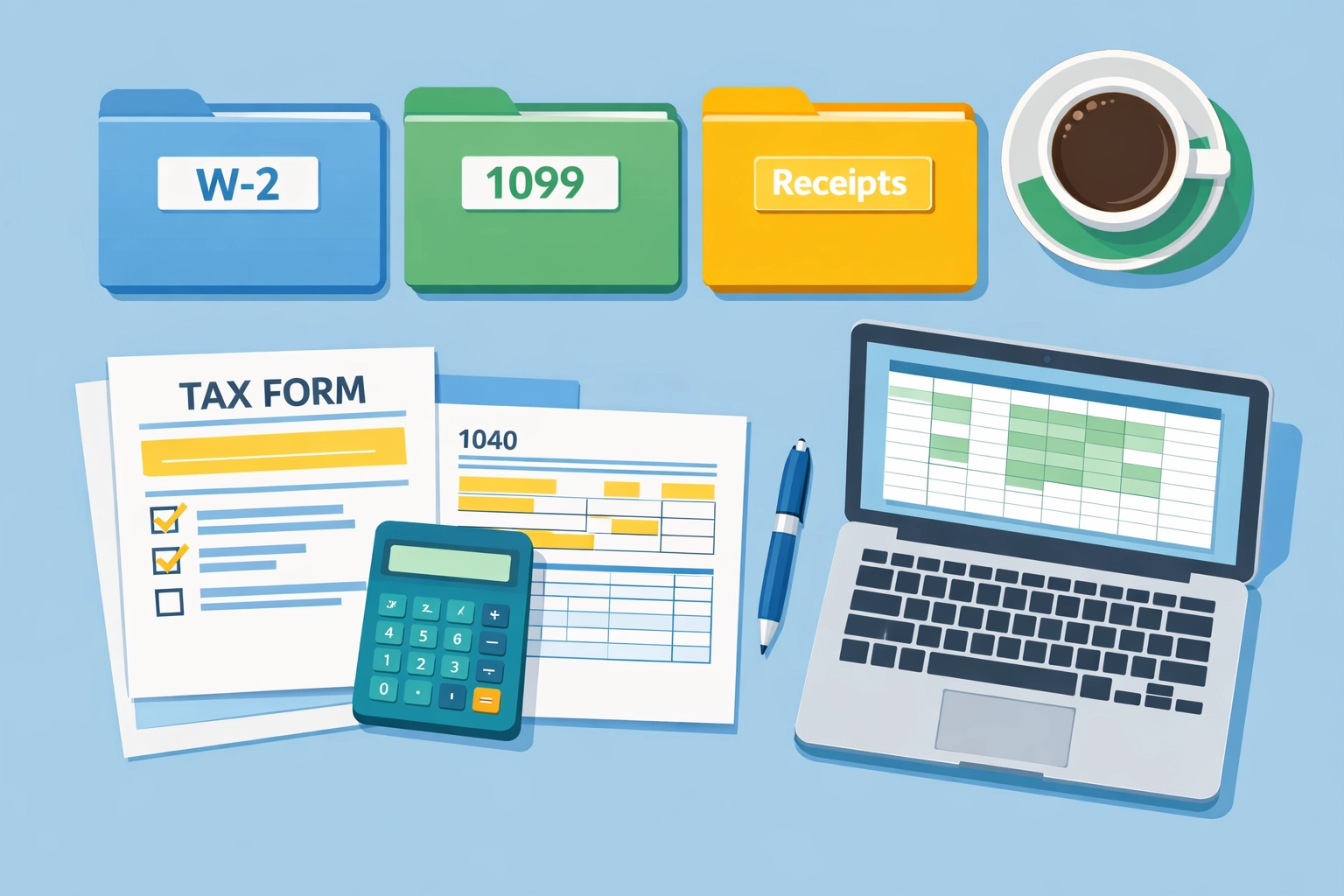
Essential documents to collect immediately:
- Form W-2 from all employers (wage and salary information)
- Form 1099-NEC for independent contractor income (deadline for receipt was February 2)
- Form 1099-INT for interest income from banks and financial institutions
- Form 1099-DIV for dividend income
- Form 1099-K if you received payments through third-party platforms exceeding $5,000
- Form 1098 for mortgage interest payments
- Form 1098-T for tuition and education expenses
- Records of charitable contributions including receipts for donations over $250
For New Haven residents, pay special attention to local tax credits and deductions. Connecticut offers specific credits for property tax payments, so keep your New Haven property tax receipts accessible. If you paid your February 2 property tax on time, that documentation can reduce your overall tax burden.
Create a physical or digital filing system this week. Use labeled folders or a cloud storage system with clear categories: Income, Deductions, Credits, Property Taxes, Healthcare, Business Expenses. This organization method saves hours during actual preparation and reduces the likelihood of mathematical errors or overlooked deductions.
Double-check that you received all expected forms. Employers and financial institutions must provide most tax documents by January 31, but some forms arrive later. If you're missing documents by this week, contact the issuing organization immediately.
2. Review Your Withholding Status and Adjust If Necessary
The February 17, 2026 deadline for W-4 withholding exemption renewal has passed. If you claimed exemption from federal income tax withholding and did not submit a new Form W-4 to your employer by that date, your employer will withhold taxes at the default rate starting with the next paycheck.
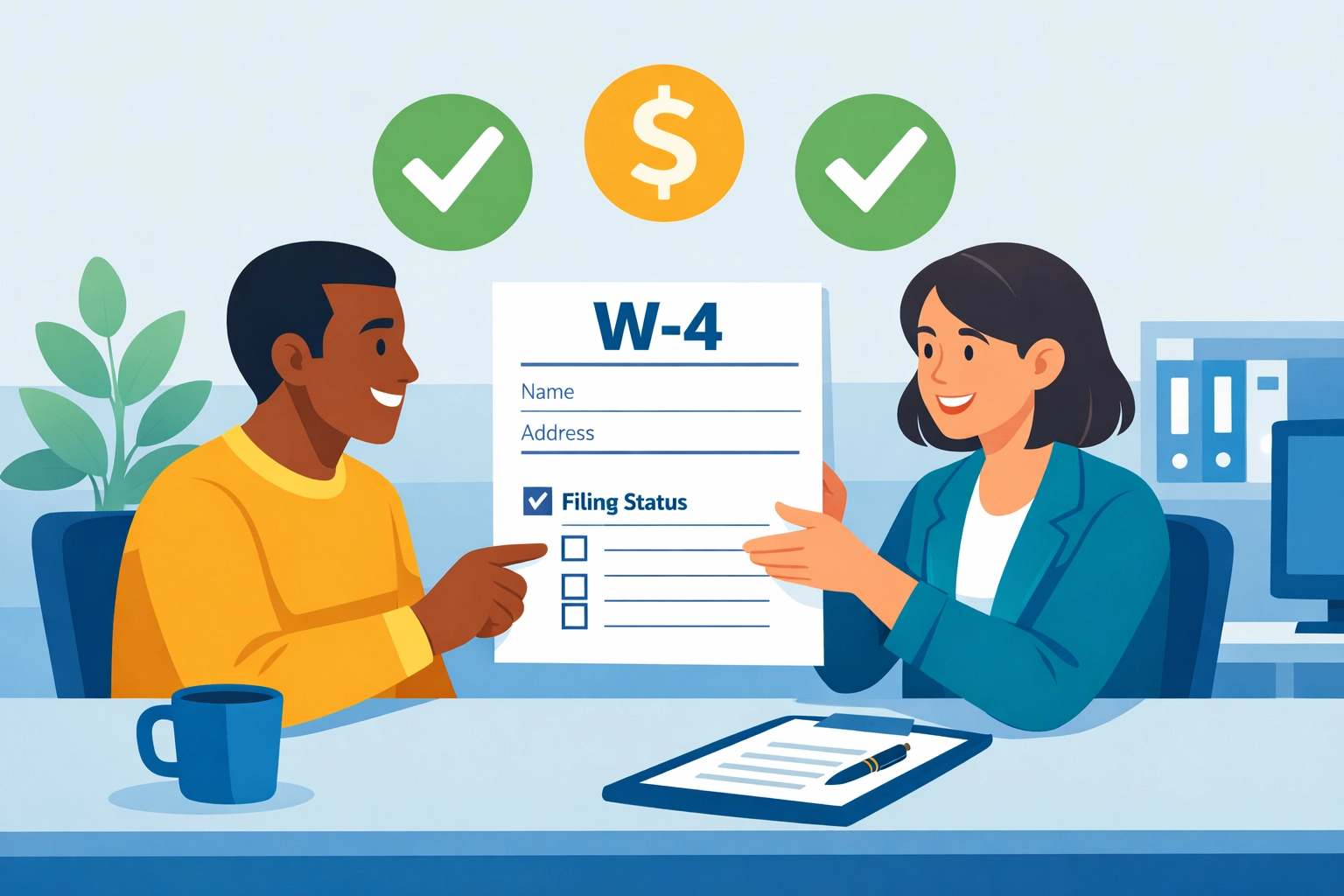
Take action this week to optimize your withholding:
Review your most recent pay stub. Compare the federal and Connecticut state tax withholding amounts to your expected tax liability for 2026. The IRS provides a Tax Withholding Estimator tool that helps calculate appropriate withholding based on your income, filing status, and anticipated deductions.
Submit a new Form W-4 to your employer if:
- You got married or divorced in 2025 or early 2026
- You had a child or gained a dependent
- You started a side business or freelance work
- You purchased a home and will claim mortgage interest
- Your income increased significantly
Connecticut requires a separate state withholding form (Form CT-W4) for state income tax. Adjust both forms to align your withholding with actual tax liability. Under-withholding can lead to penalties when you file. Over-withholding means you're giving the government an interest-free loan throughout the year.
For New Haven residents with multiple income sources, proper withholding becomes even more critical. If you work a W-2 job and have 1099 independent contractor income, you may need to increase withholding from your primary job to cover the tax liability from your self-employment income.
Calculate your 2026 estimated tax obligations this week. Self-employed individuals and those with substantial non-wage income must pay quarterly estimated taxes. The first 2026 quarterly payment is due April 15, 2026: the same date as your 2025 tax return. Use your 2025 return as a baseline to estimate 2026 obligations.
3. Address Missed Property Tax Deadline or Plan Quarterly Estimates
New Haven property taxes on the Grand List of 2024 became delinquent on February 3, 2026. If you missed the February 2 deadline, take immediate action this week to minimize penalties and protect your property tax deduction eligibility for your 2025 tax return.

If you missed the property tax deadline:
Contact the New Haven Tax Collector's Division this week at (203) 946-8280 or visit their office at 200 Orange Street. Delinquent property taxes accrue interest charges that increase your total payment obligation. The sooner you address the delinquency, the lower your total cost.
Ask about payment plan options. New Haven may offer installment arrangements for delinquent property taxes, allowing you to resolve the obligation without immediate full payment. Document all payment arrangements in writing.
For your 2025 federal and Connecticut state tax returns, you can still deduct property taxes paid during the 2025 tax year, even if you paid them late. However, the deduction applies to the tax year when you made the payment, not when the tax was due. If you pay your delinquent 2024 property taxes in 2026, that payment becomes deductible on your 2026 return (filed in 2027), not your 2025 return due April 15, 2026.
For self-employed New Haven residents and small business owners:
Calculate your first quarter 2026 estimated tax payment this week. The April 15 deadline applies to both your 2025 tax return AND your first quarter 2026 estimated payment. Failing to pay adequate estimated taxes can result in underpayment penalties.
Use Form 1040-ES for federal estimated taxes and Form CT-1040ES for Connecticut estimated taxes. Calculate estimated payments using one of these methods:
- 100% of prior year tax method: Pay 100% of your 2025 total tax liability in four equal quarterly installments (110% if your adjusted gross income exceeds $150,000)
- 90% of current year tax method: Pay 90% of your expected 2026 tax liability in four quarterly installments
Most tax professionals recommend the 100% prior year method for simplicity and safety. This approach provides a safe harbor from penalties regardless of how much your 2026 income increases.
Strategic Tax Planning for New Haven Filers
The week of February 23, 2026 represents the midpoint between early tax season deadlines and the April 15 filing deadline. Use this transition period to maximize your tax refund through strategic planning.
Connecticut-specific considerations for New Haven residents:
Review Connecticut's property tax credit, which provides relief for qualifying residents. If you're 65 or older, or if you're disabled and meet income requirements, you may qualify for additional credits. Connecticut also offers credits for certain energy-efficient home improvements made in 2025.
Business owners should verify 1099 compliance. If you paid contractors or vendors $600 or more in 2025, you should have filed Forms 1099-NEC by February 2, 2026. If you missed this deadline, file immediately to minimize penalties. The IRS assesses penalties for late filing of information returns, but timely filing: even if late: reduces those penalties.
Take Action This Week
Complete these three priorities by Friday, February 28, 2026:
- Organize all 2025 tax documents into a systematic filing structure
- Review and adjust your W-4 withholding for both federal and Connecticut state taxes
- Address missed property tax deadlines or calculate quarterly estimated tax obligations
Don't wait until April to address tax planning. The actions you take this week directly impact your refund amount and tax liability. New Haven filers face unique considerations with local property taxes and Connecticut state requirements that require attention now.
Need professional assistance with tax preparation in New Haven? Jose's Tax Service provides comprehensive tax planning and preparation services for individuals and small businesses. Contact us for personalized guidance on maximizing your tax refund and ensuring compliance with all federal, state, and local requirements.
Visit Jose's Tax Service or call our New Haven office to schedule a consultation. Our experienced tax professionals understand Connecticut tax law and local New Haven regulations, ensuring you receive every deduction and credit available.
Categories: News, Tax Planning
Keywords: tax planning, tax update, tax preparation new haven, maximize tax refund

Leave a Reply
You must be logged in to post a comment.