
Side Hustle Taxes: What New Haven's Freelancers Need to Know
New Haven, CT – February 4, 2026 – Freelancers, gig workers, and side hustlers face significant tax changes in 2026 that could increase their tax burden by thousands of dollars. Understanding these changes and implementing proper tax strategies is no longer optional: it's essential for financial survival.
All Gig Income Is Taxable: No Exceptions!
Report every dollar earned from your side hustle, regardless of amount. Even if you earned under $600 and didn't receive a 1099 form, you must report those earnings to the IRS. This applies to all income sources:
- Rideshare driving (Uber, Lyft)
- Freelance writing, design, or consulting
- Online platform sales (Etsy, eBay, Poshmark)
- Food delivery services (DoorDash, Grubhub)
- Vacation rental income (Airbnb, VRBO)
- Handmade crafts and creative work

Platform income from PayPal, Stripe, Uber, Airbnb, and Etsy will be automatically reported to the IRS in 2026. "Forgotten" income will be flagged immediately. The IRS receives copies of your 1099 forms before you do, so claiming ignorance is no longer a viable strategy.
Understanding Your Tax Forms
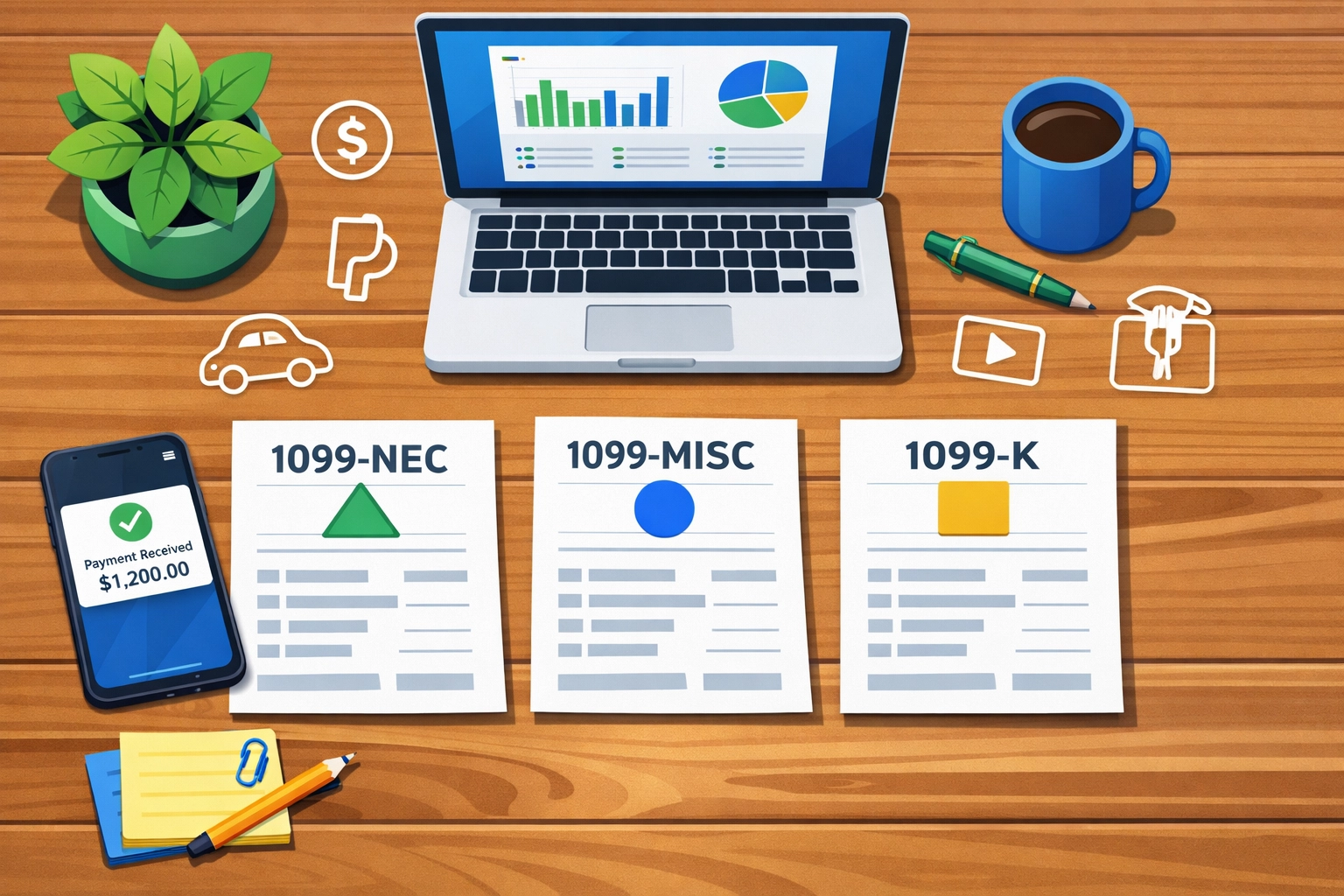
You will receive one or more of the following forms:
1099-NEC (Nonemployee Compensation) – Reports payments of $600 or more for services performed as an independent contractor.
1099-K (Third-Party Payment Processor) – Reports transactions processed through payment platforms like PayPal, Venmo, or Square.
1099-MISC (Miscellaneous Income) – Reports other types of income such as rent, prizes, or awards.
Each form reports different income types. You must reconcile all forms against your actual earnings when filing your return.
Set Aside 25-35% of Your Earnings Immediately!
Establish a separate savings account exclusively for taxes. Transfer 25-35% of every payment received into this account before spending anything. This percentage covers:
- Federal income tax (10-37% depending on bracket)
- State income tax (Connecticut's rates)
- Self-employment tax (15.3%)
- Local taxes where applicable
Freelance income rarely has taxes withheld automatically like W-2 employment. You are responsible for setting aside sufficient funds to cover your full tax liability at year-end.
Self-Employment Tax Hits Hard
Self-employment tax is 15.3% of your covered earnings. This breaks down into:
- Social Security: 12.4%
- Medicare: 2.9%
Unlike traditional employees who split these costs with their employer, freelancers pay the full amount as both employer and employee. However, you can deduct 50% of your self-employment tax payment from your taxable income, providing some relief.
Calculate self-employment tax on net earnings (gross income minus business expenses). The Social Security portion applies only to the first $168,600 of net earnings in 2026. Medicare tax applies to all net earnings with no cap.
Quarterly Estimated Tax Payments Are Required
If you expect to owe $1,000 or more in taxes, you must make quarterly estimated tax payments. Missing these payments triggers underpayment penalties and interest charges.
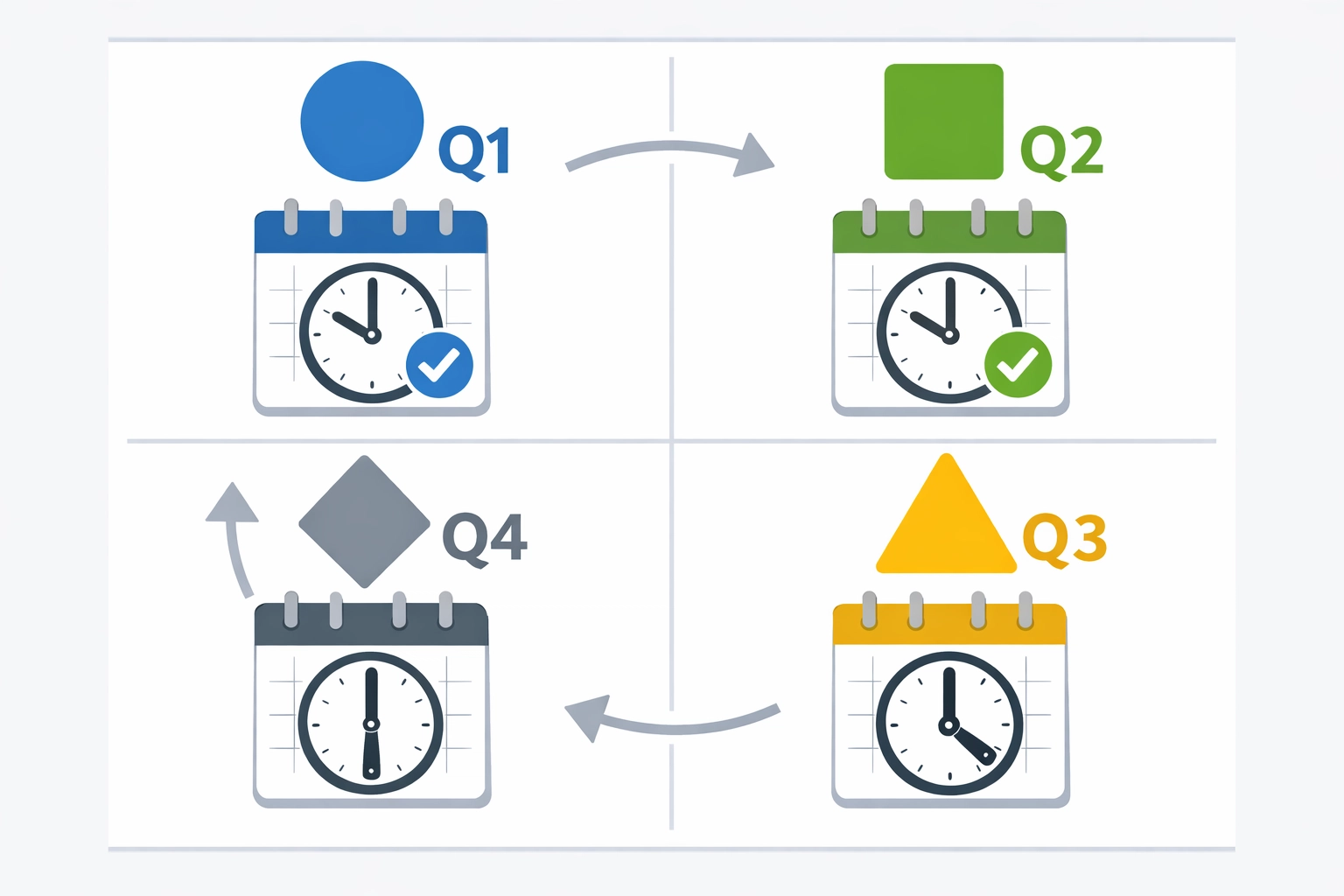
2026 Quarterly Tax Payment Deadlines:
- Q1 (January–March): April 15, 2026
- Q2 (April–June): June 16, 2026
- Q3 (July–September): September 15, 2026
- Q4 (October–December): January 15, 2027
Calculate your estimated payment using IRS Form 1040-ES. Base calculations on your expected annual income, deductions, and credits. Adjust quarterly payments if your income fluctuates significantly throughout the year.

2026 Tax Changes Impact New Haven Freelancers
Higher federal tax brackets and a reduced standard deduction mean freelancers face tax increases of $2,500-$4,500 on $95,000 net income (federal only). An additional $1,200-$3,000 in taxes results from the shrinking standard deduction.
The reduced standard deduction increases your taxable income dollar-for-dollar. For freelancers without substantial itemized deductions, this change directly increases tax liability.
The IRS is tightening deduction enforcement across home office deductions, business expenses, and write-offs. Freelancers without proper documentation will lose deductions entirely. Maintain detailed records with receipts, invoices, mileage logs, and expense categorization.
Claim the Section 199A Qualified Business Income Deduction!
The Section 199A deduction provides a 20% deduction on qualified business income (QBI). This deduction is now permanent under the One Big Beautiful Bill Act (OBBBA), though rules have tightened for 2026.
Eligible freelancers can deduct 20% of their qualified business income, reducing taxable income significantly. Income and type of business determine eligibility. Complex phase-out rules apply for higher earners and specified service trades or businesses (SSTBs).
Don't leave this money on the table. Work with a tax professional to optimize your QBI strategy and ensure you claim the maximum allowable deduction.
Business Expense Deductions You Can Claim
Track and document every business expense throughout the year. Common deductible expenses include:
- Office supplies and equipment
- Software subscriptions and technology
- Business mileage (67 cents per mile in 2026)
- Internet and phone expenses (business portion)
- Professional development and education
- Marketing and advertising costs
- Professional services (legal, accounting)
- Business insurance premiums
- Home office expenses (if qualified)
Home office deductions still exist but face stricter enforcement. You must use a specific area of your home regularly and exclusively for business. Measure your home office square footage accurately and calculate the business-use percentage of your home expenses.
Keep receipts, bank statements, and credit card statements organized throughout the year. Digital expense tracking apps simplify record-keeping and ensure you don't miss deductible expenses.
Critical Deadlines for New Haven Freelancers
April 15, 2026 – Main federal tax filing deadline and Q1 2026 estimated tax payment due date.
January 15, 2026 – Q4 2025 estimated tax payment was due. If missed, file penalties may apply.
February 2, 2026 – Deadline for businesses to issue 1099-NEC forms to contractors.
The New Haven Tax Collector charges interest on unpaid taxes from the original due date of January 1, 2026. File and pay on time to avoid additional penalties and interest charges.
How Jose's Tax Service Supports New Haven Freelancers
Navigating freelance taxes requires specialized knowledge and attention to detail. Jose's Tax Service provides personalized care for gig economy workers, freelancers, and small business owners throughout New Haven.
Our team stays current on all 2026 tax law changes affecting self-employed individuals. We maximize your deductions, ensure proper quarterly payment calculations, and handle all filing requirements accurately and on time.
$0 upfront payment means you can access professional tax preparation services without immediate out-of-pocket costs. We understand the cash flow challenges freelancers face and structure our services accordingly.
Schedule your consultation today at https://josestaxservice.com and let us handle your freelance tax complexity while you focus on growing your business.
Action Steps for 2026
Follow these steps to stay compliant and minimize your tax burden:
- Report all income from every source, regardless of amount or whether you received a 1099 form.
- Set aside 25-35% of every payment immediately in a separate tax savings account.
- Make quarterly estimated tax payments by the deadlines listed above.
- Track every business expense with proper documentation throughout the year.
- Claim the Section 199A deduction if eligible for your business type and income level.
- File your return on time to avoid penalties and interest charges.
Freelance success requires more than great skills in your craft: it demands proper tax planning and compliance. Take control of your tax situation now to avoid surprises and penalties later.

[…] expertise can mean the difference between owing money and getting a refund. Check out our guide on side hustle taxes for more […]