
SALT Cap Just Jumped to $40,000: Should New Haven Homeowners Itemize in 2026?
Big news for Connecticut homeowners: the State and Local Tax (SALT) deduction cap just climbed to $40,400 for tax year 2026. That's a 1% bump from last year's $40,000 limit, and it's making a lot of New Haven property owners rethink their tax strategy.
If you've been taking the standard deduction for the past few years because the old $10,000 SALT cap killed your itemizing game, it's time to run the numbers again. This change could put real money back in your pocket: but only if you know how to work it.
What Actually Changed With the SALT Cap?
Here's the breakdown: For tax year 2026, the SALT deduction cap is $40,400 for married couples filing jointly and single filers. If you're married filing separately, your cap is $20,200.
This cap covers the total amount you can deduct for:
- State income taxes
- Local property taxes
- State and local sales taxes (if you choose this over income tax)
The cap will continue increasing by 1% each year through 2029. After that? It drops back down to $10,000 in 2030 unless Congress changes the rules again.
New Haven Property Taxes: The Real Deal
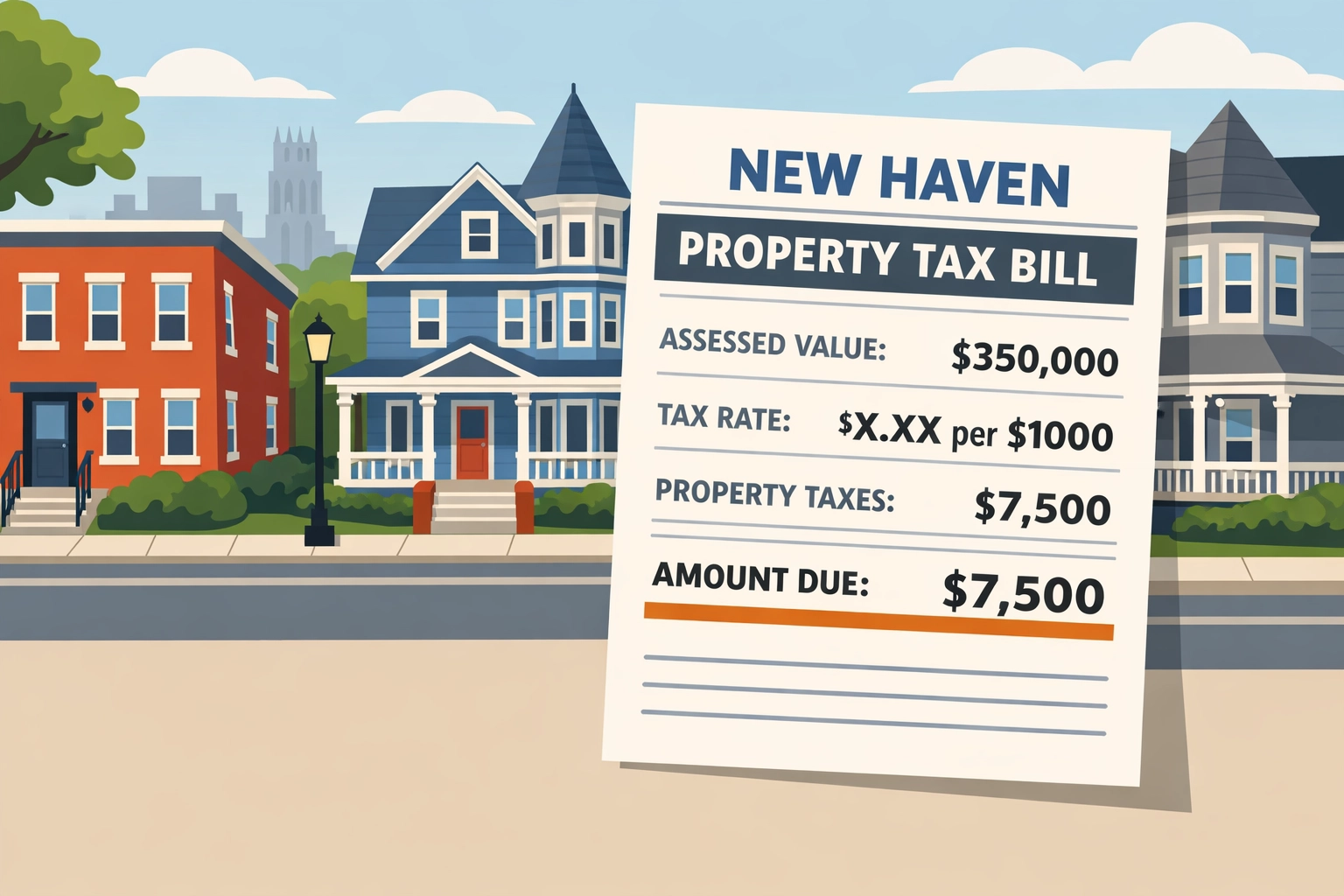
Let's talk about what this means for New Haven homeowners specifically. Connecticut has some of the highest property taxes in the country, and New Haven is no exception. The average property tax bill in New Haven hovers around $6,000 to $8,000 annually, but many homeowners pay significantly more depending on their property value and location.
Add in Connecticut state income tax: which ranges from 3% to 6.99% depending on your income: and you can see how quickly those numbers add up. For many New Haven residents, you're easily hitting $15,000 to $25,000 in combined state and local taxes.
That's exactly why this increased SALT cap matters. You're no longer stuck leaving thousands of dollars on the table.
The Income Phaseout You Need to Know About!
Before you get too excited, there's a catch. If your Modified Adjusted Gross Income (MAGI) exceeds $505,000 in 2026 ($252,500 for married filing separately), your SALT cap gets reduced.
Here's how it works: Your cap decreases by 30% of the amount your income exceeds the threshold. The good news? Your cap can never drop below $10,000, regardless of how high your income goes.
Example calculation:
If your MAGI is $540,000:
- Excess over threshold: $540,000 – $505,000 = $35,000
- Reduction: $35,000 × 30% = $10,500
- Your SALT cap: $40,400 – $10,500 = $29,900
You'd still get to deduct $29,900 instead of being stuck at the old $10,000 cap. That's a significant difference when you're writing that check to Uncle Sam.
Should You Itemize? Run This Quick Test
Itemizing only makes sense if your total itemized deductions exceed the standard deduction. While the IRS hasn't officially announced the 2026 standard deduction amounts yet, they typically increase slightly each year for inflation.
Calculate your potential itemized deductions:
- SALT taxes (up to $40,400): Add your Connecticut state income tax and New Haven property taxes
- Mortgage interest: Include interest paid on your primary residence and potentially a second home
- Charitable contributions: Cash donations, donated goods, and mileage for volunteer work
- Medical expenses: Only the amount exceeding 7.5% of your AGI
- Other qualified expenses: Investment interest, casualty losses, gambling losses (up to winnings)
Add these up. If the total exceeds your standard deduction, itemizing saves you money.
Real Scenarios for New Haven Homeowners
Scenario 1: The Young Professional
You're single, earning $95,000 annually. You own a condo in East Rock with $5,500 in annual property taxes and pay about $7,200 in Connecticut state income tax. Your mortgage interest is $8,500, and you donated $2,000 to charity.
Total itemized deductions: $23,200
If the standard deduction for single filers in 2026 is around $15,000 (estimated), itemizing saves you money on roughly $8,200 in additional deductions.
Scenario 2: The Family Homeowner
You're married filing jointly, household income of $185,000. You own a home in Westville with $9,800 in property taxes and pay about $14,000 in Connecticut state income tax. Mortgage interest is $16,500, and you gave $4,500 to charity.
Total itemized deductions: $44,800
Even with an estimated standard deduction around $30,000 for married couples, you're coming out ahead by about $14,800 in deductions.
Connecticut-Specific Considerations
Connecticut doesn't allow you to itemize on your state return unless you itemize on your federal return. This means your federal itemization decision has a direct impact on your state tax bill too.
Connecticut also has its own phase-out rules for higher earners. If your federal AGI exceeds certain thresholds, your Connecticut itemized deductions may be reduced. Factor this into your calculations.
Action Steps: What You Should Do Right Now
Step 1: Gather your tax documents from 2025. Review what you actually paid in state income tax, property taxes, mortgage interest, and charitable contributions.
Step 2: Estimate your 2026 figures. Will your income change? Are your property taxes increasing? Do you expect to donate more or less to charity?
Step 3: Run the numbers both ways. Calculate your total itemized deductions and compare them to the standard deduction.
Step 4: Consider timing strategies. If you're close to the threshold, you may want to prepay property taxes in December or bunch charitable contributions into one year.
Step 5: Consult with a tax professional. The rules are complex, and every situation is different. A qualified tax preparer can help you maximize your deductions legally.
The 2030 Cliff: Plan Ahead!
Don't forget: this increased SALT cap expires after 2029. Starting in 2030, the cap drops back to $10,000 unless Congress extends or modifies the provision.
If you're making long-term financial decisions: like buying a more expensive home or considering a major renovation: factor in how this change will affect your tax situation in just four years.
Bottom Line for New Haven Homeowners
The increased SALT cap to $40,400 is excellent news for Connecticut homeowners who've been stuck with limited deductions. If you own property in New Haven and pay Connecticut state income tax, there's a strong chance itemizing will save you money in 2026.
Don't leave money on the table. Run the numbers, keep good records throughout the year, and work with a tax professional who understands Connecticut tax law and how it interacts with federal regulations.
The tax code changes constantly, and what worked last year might not be the best strategy this year. Stay informed, stay proactive, and make sure you're taking advantage of every deduction you're entitled to claim.
Need help determining whether you should itemize in 2026? Visit Jose's Tax Service to schedule a consultation. We'll review your specific situation and help you develop a tax strategy that maximizes your refund and minimizes your stress.

Leave a Reply
You must be logged in to post a comment.