
Retirement and Taxes: Navigating 2026 Contribution Rules in Connecticut
New Haven, CT , January 2026 , If you're a Connecticut resident thinking about retirement savings this year, there's a lot to unpack. Between new state requirements, updated federal contribution limits, and some pretty significant changes to catch-up contributions, 2026 is shaping up to be a big year for retirement planning.
Whether you're an employee wondering what's getting pulled from your paycheck, a small business owner trying to stay compliant, or someone just trying to max out their retirement savings, this guide breaks down everything you need to know.
Let's get into it.
What Is MyCTSavings and Why Should You Care?
If you work for a Connecticut employer with five or more employees, you've probably heard about MyCTSavings by now. It's the state's answer to the retirement savings gap , a state-run IRA program designed to help workers who don't have access to employer-sponsored retirement plans.
Here's the deal: if your employer doesn't offer a 401(k), 403(b), SEP, or SIMPLE plan, they're required to enroll you in MyCTSavings. And starting in 2026, the state is actually enforcing this with penalties.
Key features of the MyCTSavings program:
- Default contribution rate: 5% of your gross pay (this jumped up from 3% as of July 1, 2025)
- Automatic annual increases: Your contribution goes up by 1% each year until it hits 10%
- Account type: Roth IRA , meaning your contributions are after-tax, but withdrawals in retirement are tax-free
- Eligibility: You must be at least 19 years old with five or more months of employment
One thing to note: there's no employer match with MyCTSavings. Your employer facilitates the payroll deductions, but they're not kicking in any extra money. Still, it's a solid option if you don't have access to other retirement plans.

2026 Enforcement Is Here: Penalties for Noncompliant Employers!
Connecticut has been rolling out MyCTSavings gradually, but 2026 marks the year when penalties kick in for employers who haven't gotten on board.
If your business has five or more employees and you haven't either enrolled them in MyCTSavings or set up an equivalent private retirement plan, you could be looking at annual fines under a three-strike penalty system:
| Employer Size | Maximum Annual Penalty |
|---|---|
| Small (5–24 employees) | $500 |
| Medium (25–99 employees) | $1,000 |
| Large (100+ employees) | $1,500 |
Before penalties are assessed, employers receive compliance notifications , so you do get a heads-up. But don't wait for that letter to show up. If you're a New Haven business owner and you're not sure whether you're compliant, now's the time to figure it out.
Reminder: Employers who already maintain qualifying retirement plans , like 401(k)s, 403(b)s, SEPs, or SIMPLE plans , are exempt from MyCTSavings requirements.
2026 Federal IRS Contribution Limits: What Can You Save?
Now let's talk about the numbers that really matter: how much can you actually put away for retirement this year?
The IRS has bumped up contribution limits for 2026, which is good news if you're trying to maximize your tax-advantaged savings.
2026 contribution limits at a glance:
| Account Type | 2026 Limit |
|---|---|
| 401(k), 403(b), 457 plans | $24,500 |
| Traditional or Roth IRA | $7,500 |
| Catch-up contributions (age 50+) | $8,000 |
| Enhanced catch-up (age 60–63, SECURE 2.0) | $11,250 |
That last line is a big one. Under the SECURE 2.0 Act, if you're between 60 and 63 years old and your employer's plan has adopted the enhanced catch-up provisions, you can contribute an additional $11,250 on top of the standard limit. That means your total contribution could reach $35,750 for the year.
That's a serious opportunity to turbocharge your retirement savings right before you hit the finish line.
Traditional IRA vs. Roth IRA: Which Makes Sense for You?
When you're deciding where to put your retirement dollars, the traditional vs. Roth question always comes up. Here's a quick breakdown:
Traditional IRA:
- Contributions may be tax-deductible (depending on your income and whether you have a workplace plan)
- You pay taxes when you withdraw in retirement
- Required minimum distributions (RMDs) start at age 73
Roth IRA:
- Contributions are made with after-tax dollars
- Qualified withdrawals in retirement are tax-free
- No RMDs during your lifetime
For New Haven residents in their peak earning years, a traditional IRA might offer immediate tax relief. But if you expect to be in a higher tax bracket later : or you want tax-free income in retirement : a Roth IRA can be a smart play.
Pro tip: You can contribute to both a traditional and Roth IRA in the same year, as long as your combined contributions don't exceed $7,500 (or $15,500 if you're 50+ and eligible for catch-up).
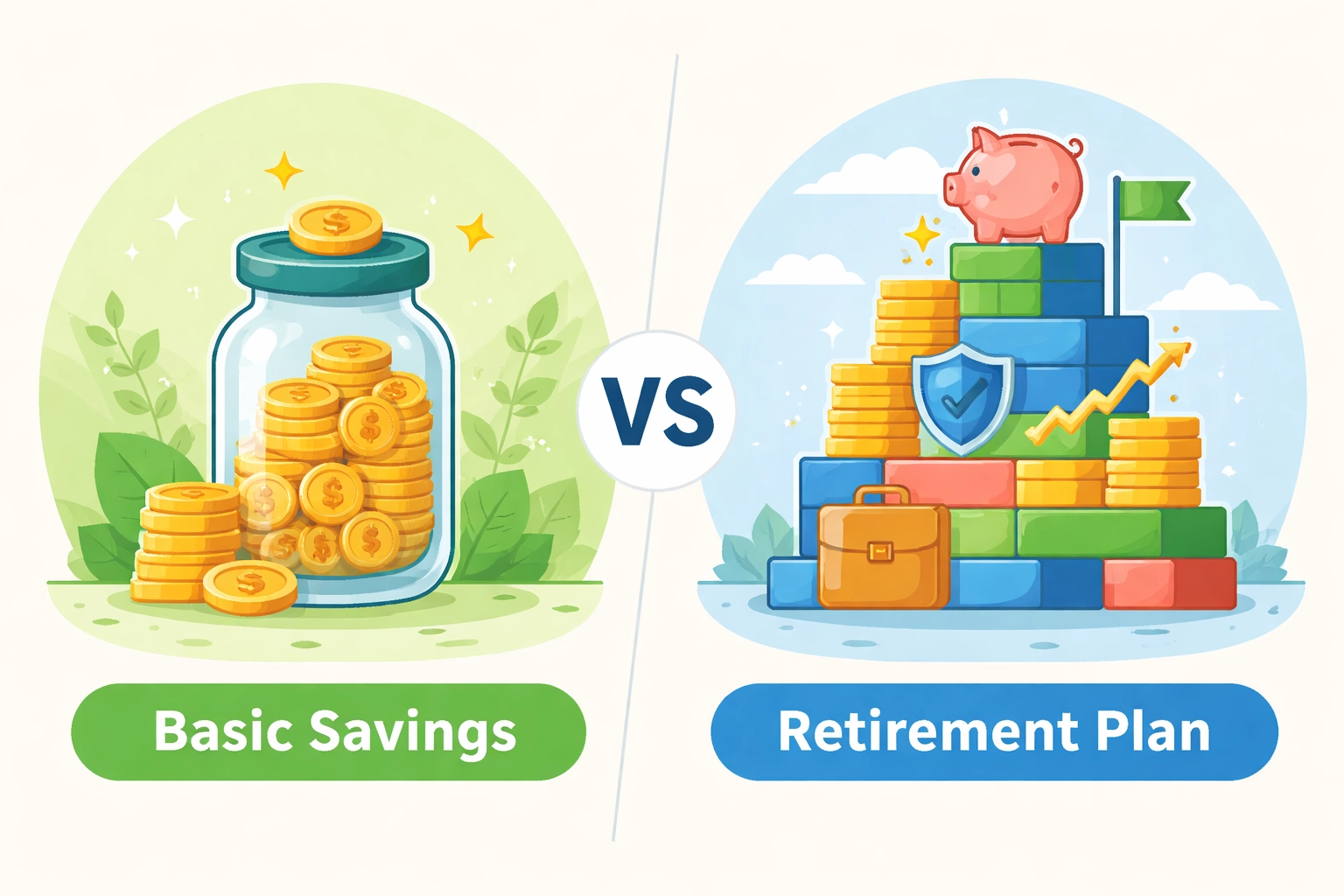
How MyCTSavings Compares to Employer-Sponsored Plans
If you have a choice between MyCTSavings and an employer-sponsored 401(k), here's what you should consider:
MyCTSavings advantages:
- Automatic enrollment : great for people who might not otherwise save
- No action required from employees
- Portable : the account stays with you if you change jobs
Employer-sponsored 401(k) advantages:
- Higher contribution limits ($24,500 vs. $7,500)
- Potential employer matching contributions
- More investment options in many cases
If your employer offers a 401(k) with a match, that's almost always the better choice. An employer match is essentially free money : you should take full advantage of it before contributing elsewhere.
But if you don't have access to a workplace plan, MyCTSavings is a solid default that gets you saving automatically.
Planning Considerations for New Haven Residents
Connecticut residents have a unique opportunity in 2026. You've got access to both federal retirement accounts and the state MyCTSavings program, which means you have options.
Here are some things to think about as you plan:
Max out employer matching first : If your employer matches 401(k) contributions, contribute at least enough to get the full match.
Consider your tax situation : If you're in a high tax bracket now, traditional contributions can reduce your taxable income. If you expect higher taxes later, Roth contributions may be better.
Don't forget about IRAs : Even if you have a 401(k), you can still contribute to an IRA for additional tax-advantaged savings.
Check your withholdings : Retirement contributions affect your take-home pay and your tax liability. Make sure your W-4 is up to date.
Review your investments : It's not just about how much you save, but how you invest. Make sure your portfolio matches your risk tolerance and timeline.
Self-Employed? You Have Options Too!
If you're self-employed or run a small business in New Haven, you're not limited to IRAs. You can set up your own retirement plan with higher contribution limits:
- SEP IRA: Contribute up to 25% of net self-employment income (up to $70,000 in 2026)
- Solo 401(k): Make both employee and employer contributions, potentially saving even more
- SIMPLE IRA: Good for small businesses with employees : lower contribution limits but easier to administer
These plans can significantly reduce your taxable income while building your retirement nest egg.
Let Jose's Tax Service Help You Plan!
Retirement planning and taxes go hand in hand. The decisions you make about contributions this year can affect your tax bill, your refund, and your long-term financial security.
At Jose's Tax Service, we offer personalized tax planning to help New Haven residents and small business owners make the most of their retirement savings. Whether you're trying to figure out the best account type, maximize your deductions, or ensure your business is compliant with Connecticut's MyCTSavings requirements, we're here to help.
Don't leave money on the table. Schedule a consultation today and let's build a tax strategy that works for your retirement goals.
Key Deadlines to Remember:
- April 15, 2026: Deadline to make 2025 IRA contributions
- December 31, 2026: Deadline to make 2026 401(k) contributions
- April 15, 2027: Deadline to make 2026 IRA contributions
Plan ahead, save smart, and let's make 2026 a great year for your retirement.

Leave a Reply
You must be logged in to post a comment.