
Maximize Your 2026 Refund: 5 Smart Moves to Make Before April 15 (That Your Tax Pro Wishes You Knew)
NEW HAVEN, CT : February 17, 2026 : The April 15 deadline is approaching fast. If you want to maximize your tax refund this year, now is the time to act. The IRS has signaled that 2026 could bring one of the strongest refund seasons in years, but only if you take advantage of every credit, deduction, and strategy available to you.
Most taxpayers leave money on the table: not because they're trying to, but because they don't know what to claim. As a concierge tax pro serving New Haven families and small business owners, I see this every season. The difference between a modest refund and a substantial one often comes down to five key moves.
Here's what you need to do before April 15 to get every dollar you deserve.
Move #1: Prioritize Tax Credits Over Deductions!
Tax credits reduce your tax bill dollar-for-dollar. Deductions only reduce your taxable income. That distinction matters more than most people realize.
Example: A $1,000 tax credit cuts your tax bill by exactly $1,000. A $1,000 deduction might save you $220 if you're in the 22% tax bracket. Credits win every time.

Common credits you may qualify for in 2026:
- Child Tax Credit : Up to $2,000 per qualifying child under 17
- Earned Income Tax Credit (EITC) : For low- to moderate-income workers (can be worth over $7,000 for families)
- Child and Dependent Care Credit : Up to $3,000 for one dependent, $6,000 for two or more
- American Opportunity Tax Credit : Up to $2,500 per student for undergraduate tuition
- Lifetime Learning Credit : Up to $2,000 for continuing education expenses
Action Step: Review your eligibility for these credits before filing. If you're unsure which ones apply to you, schedule a virtual or in-person appointment with a tax preparation New Haven professional. At Jose's Tax Service, we offer $0 upfront consultations to help you identify every credit you qualify for.
Move #2: Max Out Your Retirement and HSA Contributions Before the Deadline!
You have until April 15, 2026 to contribute to your 2025 traditional IRA or Health Savings Account (HSA). These contributions directly reduce your taxable income and can significantly boost your refund.
2025 Contribution Limits:
- Traditional IRA: $7,000 ($8,000 if you're 50 or older)
- HSA: $4,150 (individual), $8,300 (family), plus $1,000 catch-up if 55+
If you haven't maxed out your contributions yet, you still have time. Even a last-minute $3,000 IRA contribution can save you $660 in taxes if you're in the 22% bracket.
Pro Tip: HSAs offer triple tax benefits: contributions are deductible, growth is tax-free, and withdrawals for qualified medical expenses are tax-free. If you have a high-deductible health plan, an HSA should be part of your strategy to maximize tax refund potential.

Action Step: Contact your IRA or HSA custodian immediately. Make contributions before April 15 and designate them for the 2025 tax year. Your custodian will provide Form 5498 for your records.
Move #3: Decide Whether to Itemize or Take the Standard Deduction!
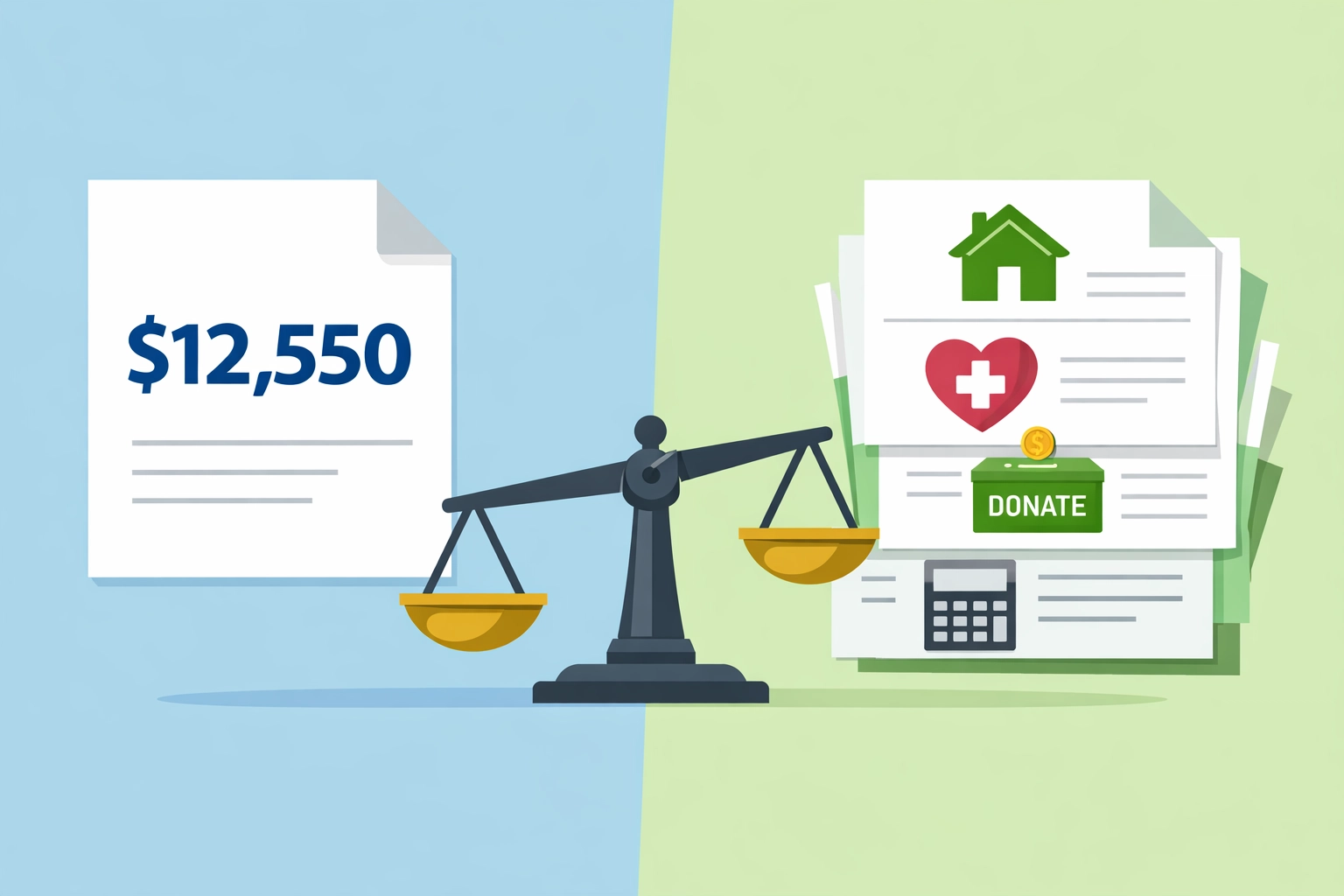
The standard deduction for 2025 is $14,600 (single) or $29,200 (married filing jointly). But if your itemized deductions exceed these amounts, itemizing will save you more.
Common Itemized Deductions for 2026:
- Mortgage Interest : On loans up to $750,000
- State and Local Taxes (SALT) : Increased cap for 2026 allows higher deductions than previous years
- Charitable Contributions : Cash donations, property, vehicles
- Medical Expenses : Only amounts exceeding 7.5% of your adjusted gross income (AGI)
The SALT cap increase in 2026 is a game-changer for New Haven taxpayers, especially homeowners with high property taxes and state income tax obligations. If your combined state income tax and property tax previously hit the old cap, you may now deduct significantly more.
Action Step: Add up your potential itemized deductions. If they exceed the standard deduction, itemize. If not, take the standard deduction. Run both scenarios or consult a concierge tax pro to determine which approach maximizes your refund.
Move #4: Time Your Income and Expenses Strategically!
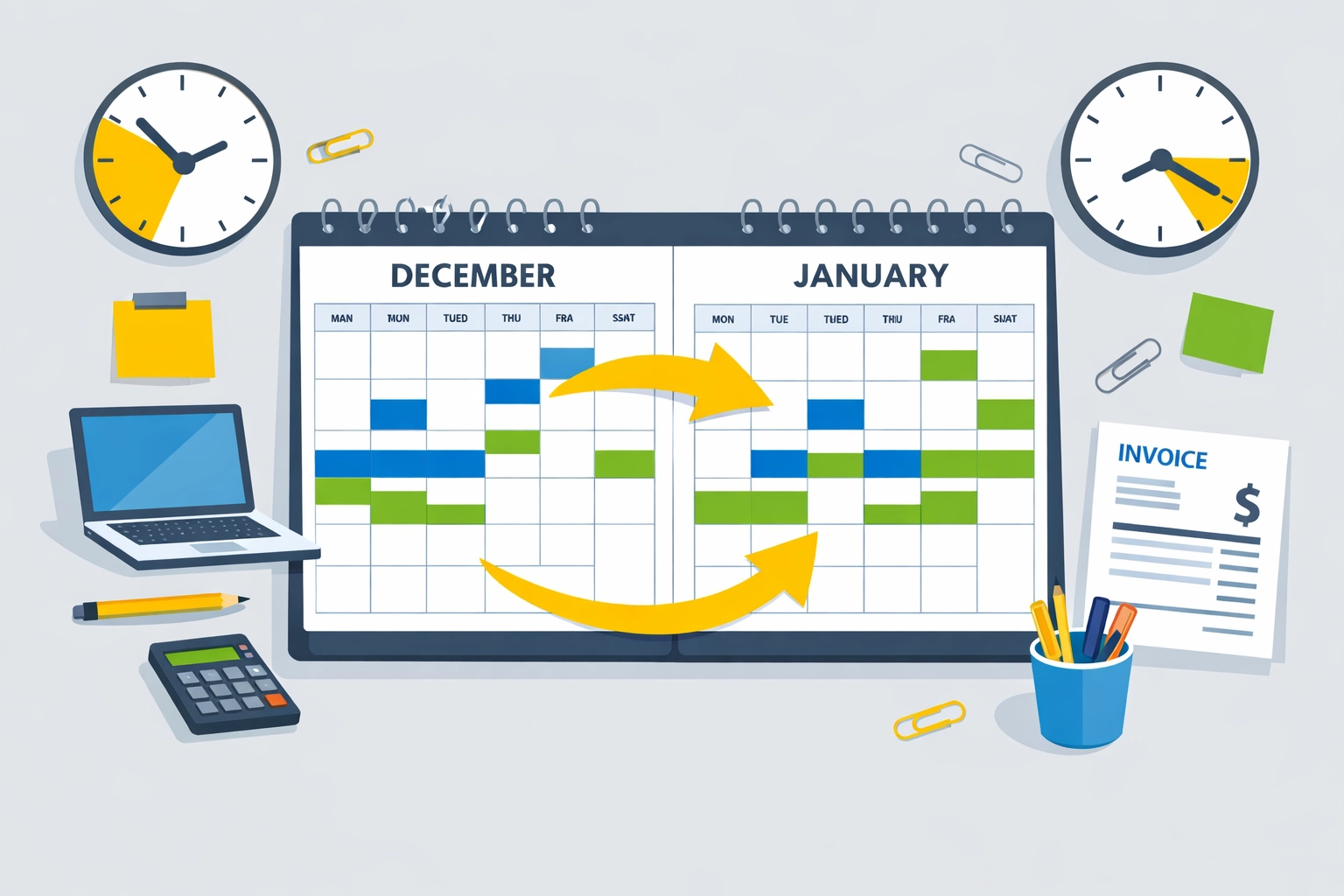
If you're self-employed, run a side business, or have control over when you receive income, timing matters. The goal is to defer income into 2027 if it pushes you into a higher bracket, and accelerate deductible expenses into 2026.
Income Timing Strategies:
- Delay sending invoices until after December 31, 2026
- Defer year-end bonuses into January 2027
- Hold off on distributions from investment accounts
Expense Acceleration Strategies:
- Purchase office equipment, software, or supplies before year-end
- Prepay business insurance premiums
- Make estimated tax payments early
- Pay deductible professional fees in December
Warning: These strategies only work if properly documented and comply with IRS rules. Improper income deferral or expense manipulation can trigger audits and penalties.
Action Step: Review your income and expense schedule before December 31, 2026. If you're unsure whether a strategy applies to your situation, schedule a consultation. At Jose's Tax Service, we help New Haven small business owners and freelancers navigate these decisions without risk.
Move #5: Claim All Work-Related and Dependent Credits!
New rules in 2026 make it easier to claim deductions for tips, overtime, vehicle expenses, and dependent care. Many taxpayers miss these entirely.
Tips and Overtime: If you earn tip income or receive overtime pay, ensure your employer accurately reports these amounts on your W-2. Request documentation if necessary. These earnings may affect your EITC eligibility and should be reported correctly.
Vehicle Expenses: If you use your car for business (not commuting), track your mileage. The standard mileage rate for 2025 is 67 cents per mile. A delivery driver logging 10,000 business miles can deduct $6,700.
Dependent Care: If you pay for childcare or adult dependent care so you can work, you may qualify for the Dependent Care Credit. Keep receipts and provider tax identification numbers (TINs).
Action Step: Organize your records now. Create folders for:
- W-2s and 1099 forms
- Mileage logs
- Childcare receipts and provider information
- Bank statements showing deductible expenses
- Charitable donation receipts
Missing documentation can delay your refund by weeks or months. The IRS will reject incomplete returns.
Don't Leave Money on the Table: Get Help From a Tax Pro!
The difference between filing on your own and working with a concierge tax pro can be worth hundreds: or thousands: of dollars. Tax software doesn't ask the right questions. It can't identify strategies you're not aware of. And it won't catch mistakes before the IRS does.
At Jose's Tax Service, we specialize in helping New Haven families and small business owners maximize their refunds legally and efficiently. We offer both virtual and in-person appointments with $0 upfront, so you can get expert guidance without risk.
Here's what you get when you work with us:
- Comprehensive review of all eligible credits and deductions
- Strategic tax planning to reduce your 2026 liability
- Accurate filing with guaranteed IRS compliance
- Fast refund processing with direct deposit
- Year-round support if the IRS has questions
Action Step: Don't wait until April 14 to figure out your taxes. Schedule your appointment today at josestaxservice.com or call our New Haven office. The sooner you start, the bigger your refund can be.
Final Reminder: April 15 is the Hard Deadline!
If you miss the April 15 filing deadline without requesting an extension, you may face:
- Failure-to-file penalty : 5% of unpaid taxes per month (up to 25%)
- Failure-to-pay penalty : 0.5% of unpaid taxes per month
- Interest charges : Compounding daily on unpaid balances
Even if you file an extension (Form 4868), you must still pay any taxes owed by April 15 to avoid penalties.
Action Step: Mark your calendar. Gather your documents. Take action on these five moves before the deadline. If you need help, reach out now: not on April 14.
Ready to maximize your 2026 refund? Contact Jose's Tax Service in New Haven for your tax preparation New Haven needs. Virtual and in-person appointments available. $0 upfront. Let's get you every dollar you deserve.

Leave a Reply
You must be logged in to post a comment.