
Estimated Taxes 101: How New Haven Freelancers Can Avoid the 2026 IRS Penalty Panic
New Haven, CT – February 13, 2026 – If you're a freelancer, contractor, or self-employed professional in New Haven, listen up. The IRS doesn't wait until April to collect your taxes. Miss your quarterly estimated tax payments in 2026, and you'll face penalties that can seriously eat into your hard-earned income.
The good news? Understanding the rules and staying ahead of the deadlines can save you hundreds: or even thousands: of dollars this year.
Who Must Pay Estimated Taxes?
Here's the deal: the IRS operates on a pay-as-you-go system. When you work a traditional W-2 job, your employer automatically withholds taxes from every paycheck. But when you're self-employed, that responsibility falls entirely on you.
You must make estimated tax payments if you expect to owe $1,000 or more when you file your 2026 tax return. This threshold applies to most freelancers, gig workers, independent contractors, and small business owners in the New Haven area.
Even if you have a part-time W-2 job alongside your freelance work, you may still need to make estimated payments if your withholding doesn't cover your full tax liability.
The 2026 Quarterly Payment Schedule
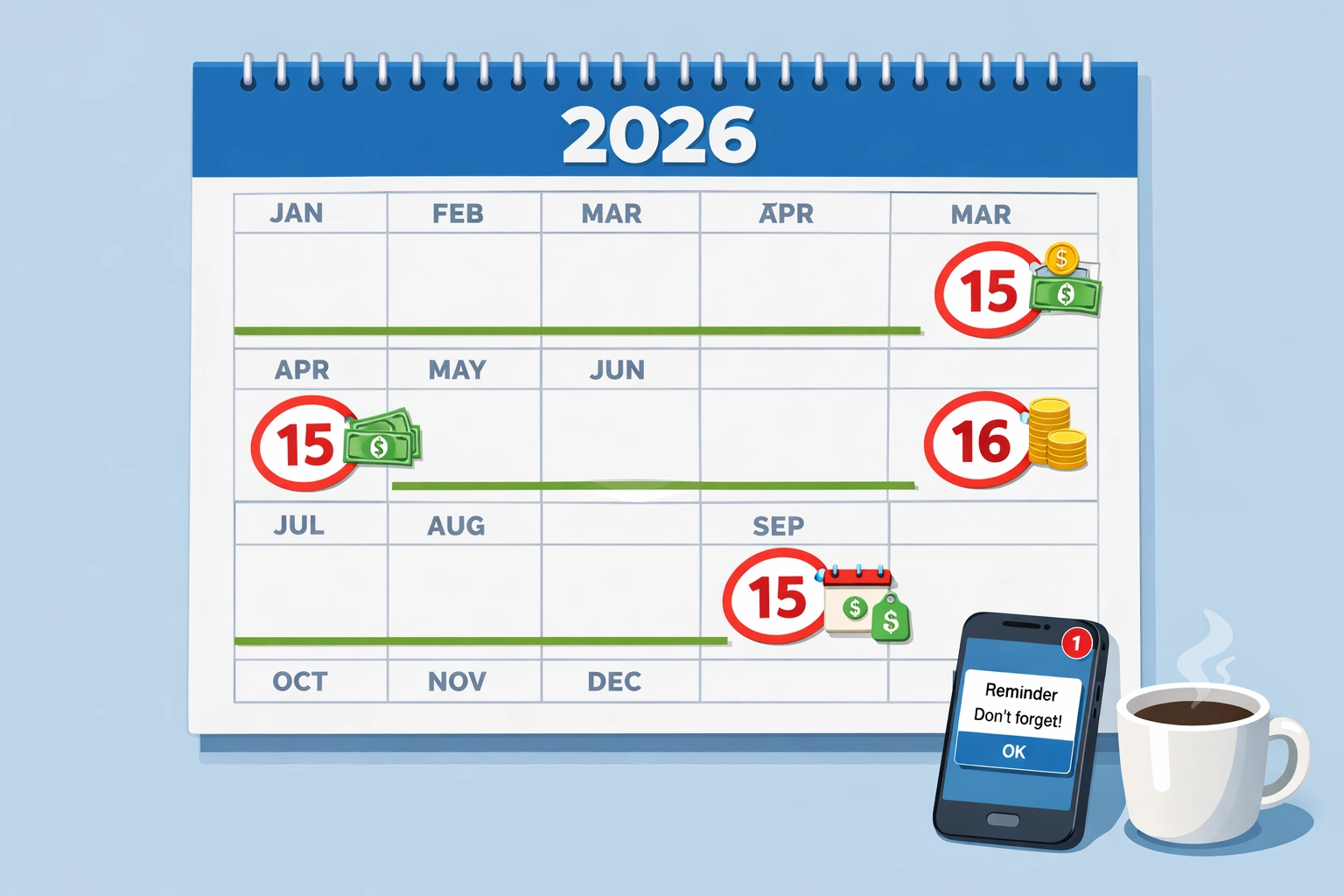
Mark these dates on your calendar right now. Missing even one deadline can trigger penalties:
- April 15, 2026 – First quarter payment (covering January 1 – March 31)
- June 16, 2026 – Second quarter payment (covering April 1 – May 31)
- September 15, 2026 – Third quarter payment (covering June 1 – August 31)
- January 15, 2027 – Fourth quarter payment (covering September 1 – December 31)
Note that the fourth quarter 2025 payment deadline (January 15, 2026) has already passed. If you missed that payment, address it immediately to minimize penalties.
Understanding the IRS Penalty Structure
The IRS doesn't mess around when it comes to estimated taxes. The underpayment penalty is 0.5% per month on the amount you should have paid, capped at 25% of your total owed tax.
Here's what makes this particularly painful: penalties are calculated separately for each quarter. You can't just skip the April payment and make it up in June without consequences. The IRS calculates what you should have paid each quarter based on your annual income, and if you fall short, you'll owe a penalty for that specific quarter.
Let's say you're a graphic designer in New Haven who owes $8,000 in annual taxes. If you skip the first quarter payment entirely ($2,000), you'll owe approximately $10 per month in penalties starting from April 15. By the time you file your return the following April, that missed payment could cost you an additional $120 in penalties: money that could have stayed in your pocket.
How to Calculate Your Estimated Tax Payments
Calculating estimated taxes requires you to project your annual income and deductions. For most freelancers, use this simplified approach:
Step 1: Estimate your total self-employment income for 2026.
Step 2: Subtract your business deductions (home office, equipment, software subscriptions, mileage, etc.).
Step 3: Calculate your self-employment tax (15.3% of your net earnings).
Step 4: Calculate your income tax based on your tax bracket.
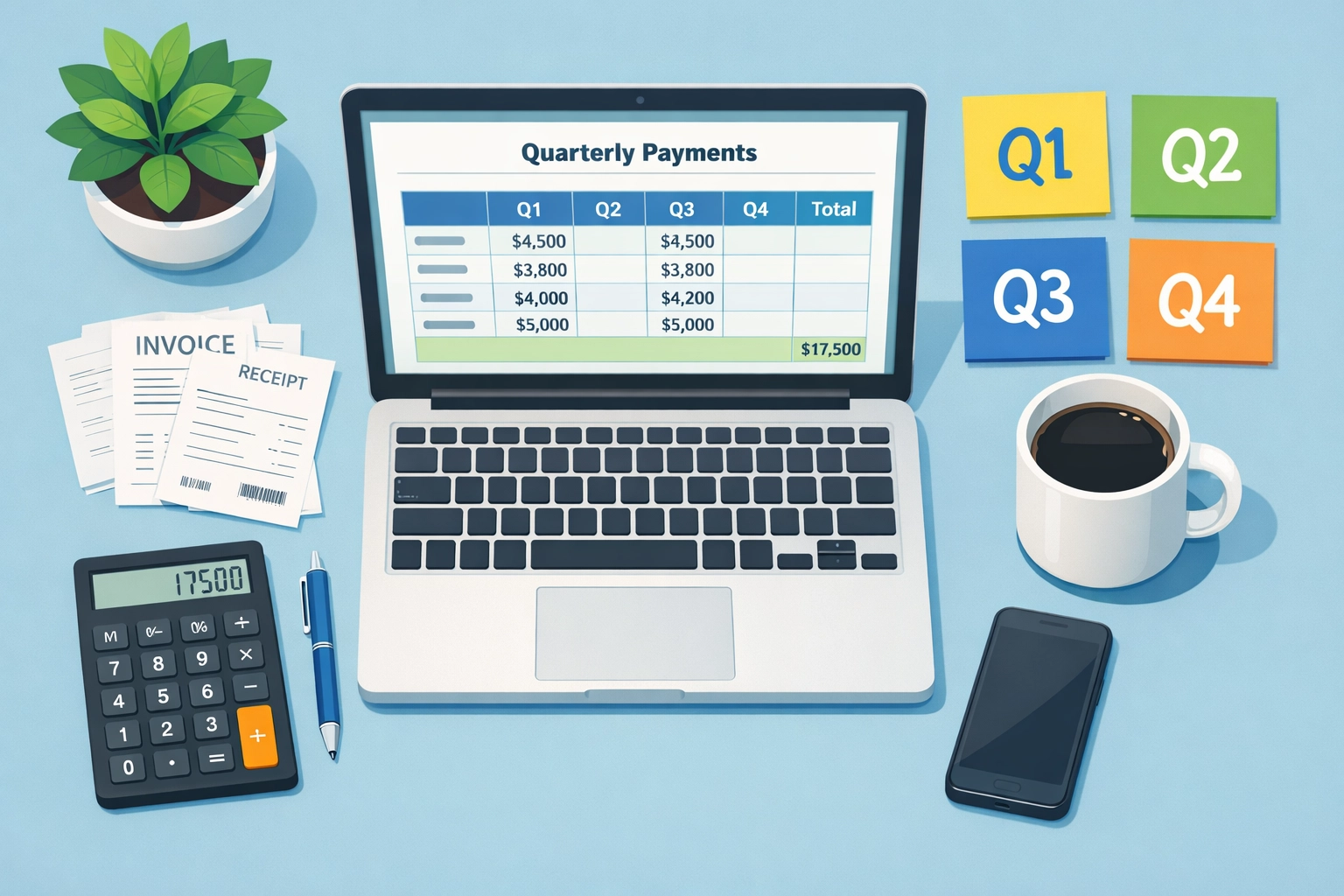
Step 5: Divide the total by four to determine your quarterly payment amount.
If your income fluctuates significantly throughout the year: common for seasonal businesses or project-based freelancers: you can use the annualized income installment method (Form 2210, Schedule AI). This method recalculates payments based on actual income earned each quarter, potentially reducing penalties if you earn more in later quarters.
Safe Harbor Rules: Your Penalty Protection!
The IRS provides three "safe harbor" methods to avoid underpayment penalties, even if you end up owing money at tax time:
Option 1: Pay at least 90% of your 2026 tax liability throughout the year.
Option 2: Pay 100% of your 2025 tax liability (110% if your 2025 adjusted gross income exceeded $150,000).
Option 3: Owe less than $1,000 in total tax when you file your return.
For many New Haven freelancers, Option 2 is the easiest approach. Simply look at your 2025 tax return, divide your total tax by four, and pay that amount each quarter. Even if your income grows in 2026, you're protected from penalties as long as you meet this threshold.
Why New Haven Freelancers Struggle with Estimated Taxes
After working with hundreds of self-employed clients in the New Haven area, we've identified the most common mistakes:
Forgetting to set money aside. When that client payment hits your account, it's tempting to spend it all. But remember: 25-35% should go straight to taxes.
Ignoring state estimated taxes. Connecticut also requires quarterly estimated payments. Don't forget your state obligation: it's separate from your federal payments.
Waiting until the last minute. Scrambling to calculate and submit payments on deadline day leads to errors and missed opportunities to maximize tax refund potential through proper planning.
Not adjusting for income changes. Had a great quarter? Your estimated payments might need to increase to avoid underpayment penalties.
How Jose's Tax Service Helps New Haven Freelancers Stay Compliant
This is where professional tax preparation New Haven services make a real difference. At Jose's Tax Service, we don't just prepare your annual return: we provide year-round tax planning to keep you compliant and penalty-free.
Our concierge tax pro approach includes:
Quarterly estimated tax calculations based on your actual income and expenses. No guesswork, no penalties.
Proactive check-ins before each quarterly deadline to ensure you're on track.
Strategic deduction planning to reduce your overall tax liability and maximize tax refund potential.
State and federal coordination so you never miss Connecticut's separate requirements.
Real-time adjustments when your income fluctuates, ensuring you pay the right amount each quarter.
Think of us as your tax planning partner, not just your once-a-year tax preparer. We're here to help New Haven's freelance community thrive without the constant worry of IRS penalties.
Take Action Before the April 15 Deadline!
The first 2026 estimated tax deadline is April 15: just two months away. Here's what you should do right now:
Review your 2025 tax return to establish your baseline payment amount.
Calculate your expected 2026 income based on current contracts and projects.
Set up a separate savings account for tax payments: treat it like a bill you pay yourself.
Schedule a consultation with a tax professional to ensure your calculations are accurate.
Set calendar reminders for all four quarterly deadlines.
Don't wait until you're facing penalty notices and scrambling to catch up. The IRS is serious about estimated taxes, and 2026 is your year to get it right.
Get Professional Help Today
If you're feeling overwhelmed by estimated taxes or worried about 2026 penalties, you're not alone. Hundreds of New Haven freelancers and self-employed professionals trust Jose's Tax Service to handle their tax planning year-round.
Visit josestaxservice.com or stop by our office to discuss your estimated tax strategy. We'll calculate your quarterly payments, explain your safe harbor options, and give you peace of mind knowing you're fully compliant.
The penalty panic is real: but it's also completely avoidable. Let's make 2026 your most tax-efficient year yet.
Jose's Tax Service – Your New Haven tax planning partner for stress-free estimated taxes.

Leave a Reply
You must be logged in to post a comment.