
Boost Your Tax Refund Instantly with These 5 Tax Planning Tips (No Accountant Required… Yet)
Let's be real: you work hard for your money, and you deserve every dollar of your tax refund. The good news? You don't need an accounting degree to boost that refund check. The even better news? These five strategies are simple, effective, and available to anyone willing to spend a little time getting organized.
Here at Jose's Tax Service, we've seen thousands of tax returns over the years, and we know exactly where people leave money on the table. So grab your coffee, pull up your tax documents, and let's make sure you're keeping more of what's yours in 2026.
Tip #1: Double-Check Everything Before You Hit Submit!
This one sounds obvious, but you'd be shocked how many refunds get delayed because of simple typos. A single wrong digit in your Social Security number, bank routing number, or account details can trigger an amended tax return. And trust me, you don't want that.
Why it matters: Amended returns extend your processing time by 8 to 16 weeks. That's two to four months of waiting for money that could be in your account right now.
What to verify:
- Social Security numbers for yourself, your spouse, and all dependents
- Bank account and routing numbers (check your actual checkbook, not your memory)
- Filing status, especially if you got married, divorced, or had major life changes
- Income figures from all W-2s and 1099 forms
- Math on deductions and credits
Take an extra 15 minutes to review your return line by line. Compare it against your source documents. Have someone else look at it if possible. Fresh eyes catch mistakes you've stared past a dozen times.

Tip #2: Wait for ALL Your Tax Documents (Yes, Even the Stragglers)
I get it. You're excited to file early and get that refund. But filing before you have all your tax documents is like baking a cake before you've gathered all the ingredients, it's just not going to turn out right.
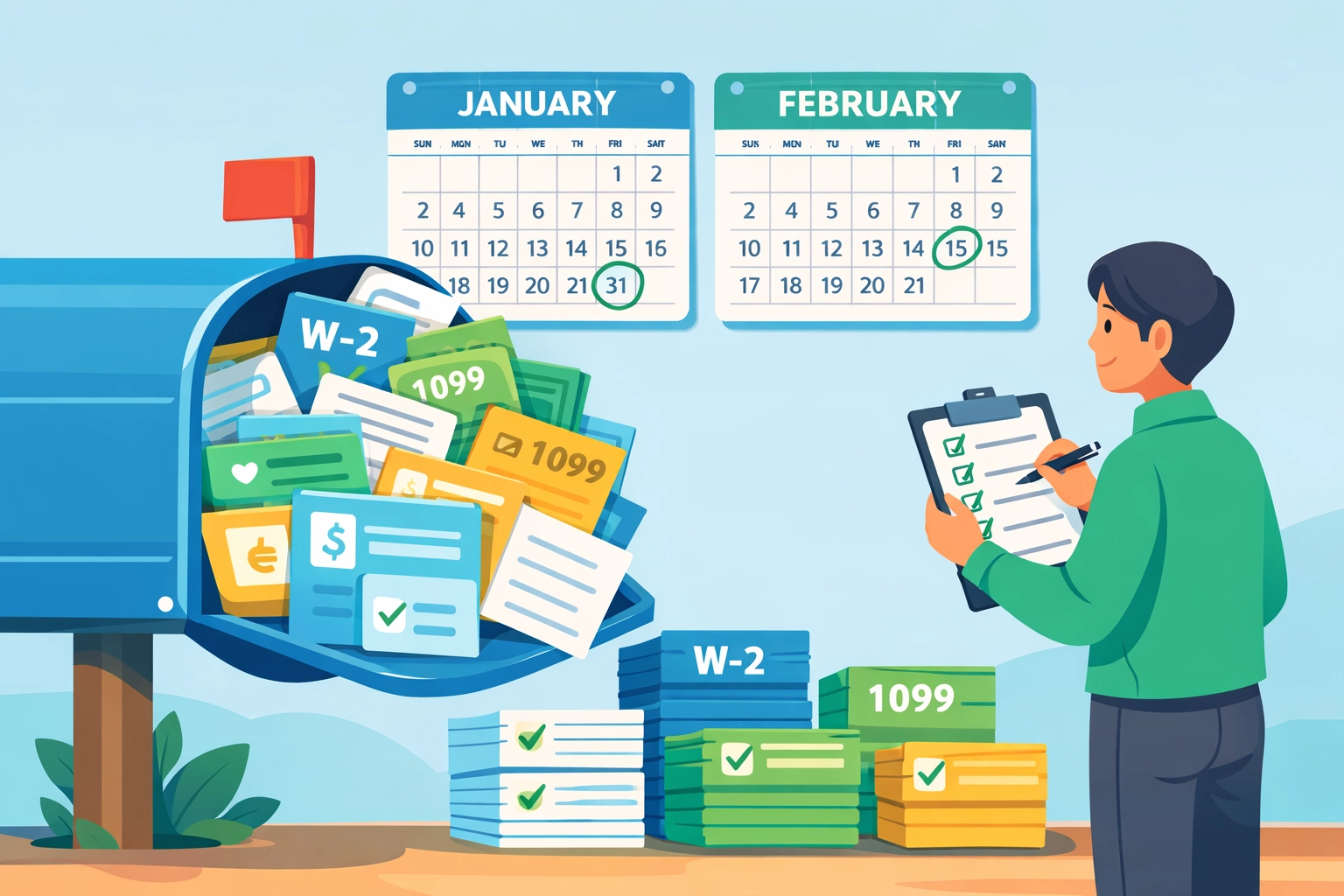
The deadline reality: Employers must send W-2 forms by January 31, and businesses must issue 1099-NEC forms by the same date. However, other 1099 variants (1099-INT, 1099-DIV, 1099-B) have until mid-February.
Common scenarios that cause issues:
- You forgot about that freelance gig you did last summer
- Your bank sent a 1099-INT for $12 in interest (yes, you still need to report it)
- You sold some stock and the 1099-B arrives late
- You changed jobs mid-year and have multiple W-2s
Pro move: Create a checklist in January of every place you earned income last year. Cross-reference it against the forms arriving in your mailbox. Only file when everything's accounted for.
Filing an incomplete return means filing an amended return later. That means delays, potential penalties, and definitely more headaches than just waiting a few extra days.
Tip #3: File Electronically with Direct Deposit (Seriously, It's 2026)
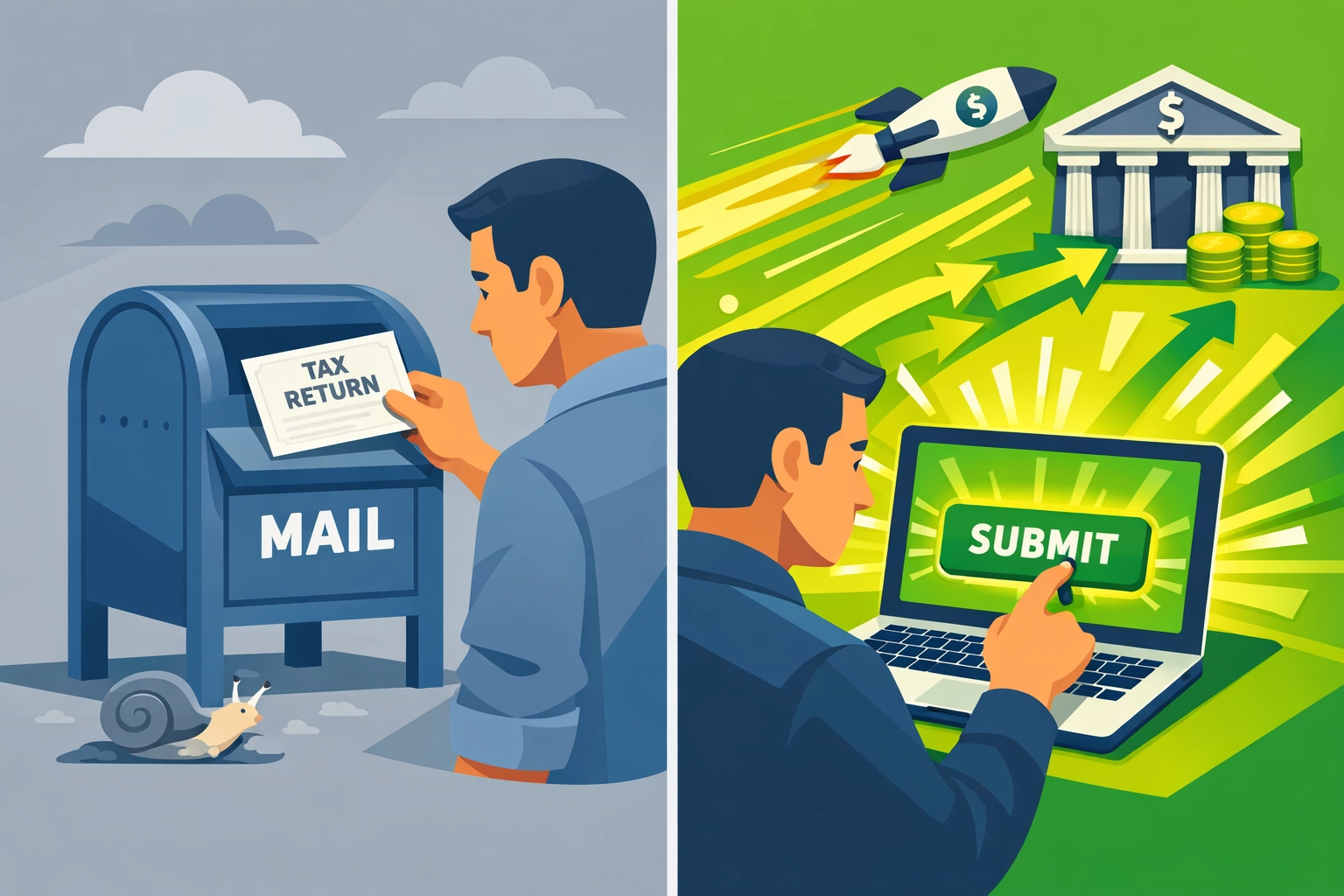
If you're still mailing paper returns, we need to talk. Electronic filing with direct deposit is hands-down the fastest way to get your refund.
The numbers don't lie:
- E-filed returns with direct deposit: 21 days or less
- Paper returns: Up to 42 days (or longer during peak season)
That's potentially three extra weeks of waiting just because you wanted to use stamps. In what universe does that make sense?
Additional benefits of e-filing:
- Immediate confirmation that the IRS received your return
- Built-in error checking that catches mistakes before submission
- Secure transmission with encryption
- Ability to track your refund status online
Most tax software is user-friendly and walks you through each section. The IRS also offers Free File for taxpayers earning below certain income thresholds. There's literally no reason not to go electronic in 2026.
Direct deposit setup: You'll need your bank's routing number (usually nine digits) and your account number. These are printed on your checks. Double-check these numbers before submitting: see Tip #1 about why accuracy matters.
Tip #4: Be Strategic About What You Do with Your Refund
Here's where the real money magic happens. Getting a bigger refund is great, but what you do with that money determines whether it actually improves your financial life.
Smart refund strategies:
Pay off high-interest debt first. Got credit card balances charging 18-25% interest? Pay those off immediately. The return on investment here is massive: every dollar you put toward that balance saves you 18-25 cents per year in interest charges.
Build your emergency fund. Financial experts recommend 3-6 months of expenses saved. Your tax refund can jump-start or boost this cushion. Open a high-yield savings account earning 4-5% APY (many online banks offer competitive rates in 2026).
Invest for the long term. Consider I Bonds (currently earning 3.98% for new bonds purchased in 2026) or low-cost index funds. Time in the market beats timing the market, and your refund can be the seed money for long-term wealth building.
Fund your IRA. You can contribute to your 2025 IRA until the April 2026 tax deadline. Maxing out your IRA creates a double win: you get the refund now and potentially reduce next year's tax bill while building retirement savings.
The worst move? Blowing your entire refund on stuff you don't need and forgetting about it by June. Treat your refund like the windfall it is: deploy it strategically.
Tip #5: Start Planning for Next Year's Taxes NOW!
The biggest refund booster isn't a single deduction or credit: it's planning ahead. Tax planning isn't just for business owners and wealthy people. Anyone can benefit from thinking strategically about their taxes throughout the year.
Year-round tax planning moves:
Adjust your W-4 withholding. If you're getting massive refunds every year, you're essentially giving the government an interest-free loan. Use the IRS withholding estimator to dial in the right amount. Keep more money in your paychecks and put it to work for you throughout the year.
Track deductible expenses monthly. Don't wait until January to hunt for receipts. Keep a simple spreadsheet or use an app to track:
- Charitable donations (including non-cash items like clothing and furniture)
- Medical expenses exceeding 7.5% of your adjusted gross income
- Business expenses if you're self-employed or have a side hustle
- Home office expenses for remote workers (if you qualify)
- Education expenses and student loan interest
Maximize retirement contributions. Contributing to a traditional 401(k) or IRA reduces your taxable income dollar-for-dollar. For 2026, you can contribute up to $23,000 to your 401(k) ($30,500 if you're 50 or older).
Stay informed about tax law changes. Tax provisions can change annually. Extensions, new credits, and modified deductions can significantly impact your refund. The 2026 tax year may include extensions of certain provisions that could benefit your situation.
Consider quarterly reviews. Check in on your tax situation every three months. Had a major life change? Got married? Had a baby? Started a side business? These events have tax implications that are easier to manage proactively than to scramble with in April.
When DIY Becomes "Maybe I Should Call Jose"
Look, these five tips will definitely help you maximize your refund on straightforward tax situations. But here's the thing: tax law is complicated, and it changes constantly. If your situation involves any of the following, it might be time to bring in a professional:
- Self-employment or small business income
- Rental properties or real estate investments
- Stock sales, cryptocurrency, or complex investments
- Major life changes (marriage, divorce, death of spouse)
- Multi-state income or international considerations
- Previous IRS issues or audits
At Jose's Tax Service, we offer concierge tax preparation that takes the stress out of tax season. We catch deductions you might miss, navigate complex situations, and represent you if any issues arise. Sometimes the money saved and the peace of mind gained are worth way more than the cost of professional preparation.
Plus, we handle everything virtually: you don't even need to leave your house to maximize your refund. Learn more about our services here.
The Bottom Line
Boosting your tax refund doesn't require magic or a PhD in accounting. It requires attention to detail, patience to wait for all your documents, smart use of technology, strategic thinking about your money, and year-round planning.
Follow these five tips, and you'll keep more of what you earn. And if your tax situation gets complicated? You know where to find us. We're here to make sure you're not leaving money on the table.
Now stop reading and go verify those account numbers one more time. Your future self will thank you when that refund hits your account in 21 days instead of 42.

Leave a Reply
You must be logged in to post a comment.