
Bookkeeping 101: Why Staying Organized Saves You Money on Your 2026 Taxes
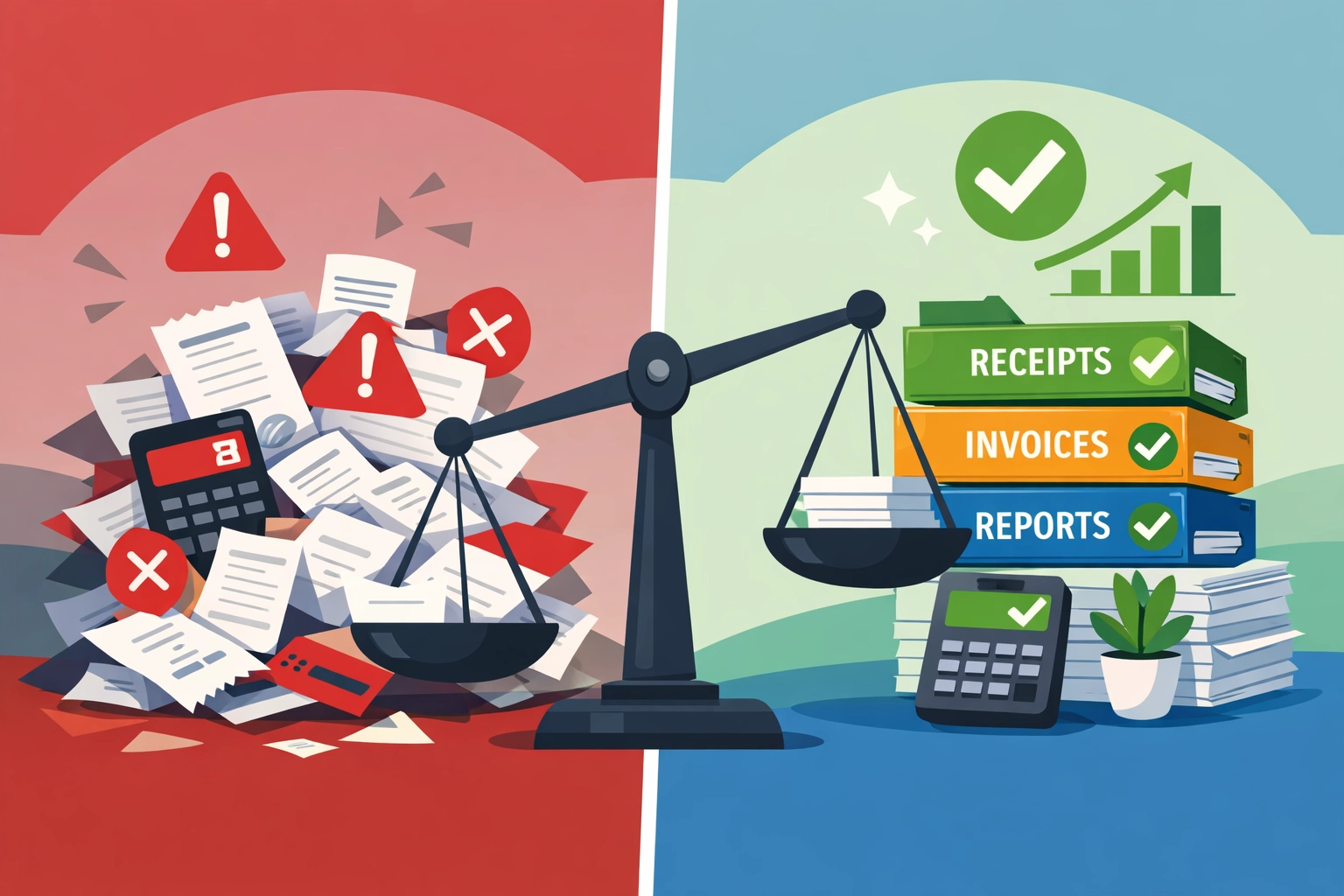
Let's be real, nobody gets into business because they love tracking receipts and categorizing expenses. But here's the thing: good bookkeeping isn't just about staying organized. It's about keeping more of your hard-earned money.
If you're a small business owner or freelancer in the New Haven area, organized bookkeeping can literally save you thousands of dollars on your 2026 taxes. And with some significant tax changes taking effect this year, staying on top of your financial records matters more than ever.
Why Messy Books Cost You Money (And Peace of Mind)
When tax season rolls around and you're scrambling through shoeboxes of receipts or trying to remember what that random $47 charge was for back in March, you're not just stressed, you're leaving money on the table.
Here's what happens when your bookkeeping falls behind:
- You miss deductible expenses. That home office setup? The mileage from client meetings? Software subscriptions? If you're not tracking them properly throughout the year, you'll forget to claim them.
- Errors multiply. Small mistakes compound over time. When you rush through tax prep with disorganized records, the chances of calculation errors or missed income reporting increase dramatically.
- You can't plan strategically. Without real-time financial visibility, you're flying blind. You can't make smart tax moves in December if you don't know where your numbers stand.
- Audits become nightmares. If the IRS comes knocking and you can't produce organized documentation, you're in for a rough ride.

How Organized Bookkeeping Directly Cuts Your Tax Bill
Professional bookkeeping, or even consistent DIY tracking with good systems, creates multiple opportunities to reduce your tax liability.
Capture Every Deductible Expense
The average small business owner misses hundreds (sometimes thousands) of dollars in legitimate deductions simply because they don't have a system to track them. When you maintain organized records year-round, you ensure that eligible business expenses get properly categorized and claimed.
Common missed deductions include:
- Home office expenses (furniture, utilities, internet, repairs)
- Vehicle mileage and auto expenses
- Professional development and education
- Business meals and entertainment
- Technology and software subscriptions
- Insurance premiums
- Professional services and subscriptions
Action step: Set up a dedicated business bank account and credit card. This separation makes expense tracking exponentially easier and creates a clear paper trail for deductible business expenses.
Reduce Costly Errors and Prevent Audits
When your bookkeeper and tax preparer work from the same organized financial data, you dramatically reduce the chance of mistakes that could trigger audits or result in underpaid taxes. Monthly bookkeeping prevents errors from accumulating throughout the year by providing real-time financial visibility.
Think of it this way: fixing a $500 categorization error in March takes five minutes. Discovering that same error during an IRS audit 18 months later? That's penalties, interest, professional fees, and a whole lot of stress.

Make Tax Season Actually Manageable
Going into tax season with organized books saves significant time during tax preparation and helps ensure accuracy. Your tax professional can focus on strategic tax planning and identifying applicable credits and deductions, not deciphering your expense chaos.
At Jose's Tax Service, we see this every year. Clients who maintain organized bookkeeping throughout the year typically complete their tax prep in a single focused session. Those who show up with bags of receipts in April? That's multiple appointments, higher preparation fees, and often missed filing deadlines.
The 2026 Tax Changes That Make Bookkeeping Even More Critical
Two major tax changes in 2026 make organized bookkeeping especially valuable this year. If you're not tracking your expenses properly, you'll miss out on significant savings.
The Qualified Business Income (QBI) Deduction Is Now Permanent
The QBI deduction allows pass-through entities (sole proprietors, partnerships, S-corps, and LLCs) to deduct 20% of their qualified business income. For 2026, there's now a minimum deduction of $400 for taxpayers with at least $1,000 in qualified business income.
This deduction can be substantial, but only if you can properly document your business income and expenses throughout the year. Without organized bookkeeping, calculating your qualified business income becomes guesswork, and the IRS doesn't accept guesswork.
What you need to track:
- Gross business income from all sources
- Cost of goods sold (for product-based businesses)
- Business expenses that reduce qualified business income
- W-2 wages paid (for larger businesses)
The Childcare Credit Expanded Dramatically
If you're a small business owner who provides childcare benefits or runs a childcare facility, pay attention. Eligible small businesses can now claim 50% of eligible childcare costs up to $600,000 annually, up from 25% and $150,000 previously.
This represents a potential tax credit of up to $300,000 for qualifying businesses. But claiming this credit requires detailed, well-organized expense tracking throughout the year. You'll need to document:
- Qualified childcare facility costs
- Qualified childcare resource and referral expenditures
- Employee usage and eligibility
- Total facility capacity and utilization
Missing or disorganized records mean missing this valuable credit.
What Good Bookkeeping Actually Looks Like
You don't need to become a CPA, but you do need consistent systems. Here's what effective bookkeeping involves:
Monthly (at minimum):
- Reconcile all business bank and credit card accounts
- Categorize all income and expenses
- Review accounts receivable and payable
- Document any cash transactions with receipts
- Track mileage for business vehicle use
Quarterly:
- Review profit and loss statements
- Estimate quarterly tax payments
- Assess progress toward financial goals
- Clean up any uncategorized transactions
Annually:
- Compile year-end financial statements
- Organize tax documents (1099s, receipts, etc.)
- Review the year's financial performance
- Plan tax strategy for the coming year

When to DIY vs. When to Hire Help
Many small businesses and freelancers start with DIY bookkeeping using software like QuickBooks, FreshBooks, or Wave. This can work well if:
- Your business has straightforward transactions
- You have time to dedicate to it monthly
- You're comfortable with basic accounting concepts
- Your transaction volume is manageable (under 50 transactions monthly)
Consider hiring professional bookkeeping support when:
- Your business grows beyond simple transactions
- You're spending more than 5 hours monthly on bookkeeping
- You've made costly errors in the past
- You have inventory, multiple revenue streams, or employees
- Tax season causes significant stress
At Jose's Tax Service, we offer bookkeeping support specifically designed for New Haven small businesses and freelancers. We handle the monthly details so you can focus on growing your business: and we ensure your records are tax-ready year-round.
Your Action Plan: Getting Organized Now
Don't wait until April to think about your 2026 bookkeeping. Start implementing these steps today:
Set up proper accounts. Open dedicated business bank accounts and credit cards if you haven't already.
Choose your system. Select bookkeeping software or commit to working with a professional bookkeeper.
Create a schedule. Block time monthly (ideally the first week of each month) to reconcile accounts and categorize expenses.
Digitize receipts immediately. Use your phone to photograph and store receipts as soon as you get them. Apps like Expensify or even Google Drive work fine.
Track mileage religiously. Use a mileage tracking app (MileIQ, Everlance, or even Google Maps Timeline) to automatically log business driving.
Schedule a mid-year review. Don't wait until December to assess your tax situation. A mid-year check-in allows time for strategic adjustments.
The Bottom Line
Forgoing organized bookkeeping can result in rushed tax preparation, paperwork headaches, and missed deductions and deadlines. In 2026, with expanded credits and deductions available, those missed opportunities represent real money left on the table.
Good bookkeeping isn't exciting, but it's profitable. Every receipt tracked, every expense categorized, and every transaction reconciled creates a clearer financial picture: and a smaller tax bill.
If you need help getting your bookkeeping organized or want to discuss how the 2026 tax changes affect your specific situation, reach out to us at Jose's Tax Service. We're here to help New Haven small businesses and freelancers keep more of what they earn.

Leave a Reply
You must be logged in to post a comment.