
Avoiding the Underpayment Trap: A Guide to Estimated Taxes for 2026
Missing estimated tax payments can lead to unexpected penalties and interest charges! If you're self-employed, run a side business, or have multiple income streams, understanding your estimated tax obligations is critical for avoiding costly mistakes in 2026.
Estimated taxes are required if you expect to owe $1,000 or more in federal income taxes after accounting for withholding and refundable credits. You must also pay if your withholding and credits will cover less than 90% of your 2026 tax liability or 100% of your 2025 liability: whichever is smaller.
Who Must Pay Estimated Taxes in 2026?
The IRS requires estimated tax payments from individuals who don't have taxes withheld from their income throughout the year. This includes:
- Self-employed individuals including freelancers, independent contractors, and gig economy workers
- Small business owners operating sole proprietorships, partnerships, or S corporations
- Investors with significant dividend, interest, or capital gains income
- Rental property owners generating income from real estate
- Individuals with multiple income streams where withholding doesn't cover total tax liability
- Retirees receiving taxable distributions from retirement accounts without adequate withholding
Special rules apply to farmers, fishermen, and certain household employers who may qualify for different payment schedules or thresholds.

Mark These Critical 2026 Deadlines!
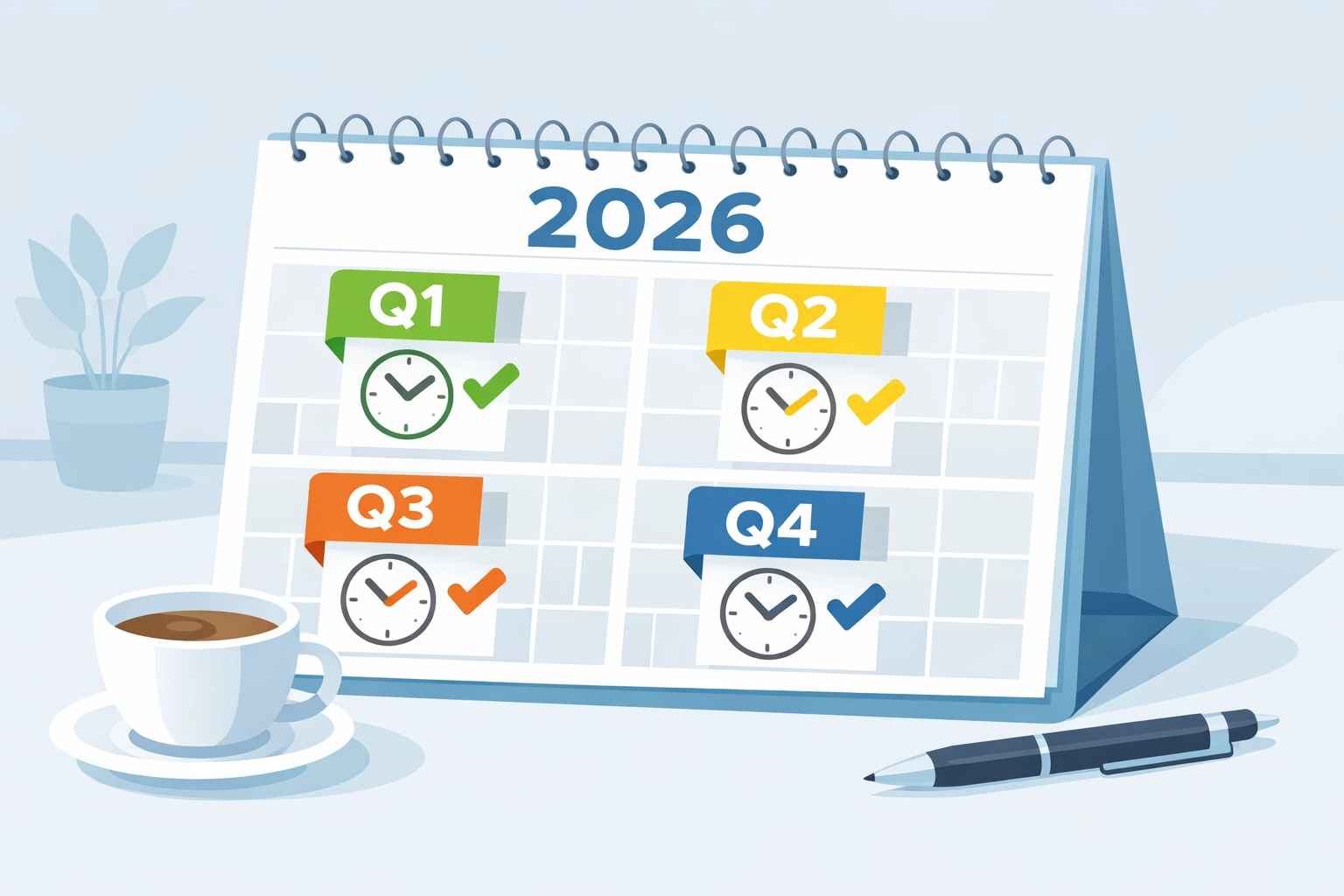
Missing payment deadlines triggers underpayment penalties. Enter these dates in your calendar immediately:
2026 Estimated Tax Payment Schedule:
| Income Period | Payment Due Date |
|---|---|
| January 1 – March 31, 2026 | April 15, 2026 |
| April 1 – May 31, 2026 | June 15, 2026 |
| June 1 – August 31, 2026 | September 15, 2026 |
| September 1 – December 31, 2026 | January 15, 2027 |
Important note: If a due date falls on a weekend or federal holiday, the deadline moves to the next business day. Set reminders at least one week before each deadline to ensure timely payment processing.
How to Calculate Your Estimated Tax Payments
Use IRS Form 1040-ES to determine your quarterly payment amounts. Nonresident aliens should use Form 1040-ES(NR) instead.
Follow these steps to calculate your estimated tax:
- Estimate your 2026 adjusted gross income (AGI) by reviewing your current income sources and projecting annual totals
- Calculate your expected deductions including the standard deduction or itemized deductions
- Determine anticipated tax credits such as child tax credits, education credits, or energy credits
- Apply the 2026 Tax Rate Schedules to your projected taxable income to calculate total tax liability
- Subtract expected withholding from wages, pensions, or other sources with automatic tax withholding
- Divide the remaining balance by four to determine your quarterly payment amount
Use your 2025 tax return as your starting point. If your income and deductions remain relatively stable, last year's figures provide a reliable baseline for estimating 2026 taxes.
Safe Harbor Rules: Your Protection Against Penalties
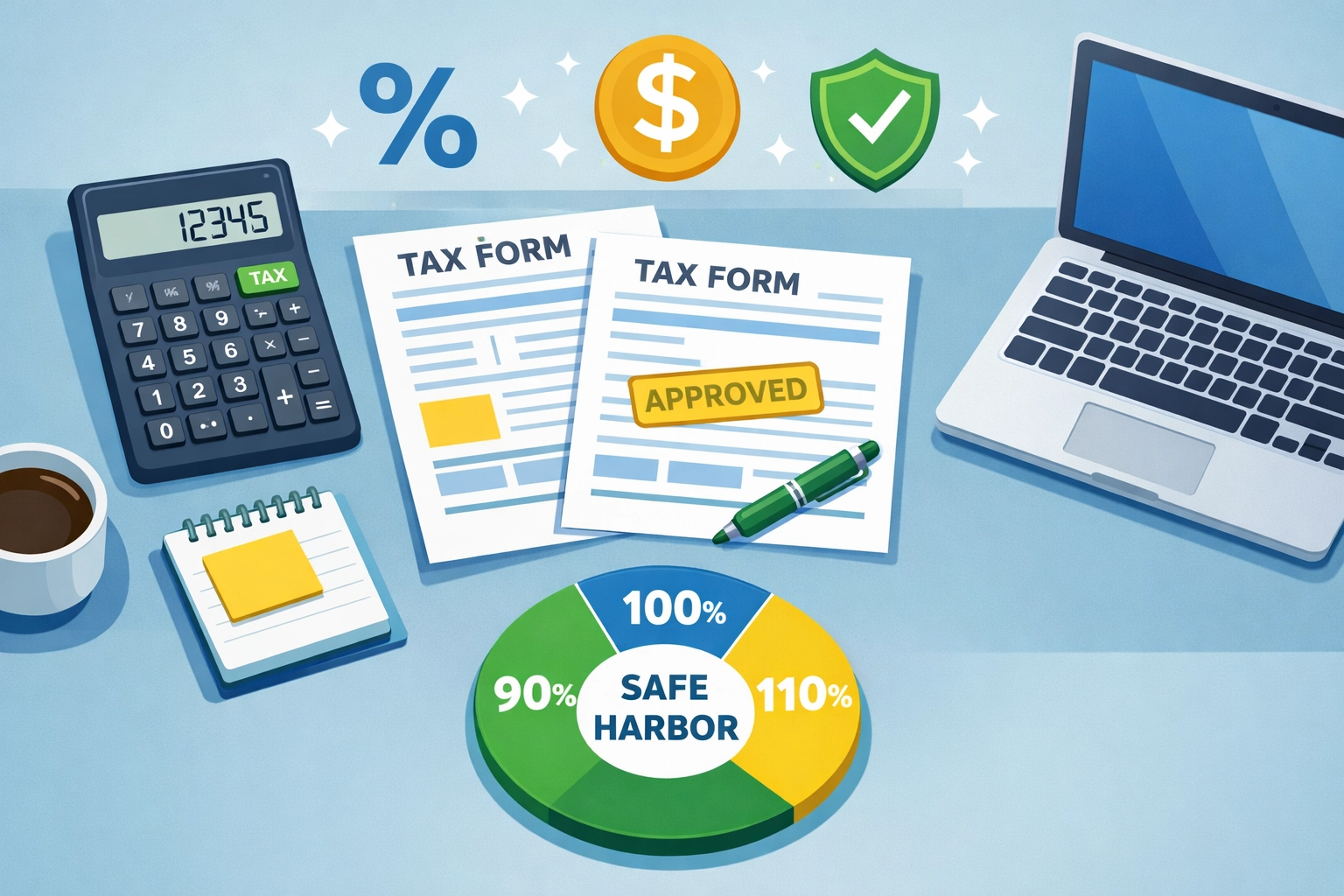
The IRS provides safe harbor provisions to help taxpayers avoid underpayment penalties. You will not face penalties if you meet one of these requirements:
Safe Harbor Option 1: Pay 90% of Current Year Tax
Pay at least 90% of your 2026 tax liability through estimated payments and withholding. This option works well if you can accurately project your current year income.
Safe Harbor Option 2: Pay 100% of Prior Year Tax
Pay 100% of your 2025 tax liability regardless of what you ultimately owe for 2026. This provides certainty but requires reviewing your 2025 return.
Safe Harbor Option 3: Pay 110% for High-Income Taxpayers
If your 2025 adjusted gross income exceeded $150,000 (or $75,000 if married filing separately), you must pay 110% of your 2025 tax liability to qualify for safe harbor protection.
Example: If you owed $20,000 in federal taxes for 2025 and your AGI was under $150,000, making equal quarterly payments of $5,000 ($20,000 ÷ 4) protects you from underpayment penalties: even if your 2026 tax liability increases to $25,000.
Special Considerations for 2026
Social Security Wage Base Increase
The maximum earned income subject to Social Security tax for 2026 is $184,500. Self-employed individuals must account for self-employment tax on earnings up to this threshold when calculating estimated payments.
Nonresident Alien Requirements
Nonresident aliens must use Form 1040-ES(NR) and should note the filing deadline of March 1, 2027, for their 2026 return. Special withholding rules and treaty provisions may apply to your situation.
Annualized Income Installment Method
If your income varies significantly throughout the year: common for seasonal businesses or those with irregular investment income: you can use the annualized income installment method. This approach allows you to adjust quarterly payments based on actual income received during each period, potentially reducing overpayment during slower months.
Reporting Estimated Tax Payments
Report all estimated tax payments made during 2026 on Form 1040, Line 26 when filing your return. Maintain records of payment confirmations, including dates, amounts, and confirmation numbers from the IRS Direct Pay system or EFTPS.
Common Mistakes That Lead to Underpayment Penalties
Avoid these frequent errors:
- Failing to account for all income sources including side gigs, freelance work, or investment income
- Underestimating self-employment tax which includes both employer and employee portions of Social Security and Medicare taxes
- Ignoring state estimated tax requirements which may have different deadlines and calculation methods
- Missing payment deadlines due to inadequate calendar reminders or payment processing delays
- Overlooking income changes from new clients, business growth, or investment gains
- Assuming W-2 withholding covers all tax liability when additional income streams exist
How Jose's Tax Service Can Help You Stay Compliant
Navigating estimated tax requirements can be complex, especially when managing multiple income sources or experiencing business growth. Jose's Tax Service provides comprehensive tax planning services to help self-employed individuals and small business owners avoid underpayment penalties while optimizing their tax strategy.
Our tax planning services include:
- Accurate estimated tax calculations based on your specific income situation
- Quarterly payment reminders to ensure you never miss a deadline
- Year-round tax projections to identify potential liability increases
- Strategic withholding adjustments to minimize quarterly payment requirements
- Safe harbor analysis to determine the most beneficial compliance strategy
- Documentation systems to track all estimated payments and income sources
Don't wait until April to discover you've underpaid your taxes! Proactive tax planning throughout 2026 protects you from penalties and provides greater financial predictability. Contact Jose's Tax Service to schedule a tax planning consultation and develop a personalized estimated tax strategy for 2026.
Whether you're newly self-employed or managing an established business with multiple income streams, our team ensures you meet all estimated tax obligations while maximizing available deductions and credits. Take control of your tax situation before penalties add unnecessary costs to your 2026 tax bill.

Leave a Reply
You must be logged in to post a comment.