
Maximize Tax Refund Secrets Revealed: What the Big Chains Don’t Want You to Know
NEW HAVEN, CT – JOSE’S TAX SERVICE – MARCH 18, 2026
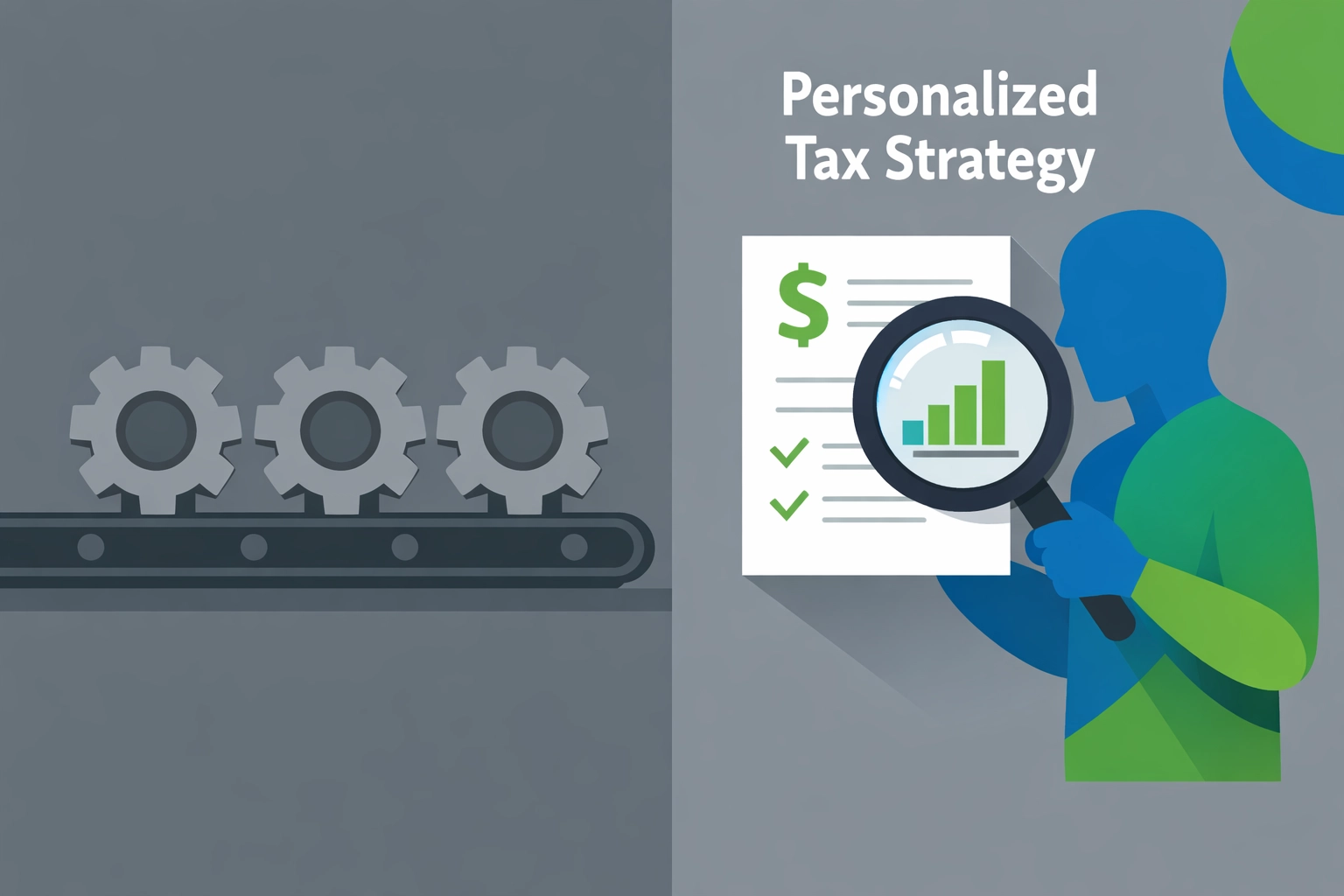
The 2026 tax season introduces the most significant changes to the Internal Revenue Code (IRC) in nearly a decade. While large national tax chains focus on high-volume processing and rapid turnover, these "assembly line" methods often overlook deep-level strategies that can significantly increase your bottom line. To maximize tax refund results, taxpayers must look beyond basic software prompts and understand the specific 2026 provisions that favor middle-class families and workers.
As a concierge tax pro at Jose’s Tax Service, I have identified several critical areas where big chains typically fail their clients. This report details the "secrets" of professional tax planning and the specific 2026 deductions that could result in thousands of dollars in additional savings.
The Truth About Big Chain "Accuracy Guarantees"
Most national tax franchises rely on seasonal employees who receive limited training. These preparers are instructed to follow a software-driven workflow that prioritizes speed over strategy. Their "accuracy guarantee" usually only covers mathematical errors or data entry mistakes, not the failure to identify missed deduction opportunities.
In contrast, professional tax preparation New Haven services focus on tax planning, a proactive approach that analyzes your financial life to find legal ways to minimize liability. The difference between a "filler" and a "planner" often amounts to the difference between a standard refund and a maximized one.
Secret #1: The 2026 SALT Cap Expansion
For years, the State and Local Tax (SALT) deduction was capped at $10,000, which heavily penalized homeowners in high-tax states like Connecticut. For the 2026 tax year, new legislation has increased this cap.
- Analyze Your State Taxes: Determine the total amount of state income tax or sales tax paid during the 2025 calendar year.
- Calculate Property Taxes: Total all real estate taxes paid on your primary residence and any secondary properties.
- Compare to the Standard Deduction: With the SALT cap increased, more taxpayers will find that itemizing on Schedule A (Form 1040) yields a higher deduction than the standard deduction.
If your total deductible expenses, including mortgage interest, charitable contributions, and the new SALT limits, exceed the standard deduction threshold, you must itemize to maximize tax refund outcomes. Big chains often default to the standard deduction because it requires less documentation and less time to process.
Secret #2: The New 2026 "Service and Labor" Deductions
The 2026 tax year introduces three groundbreaking deductions specifically designed for the workforce. Many "big box" tax offices are not yet fully integrated with these niche changes.
The Tips Deduction
Service industry workers, including servers, bartenders, and stylists, can now deduct a portion of their reported tips from their taxable income. This is a direct reduction of your Adjusted Gross Income (AGI).
- Action: Ensure you have a daily record of tips (Form 4070) to substantiate this claim.
The Overtime Deduction
In a move to reward extra labor, workers earning overtime pay in 2026 can reduce their taxable income by a portion of those extra earnings. This prevents "bracket creep," where working extra hours pushes you into a higher tax percentage.
- Requirement: You must maintain pay stubs that clearly distinguish between regular hourly pay and overtime pay.
Vehicle Interest Deduction for W-2 Employees
Previously reserved for business owners, certain employees who use their vehicles for work can now deduct a percentage of their car loan interest.
- Step: Calculate the percentage of miles driven for work versus personal use. Apply that percentage to the total interest paid on your auto loan for the year.

Secret #3: Income Timing and "Bracket Management"
Tax liability is determined by the "bucket" your income falls into. Big chains simply report what happened; a concierge tax pro helps you control what happens.
- Delaying Income: If you are expecting a year-end bonus or a commission check, delaying receipt until January 1, 2027, can prevent that income from being taxed at your 2026 rate.
- Accelerating Deductions: If you know you will be in a lower bracket next year, pay your January mortgage or make your planned charitable donations before December 31, 2026. This allows you to claim the deduction against your higher 2026 income.
Use our tax quote tool to see how shifting just a few thousand dollars in income can change your refund status.
Secret #4: Maximizing Tax-Advantaged Accounts
One of the fastest ways to maximize tax refund amounts is to lower your taxable income through retirement and health contributions.
- Traditional IRA: You generally have until the filing deadline in April 2027 to contribute to a Traditional IRA for the 2026 tax year. This "last minute" deduction can often bridge the gap between owing money and receiving a refund.
- Health Savings Accounts (HSAs): Contributions to an HSA are 100% tax-deductible (up to IRS limits) and can be used for medical expenses.
- 401(k) Catch-up: If you are over age 50, ensure you are utilizing the catch-up contribution limits to shield more income from the IRS.
Every $1,000 contributed to a traditional IRA can potentially increase your refund by $100 to $370, depending on your tax bracket. You can check your potential savings at josestaxservice.com/jts-tools.

Secret #5: The Documentation Trap
Big chains often tell you "don't worry about the receipt" if it’s under a certain amount. While this might pass an initial filing, it fails during an IRS correspondence audit. Furthermore, if you don't have the documentation, you might be too intimidated to claim a perfectly legal deduction.
Required Records for 2026:
- Form 1098: Mortgage Interest Statement.
- Schedule K-1: If you have investments in partnerships or S-corporations.
- Charitable Receipts: Digital or paper receipts for any donation over $250.
- Medical Invoices: Only deductible if they exceed 7.5% of your AGI.
If you are unsure if your records are sufficient, visit our download center for checklists and organizers designed to keep you audit-ready.
Why New Haven Residents Choose Jose’s Tax Service
Local expertise matters. Tax preparation New Haven involves understanding specific Connecticut tax credits that national software might skip. Whether it’s the CT Property Tax Credit or specific state-level earned income credits, a local pro ensures you aren't leaving money on the table.
Our "Concierge" approach means we don't just file your forms; we review your previous three years of returns for missed opportunities and provide a roadmap for the year ahead.

Critical Deadlines and Warning
Failure to file accurately and on time can lead to failure-to-file penalties (5% of the unpaid taxes for each month or part of a month that a tax return is late) and failure-to-pay penalties.
- April 15, 2026: Deadline to file 2025 returns (unless an extension is filed).
- Estimated Tax Deadlines: For those with 1099 income, quarterly payments are required to avoid interest.
If you are ready to move away from the "big chain" experience and want to truly maximize tax refund opportunities, start your journey with us today.
Action Steps:
- Gather all W-2s, 1099s, and 2026 receipts.
- Use our Tax Quote Questions to get an initial assessment.
- Schedule a deep-dive consultation with a concierge tax pro.
Don't let a seasonal worker at a retail chain decide your financial future. Use the strategies the pros use to ensure you keep more of what you earn.
Ready to get started? Start your tax process here.

Disclaimer: Tax laws are subject to change. This information is provided for educational purposes and does not constitute formal legal or financial advice. Individual circumstances vary; please consult with a qualified professional at Jose's Tax Service to discuss your specific situation.

Leave a Reply
You must be logged in to post a comment.