
New Haven Small Business Tax Planning: 7 Mistakes You’re Making (and How to Fix Them Before April 15th)
NEW HAVEN, CT – Jose’s Tax Service – March 16, 2026
It is officially mid-March. If you are a small business owner here in New Haven: whether you’re running a tech startup near Yale, a retail shop on Whalley Avenue, or a landscaping crew serving Westville: the clock is ticking. You have less than thirty days until the April 15th filing deadline.
In my years as CEO and Tax Pro at Jose’s Tax Service, I have seen brilliant entrepreneurs lose thousands of dollars simply because they waited too long or misunderstood a single line of the tax code. The 2026 tax season has brought specific changes to Qualified Business Income (QBI) and Connecticut state reporting that you cannot afford to ignore.
If you are feeling the pressure, don’t panic. We are going to break down the seven most common mistakes New Haven business owners are making right now and, more importantly, how you can fix them before the IRS comes knocking.
1. Operating Without Clear Financial Numbers
Many business owners focus entirely on sales and growth, ignoring the "back office" until tax season arrives. If you are walking into your tax appointment with a shoebox of receipts or a bank statement you haven’t looked at since November, you are already behind.
Strong bookkeeping is the foundation of effective tax planning. Without clear numbers, you cannot identify the deductions you earned during the 2025 calendar year.
The Fix:
- Reconcile immediately: Use the next 48 hours to categorize every transaction from 2025.
- Separate accounts: Ensure no personal expenses are mingled with business funds. If they are, flag them now so your preparer can exclude them correctly.
- Use a professional: If your books are a mess, contact us for a quick review before you file.
2. Misclassifying Active vs. Passive Income
One of the most significant errors in 2026 involves the $400 minimum deduction under QBI provisions. This deduction applies strictly to active qualified business income.
I often see New Haven landlords or silent partners try to claim this against passive rental income or investment activities. The IRS is particularly aggressive about this distinction this year. Misclassifying this income can lead to an automatic flag on your return.
The Fix:
- Review your participation: Determine if you meet the "material participation" tests set by the IRS.
- Separate income streams: Ensure your tax software or preparer has clearly separated your active trade income from your passive investments.
3. Misunderstanding SSTB Classifications
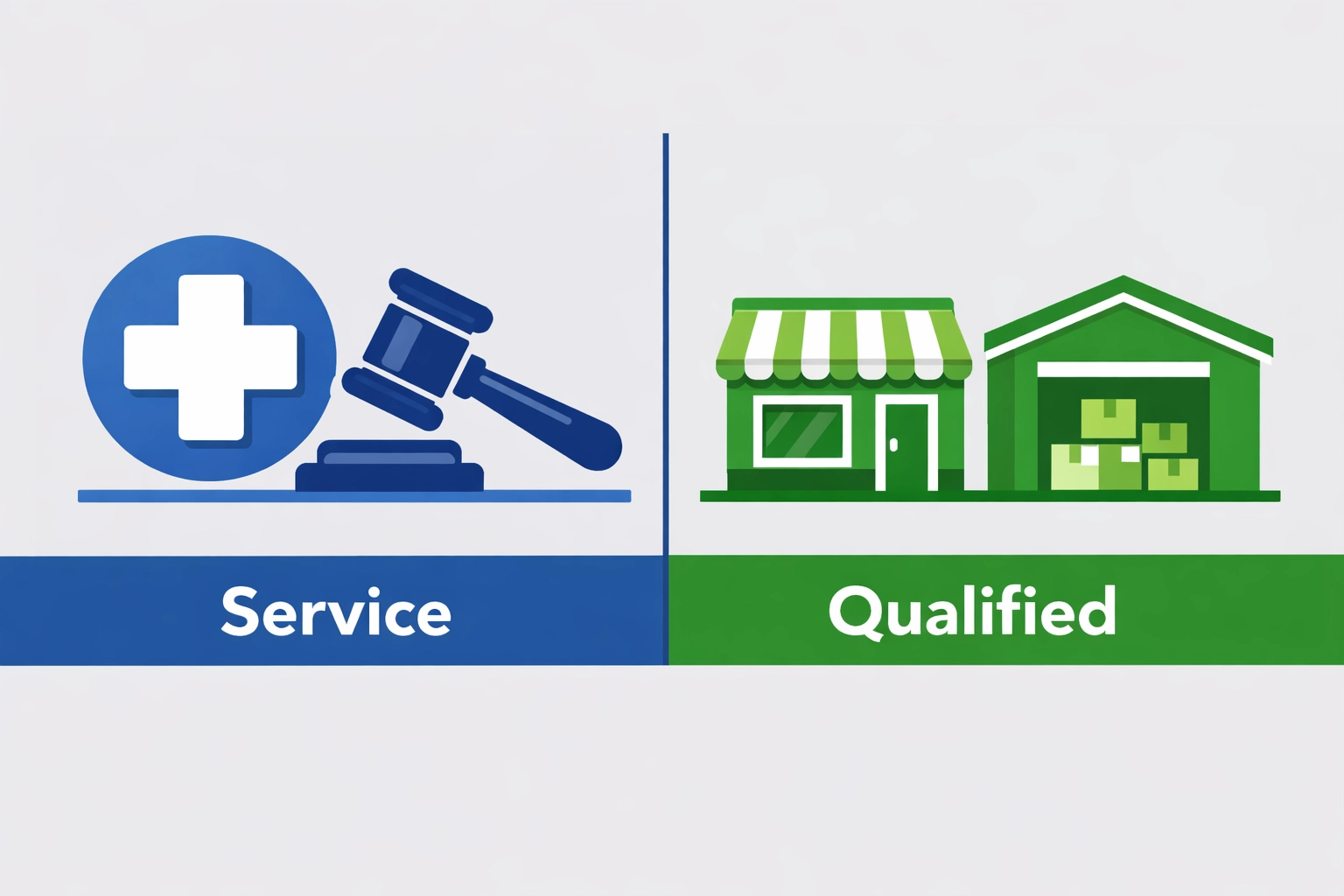
If you are a doctor, lawyer, consultant, or provide professional services in New Haven, you likely fall under the Specified Service Trade or Business (SSTB) category. Recent IRS guidance has updated how these activities are classified, particularly regarding how they affect your wage and property base limitations.
If you misclassify your business as a non-service trade when it is actually an SSTB, you may claim a QBI deduction you aren't entitled to, leading to significant penalties and interest.
The Fix:
- Check the list: Verify your NAICS code and business description against the latest SSTB definitions.
- Calculate thresholds: If your total taxable income exceeds the 2026 thresholds, your SSTB status will limit or eliminate your QBI deduction. Know these numbers before you file.
4. Ignoring Connecticut’s Specific State Tax Rules
New Haven business owners often make the mistake of assuming Connecticut follows Federal rules 1:1. That is a costly assumption. Connecticut’s treatment of QBI deductions and the Pass-Through Entity Tax (PTET) is unique.
While the federal government offers certain breaks, Connecticut may require "add-backs" or offer different credits that can drastically change your bottom line.
The Fix:
- Coordinate your planning: Ensure your federal strategy doesn't create an accidental tax spike at the state level in Hartford.
- Review PTET credits: If your business is an LLC or S-Corp, make sure you are properly utilizing the Connecticut Pass-Through Entity Tax Credit to reduce your state income tax liability.
5. The "Last-Minute" Tax Planning Trap
Waiting until April 14th to "plan" isn't planning: it's damage control. By then, most of the moves you could have made to save money (like equipment purchases or specific entity changes) are no longer possible for the 2025 tax year.
However, there are still a few "last-minute" moves available until the April 15th deadline that can impact your 2025 return.
The Fix:
- Maximize retirement contributions: You generally have until the filing deadline to contribute to a SEP-IRA or a Solo 401(k) for the previous year. This is one of the fastest ways to lower your taxable income right now.
- Review estimated payments: If you missed an estimated payment in 2025, pay it now to minimize the underpayment penalty.
6. The "DIY" Burnout
I get it: you’re an entrepreneur. You like to handle things yourself. But trying to manage payroll, client relations, and complex 2026 tax code changes at 2:00 AM is a recipe for disaster. Small business tax returns are significantly more complex than standard 1040s.
Small errors in depreciation schedules or home office calculations can trigger audits that cost far more than a professional tax preparer's fee.
The Fix:
- Delegate: Your time is worth more than the cost of professional filing. Focus on growing your business and let a professional handle the IRS.
- Request a quote: At Jose’s Tax Service, we offer competitive rates and personalized service specifically for the New Haven community.

7. Failing to Review Your Business Entity Structure
Is your business still an LLC when it should be an S-Corp? In 2026, the expanded income ranges for QBI mean that S-corporation status might provide greater benefits for service businesses that were previously ineligible.
If you are still operating under an old structure because "that's how I started," you might be overpaying on self-employment taxes.
The Fix:
- Perform an entity check-up: Even if it’s too late to change for the 2025 filing, you need to make this move now for the 2026 tax year.
- Analyze the "S-Election": Calculate if the savings on self-employment tax outweigh the additional administrative costs of payroll and corporate filing.
Immediate Action Steps to Take Today
To avoid the April 15th crunch and ensure you aren't leaving money on the table, follow these three commands:
- Document All Expenses: Gather every receipt and invoice for marketing, professional fees, equipment, and home office costs. If you used your vehicle for business, ensure your mileage log is complete.
- Fund Your Retirement: Consult with your financial advisor or reach out to us to determine the maximum allowable contribution to a SEP-IRA or Solo 401(k). This is your best tool for last-minute tax reduction.
- Schedule Your Appointment: Don't wait until April. Schedule your tax appointment with ease at our New Haven office today.

Why Choose Jose’s Tax Service?
In New Haven, you have plenty of options for tax prep, from the big national chains to the "pop-up" shops that disappear on April 16th. At Jose’s Tax Service, we offer something different: personalized, local expertise.
We understand the New Haven economy. We know the specific challenges facing local contractors, consultants, and shop owners. Our brand is built on being professional, but our service is casual and approachable. We talk to you like a partner, not just a client.
- Personalized Service: We take the time to look at your specific situation.
- Competitive Rates: Expert advice shouldn't break the bank.
- Year-Round Support: We don't just close our doors after the deadline.
Ready to get started?
- Visit our Small Business Learning Center for more tips.
- Check our latest news and updates.
- Contact Jose's Tax Service to secure your spot before the April 15th deadline.
Category: news, tax planning
Location: New Haven, CT
Deadline Reminder: Federal and Connecticut State returns are due Monday, April 15th, 2026. Avoid late filing penalties( act now.)

Leave a Reply
You must be logged in to post a comment.