
The Ultimate Guide to 2026 Tax Planning: How to Maximize Your Refund Before April 15
NEW HAVEN, CT – JOSE’S TAX SERVICE – MARCH 13, 2026
Listen, I get it. Nobody wakes up on a Friday morning in March and thinks, "I can’t wait to dig into the internal revenue code!" But here’s the reality: we are officially one month out from the April 15 deadline. If you haven’t started your tax planning for the 2026 season, you’re essentially leaving a stack of cash on the table for the government to keep. And let’s be honest, they have enough of your money already.
As the CEO and Lead Tax Pro here at Jose's Tax Service, I’ve seen every mistake in the book. This year is different. The 2026 tax update has introduced some massive shifts that actually favor the taxpayer for once. We are looking at a refund season where the average filer might see an extra $1,000 back in their pocket, if they know which buttons to push.
Let’s break down exactly how you can maximize tax refund results before the clock strikes midnight on April 15.
The 2026 Tax Landscape: What Has Changed!
The IRS has undergone a bit of a facelift for 2026. While they are phasing out those old-school paper checks (which we talked about in Day 1 of this series), they’ve also introduced several new deductions that directly impact the working class in New Haven.
One of the biggest shifts involves the State and Local Tax (SALT) cap. For years, we were stuck with a $10,000 limit that felt like a punch in the gut for Connecticut residents. For the 2026 filing year, that cap has been adjusted upward, allowing many of you to finally see a benefit from itemizing again.

1. Master the New "Workhorse" Deductions!
This is where the 2026 tax year gets interesting. There are three brand-new deductions that most DIY software, and frankly, some of the "big box" tax chains, are going to overlook. If you want to maximize tax refund totals, you need to account for these:
The Overtime Pay Deduction
If you’ve been grinding away at the factory, the hospital, or the warehouse, listen up. Under the 2026 update, a portion of your overtime pay may now be deductible from your taxable income. This is a game-changer for hourly workers.
- Action: Request a detailed payroll summary from your employer specifically breaking down "Overtime Hours" vs. "Regular Hours."
- Requirement: You must have a Form W-2 that clearly delineates these earnings.
The Service Industry Tips Deduction
New Haven is a city of incredible food and even better servers. In 2026, service industry workers can deduct a portion of their reported tips.
- Action: Ensure your tip log is consolidated and matches what was reported to your employer.
- Warning: Discrepancies between your internal log and your W-2 can trigger a flag, so double-check the math.
The Vehicle Interest Deduction
Previously reserved for heavy-duty business owners, certain car loan interest is now deductible for those who use their vehicles primarily for work (even if you aren’t a "business owner" in the traditional sense).
- Action: Gather your 2025-2026 car loan interest statements.
- Instruction: Maintain a digital mileage log to prove work-related usage.
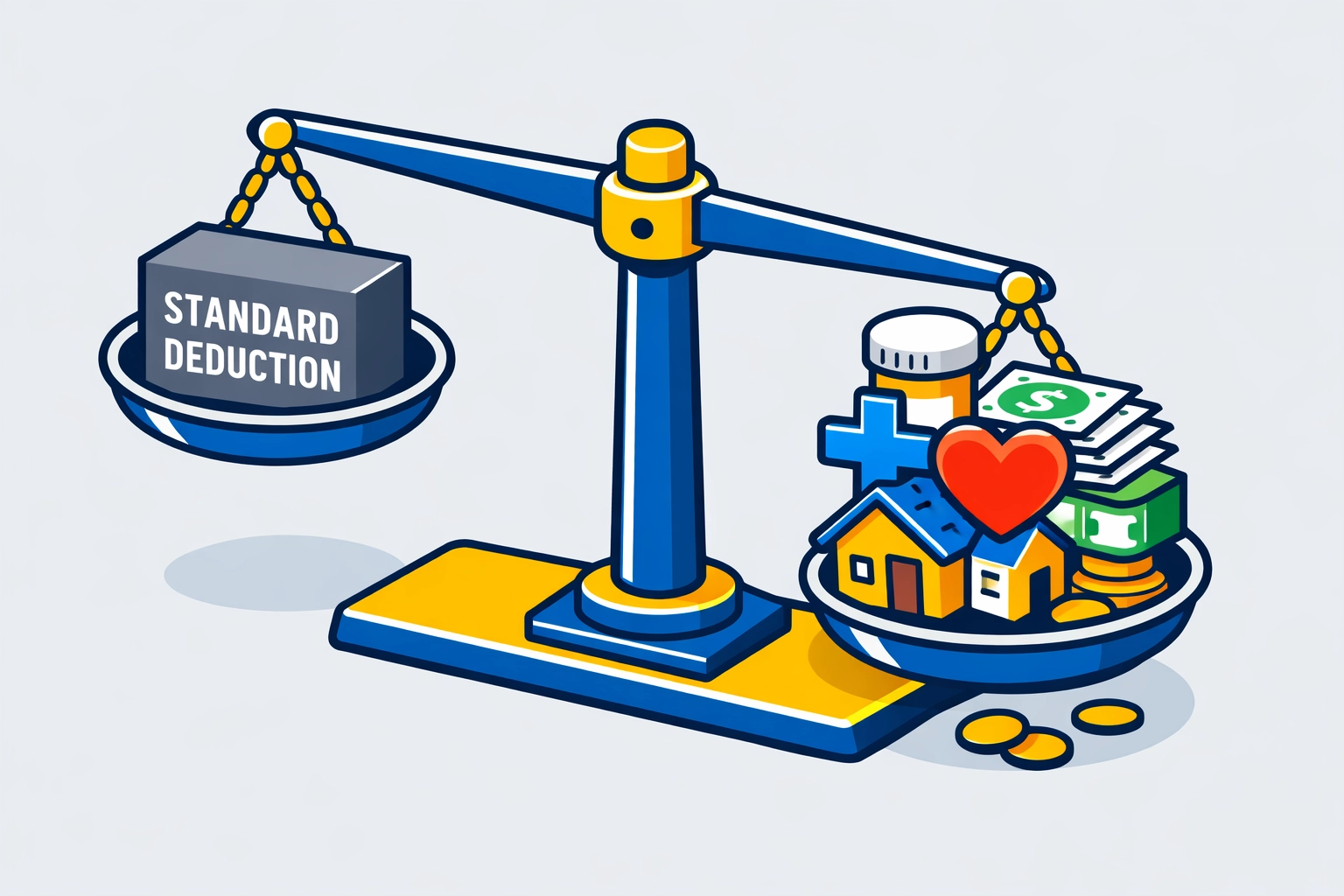
2. To Itemize or Not to Itemize: The SALT Shift!
For the last several years, the "Standard Deduction" was the king. Most people just took the flat rate and moved on. However, with the 2026 changes to the SALT cap and the increase in allowable medical expenses, itemizing on Schedule A (Form 1040) is making a massive comeback.
Compare your numbers:
- Standard Deduction: This is the fixed amount the IRS allows you to deduct, no questions asked.
- Itemized Deductions: This is where you list every cent of mortgage interest, charitable donations, state/local taxes, and medical expenses.
In New Haven, where property taxes can be… let's call them "robust," the higher SALT cap means you should almost certainly run the numbers for both scenarios. At Jose's Tax Service, we run a side-by-side comparison for every client. If itemizing saves you $5, we’re doing it.
3. Maximize Your Tax-Advantaged Accounts!
You have until April 15 to contribute to certain accounts and have it count toward your 2025/2026 tax year. This is the single fastest way to lower your taxable income right now.
- Traditional IRA: Contributions to a Traditional IRA are generally tax-deductible. If you put $5,000 into an IRA today, the IRS views your income as $5,000 lower.
- Health Savings Account (HSA): If you have a high-deductible health plan, the HSA is your best friend. Contributions are 100% tax-deductible, and the money grows tax-free.
- 401(k) Contributions: While you can't retroactively change your 2025 401(k) contributions, you can increase your withholdings now to lower your 2026 liability.
Instruction: Contact your financial institution immediately. They often have specific "Prior Year Contribution" forms that must be filed correctly to ensure the IRS credits the deduction to the right year. For more information on tax categories, visit our category sitemap.
4. Don’t Leave Credits on the Table!
Deductions lower the income you are taxed on; credits are a dollar-for-dollar reduction of the tax you owe. Credits are the "Holy Grail" of tax preparation New Haven residents need to focus on.
- The Child Tax Credit (CTC): Ensure you have Social Security Numbers (SSN) for any new additions to the family. No SSN, no credit. It’s that simple.
- Education Credits: If you or a dependent took classes at Yale, Gateway, or any other institution, fetch your Form 1098-T. The American Opportunity Tax Credit (AOTC) can be worth up to $2,500.
- Dependent Care Credit: If you paid for childcare so you could work, those receipts are worth their weight in gold.

5. Income Timing: The Pro Move!
If you are a freelancer or a small business owner, you have control over your income timing. If you’re hovering on the edge of a higher tax bracket, you might want to delay sending that final invoice until after April, or conversely, pull deductions forward.
While this guide focuses on the 2026 filing, smart tax planning is a year-round sport. Check out our recent archive for more strategies on long-term wealth preservation.
6. Organization is the Enemy of the IRS!
The IRS wins when you are disorganized. They love it when you lose receipts and forget about that $500 donation to the local shelter.
Instruction: Follow this Pre-Filing Checklist:
- Consolidate Documents: Gather all W-2s, 1099s (NEC, MISC, K, and INT), and 1098s.
- Digital Backups: Scan your receipts. Thermal paper fades; digital files don't.
- Validate SSNs: Ensure all names and numbers match exactly what is on the Social Security cards for everyone on the return.
- Review 2024 Returns: Look at last year's return to ensure you aren't missing any recurring deductions. You can find templates and older info in our archive section.
Why Professional Tax Preparation Matters in 2026
I’ll be blunt: using "free" software is like performing surgery on yourself with a butter knife. Sure, you might get the job done, but it’s going to hurt, and you’re probably going to miss something important.
At Jose's Tax Service, we don't just "input numbers." We look at the story your finances are telling. We identify the "red flags" that trigger audits: like unusual home office deductions or mismatched 1099-K reporting from payment apps (more on that in Day 2 of our series).
The IRS expects this to be one of the best refund seasons in a decade. Don't let your piece of that pie shrink because you were too busy or too overwhelmed to plan. Whether you're a New Haven local or filing from across the state, the rules are the same: be proactive, be organized, and be early.

Summary of Critical Deadlines
- April 15, 2026: Deadline to file your 2025/2026 return or request an extension.
- April 15, 2026: Deadline to make 2025 contributions to your IRA or HSA.
- Immediately: Start gathering documents. Every day you wait is a day the "logjam" at the IRS gets worse.
For a full list of our services and how we can help you navigate these new 2026 laws, visit our posts page or browse our complete site map.
Final Reminder: Filing early doesn't just get you your money faster: it also protects you from tax identity theft. Once your return is in the system, no one else can file using your SSN.
Let's get that refund maximized. Stop by the office or give us a call. We’re here to make sure Uncle Sam doesn’t take a penny more than he’s entitled to.
Stay tuned for Day 4 of our 7-day series: "Do You Really Need an IRS Online Account? Here's the Truth (Plus Tax Update for 2026)."

Leave a Reply
You must be logged in to post a comment.