
Avoid the Penalty Panic: A Simple Guide to 2026 Estimated Taxes for New Haven Freelancers
New Haven, CT : February 19, 2026 : If you're freelancing, consulting, or driving for ride-share companies in the Elm City, you need to know about estimated tax payments. Miss these quarterly deadlines, and you could face penalties that eat into the income you worked hard to earn. With the first 2026 payment deadline just weeks away, now's the time to get your tax strategy sorted.
Who Actually Needs to Pay Estimated Taxes?
Here's the rule: If you expect to owe at least $1,000 in federal tax for 2026 after accounting for withholding and refundable credits, you must make quarterly estimated tax payments. This applies to freelancers, independent contractors, consultants, gig-economy workers, and anyone receiving 1099 income without tax withholding.
Don't fall for the myth that you can skip reporting income under $600 because a client won't send you a 1099-MISC form. This is completely false. You must report all freelance income, regardless of the amount. The IRS is ramping up enforcement in 2026, and they're particularly focused on unreported income.

Think of it this way: when you work a traditional W-2 job, your employer withholds taxes from every paycheck. As a freelancer, nobody's doing that for you. The IRS still wants their money throughout the year, not all at once in April. That's what estimated tax payments are all about.
Mark Your Calendar! 2026 Payment Due Dates
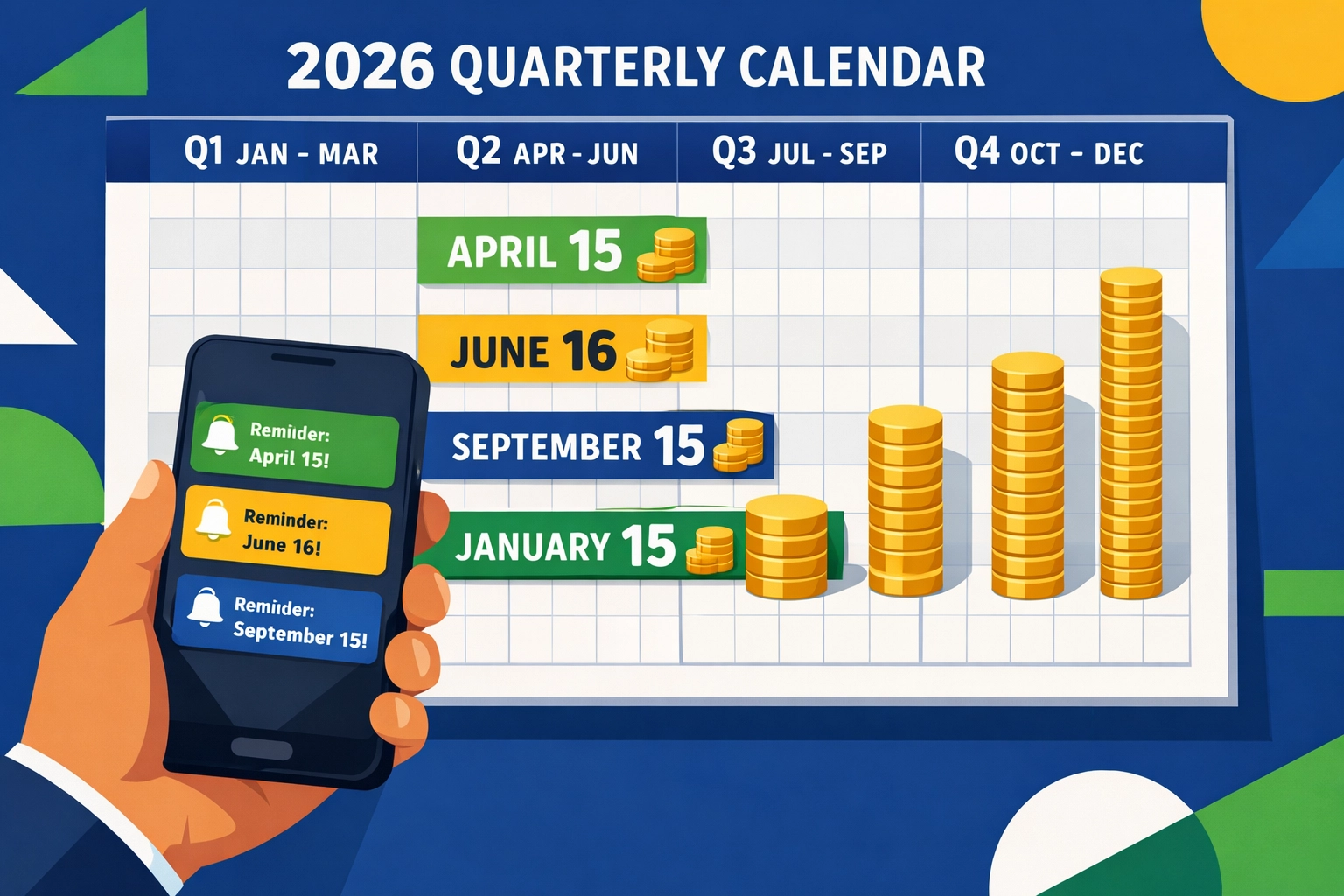
The four quarterly payments for 2026 are due on these dates:
- April 15, 2026 : Q1 payment (covering January–March income)
- June 16, 2026 : Q2 payment (covering April–May income)
- September 15, 2026 : Q3 payment (covering June–August income)
- January 15, 2027 : Q4 payment (covering September–December income)
Notice that these quarters aren't equal lengths. The IRS uses its own quirky calendar. Set reminders on your phone now, or better yet, automate your payments through the IRS Direct Pay system or EFTPS (Electronic Federal Tax Payment System).
How to Calculate Your Quarterly Payments Without Losing Your Mind
Use one of two safe harbor methods to avoid underpayment penalties:
Option 1: Pay 90% of your current year's tax liability. Divide this amount by four and pay each quarter. The challenge? You're predicting the future. If you underestimate, you could still face penalties.
Option 2: Pay 100% of your prior year's tax liability. This is often the smarter move. Take your 2025 total tax liability, divide by four, and pay that amount each quarter. Even if your 2026 income skyrockets, you're protected from underpayment penalties.
For example, if your 2025 tax liability was $40,000, paying $10,000 quarterly in 2026 ($40,000 ÷ 4) protects you from penalties even if your freelance business grows significantly this year.
The Self-Employment Tax Trap That Catches Everyone!
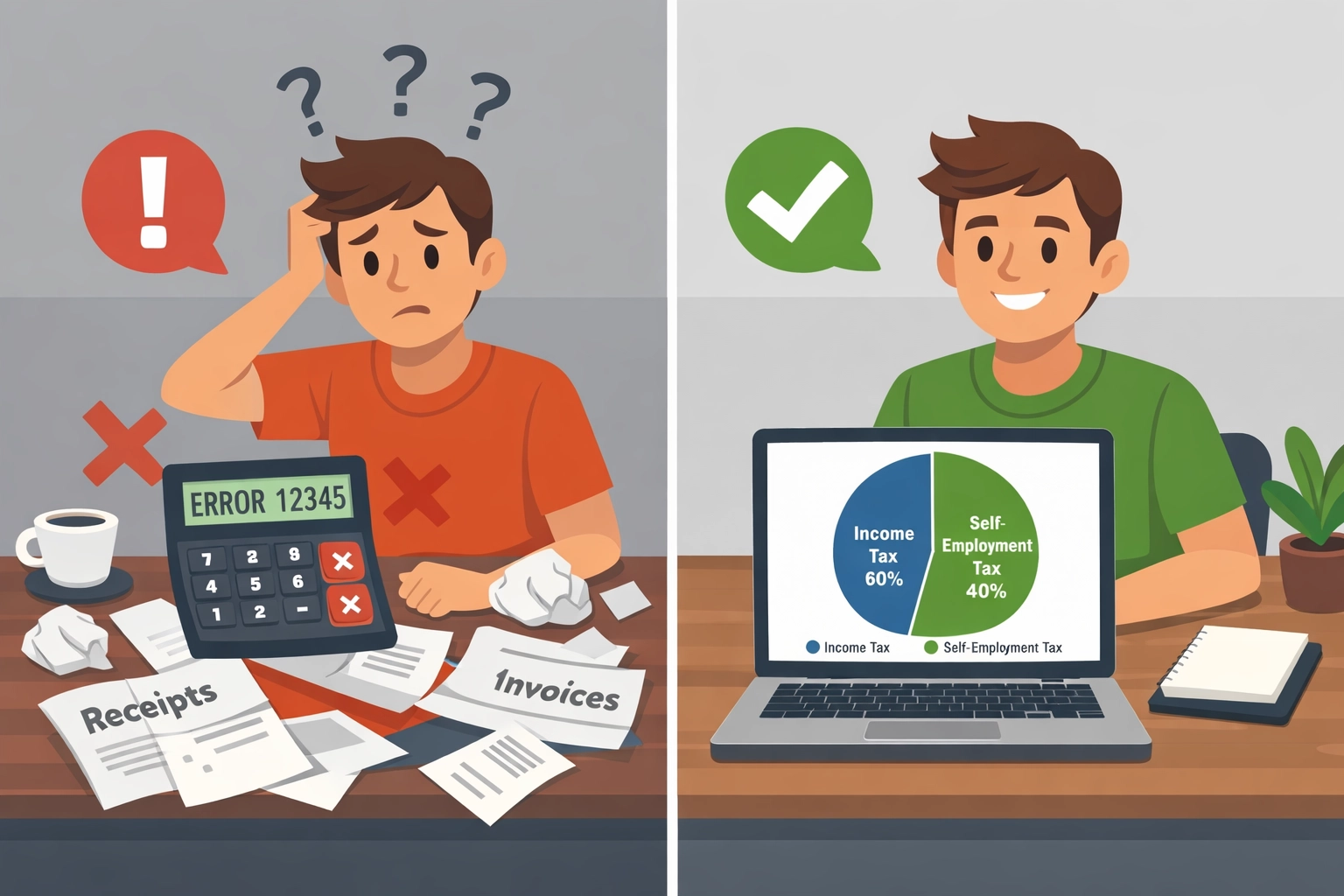
Here's where freelancers get burned: Don't forget the 15.3% self-employment tax. Many freelancers calculate only their federal income tax rate and forget about Social Security and Medicare taxes. When you're employed, your employer pays half of these taxes. As a freelancer, you pay both halves.
Calculate self-employment tax first using Schedule SE, then apply income tax rates to the remaining amount. This alone can add thousands to your tax bill. Skip this step, and you'll seriously underpay your estimated taxes.
What Happens When You Miss a Payment? (Spoiler: It's Not Pretty)
Estimated tax penalties compound quickly. If you owe $5,000 in taxes and file three months late, the failure-to-file penalty alone hits $750 (5% per month for up to three months). Missing quarterly payments can trigger $500–$1,000+ in penalties depending on how much you underpaid and for how long.
Underpayment penalties are calculated quarterly at the federal short-term interest rate plus 3 percentage points, currently hovering around 7–8% annually. That's not a rate you want to be paying on avoidable tax penalties.
The IRS has significantly increased enforcement in 2026, with enhanced focus on high-income earners and those claiming new deductions. Proactive planning now prevents costly penalties later.
New Haven Freelancers: Local Tips for Tax Success
Working from your apartment near Yale? Running a consulting business from East Rock? Here are New Haven-specific considerations:
Connecticut state estimated taxes: Don't forget! Connecticut requires estimated tax payments too if you expect to owe more than $1,000 in state tax. The due dates align with federal deadlines.
Home office deduction: Many New Haven freelancers work from home in our pricey rental market. If you use part of your apartment exclusively for business, you may qualify for home office deductions that reduce your tax liability.
Parking and transportation: If you meet clients around downtown New Haven, track your parking expenses and mileage. These business expenses reduce your taxable income.
Local networking expenses: Coffee meetings at Blue State Coffee or lunch with clients at Frank Pepe's? These are legitimate business expenses if they're directly related to your work.
Common Mistakes That Cost New Haven Freelancers Money
Avoid these errors that we see constantly at our New Haven tax preparation office:
- Reporting only income tax without self-employment tax : This is the number one mistake that leads to massive underpayment
- Using prior-year income as a safe harbor without adjusting for major income increases : If you landed a huge contract this year, 100% of last year's tax might not be enough
- Failing to track expenses throughout the year : Don't wait until tax season to gather receipts. Use an app or simple spreadsheet to maximize tax refund potential
- Ignoring quarterly deadlines because "I'll catch up later" : Penalties accrue quarterly, so catching up doesn't erase what you already owe
- Not adjusting payments when income changes mid-year : You have flexibility to increase or decrease payments as your situation changes
You Don't Have to Figure This Out Alone
Look, estimated taxes are confusing. The IRS doesn't exactly make things easy, and as a New Haven freelancer, you're juggling Connecticut state taxes on top of federal requirements. That's where working with a concierge tax pro makes sense.
At Jose's Tax Service, we help New Haven freelancers avoid penalty panic with personalized tax planning that actually fits your situation. We offer both virtual and in-person appointments (whatever works for your schedule), and here's the best part: $0 upfront to get started.
We'll calculate your estimated tax payments based on your actual income projections, help you maximize your tax refund by finding every deduction you're entitled to, and set up a payment schedule that keeps you penalty-free. No more guessing, no more panic when tax season arrives.
Whether you're a graphic designer in Westville, a consultant in downtown New Haven, or a rideshare driver covering the greater New Haven area, we provide tax preparation New Haven freelancers can actually understand.
Take Action Before the April 15 Deadline!
You have less than two months before the first 2026 estimated tax payment is due. Don't wait until April 14 to figure this out. Calculate your quarterly payment amount now, set up automatic payments, or schedule a consultation to get personalized guidance.
The difference between freelancers who stress about taxes and those who don't? The calm ones have a plan. They know exactly what they owe, when it's due, and they've built quarterly tax payments into their business budget.
Visit Jose's Tax Service to schedule your consultation. Let's make 2026 the year you avoid the penalty panic and keep more of what you earn. Your freelance business deserves a tax strategy that works as hard as you do.

Leave a Reply
You must be logged in to post a comment.