
Are You Making These 7 Common Tax Mistakes? Here’s How a Tax Pro Catches What You Miss
Tax season brings stress for millions of Americans: and it's not just about paying what you owe. The real problem? Most taxpayers make preventable mistakes that delay refunds, trigger IRS notices, or worse, lead to audits. The good news is that professional tax preparers catch these errors before they become major headaches.
Let's walk through the seven most common tax mistakes and reveal exactly how tax professionals identify them.
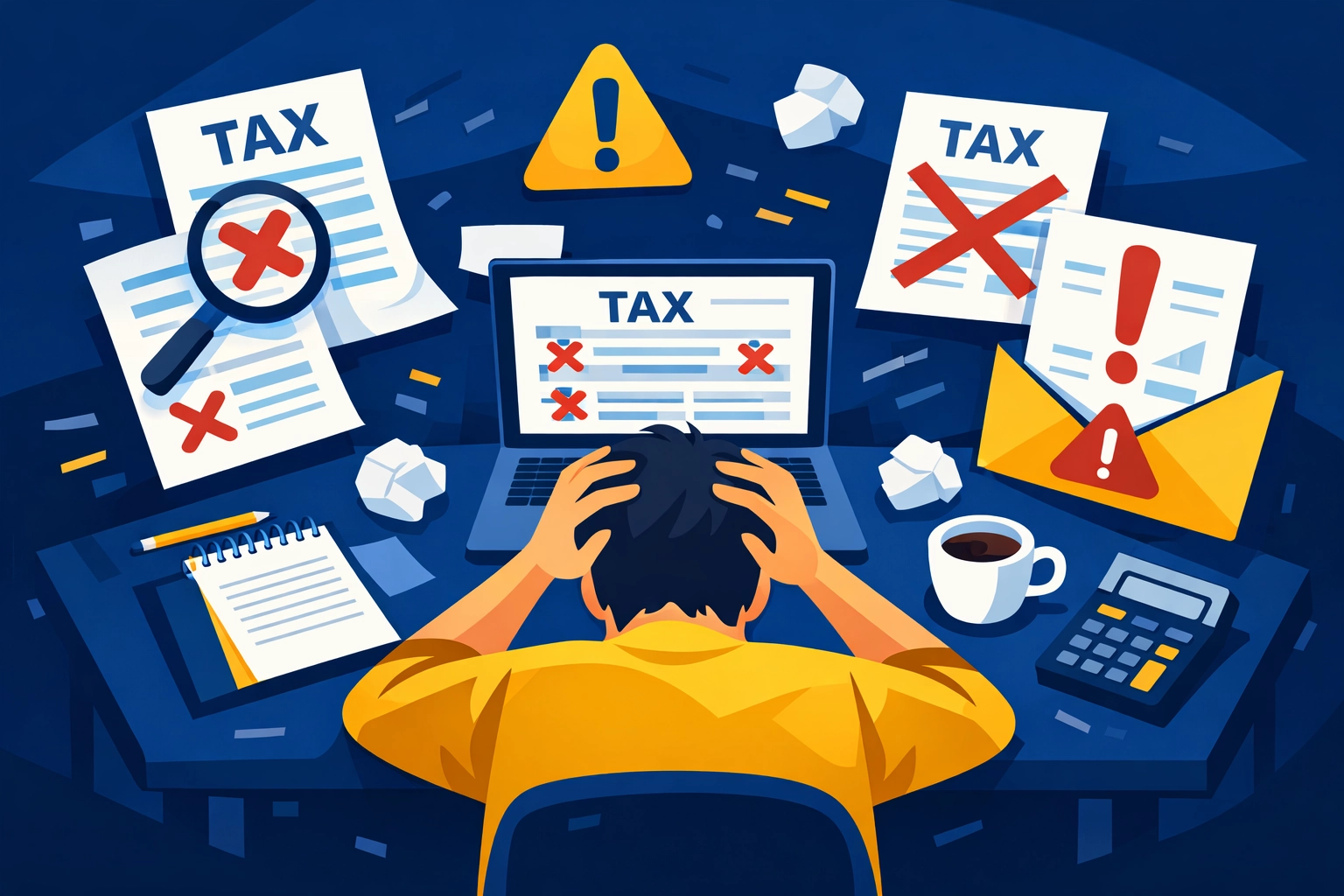
Mistake #1: Incorrect Personal Information
Misspelled names, wrong Social Security numbers, incorrect bank account numbers: these simple errors are the leading cause of processing delays.
Why this matters: The IRS automatically verifies every Social Security number against the Social Security Administration database. Even a single-digit error freezes your return. Wrong bank account information? Your refund gets sent to someone else's account or bounces back, adding weeks to your wait time.
How tax pros catch it: Professional preparers verify every piece of personal information against official documents: Social Security cards, birth certificates, and bank statements. They double-check routing numbers and account numbers character by character. This verification step eliminates 90% of processing delays.
Mistake #2: Underreported or Mismatched Income
The IRS receives copies of every 1099 form sent to you: from employers, banks, investment firms, and payment processors. If your reported income doesn't match what's on those forms, the system automatically flags your return.
Who's most vulnerable: Gig economy workers, freelancers, and anyone with multiple income sources. That $800 you earned from a side project? If the company sent a 1099-NEC to the IRS, they expect to see it on your return.
How tax pros catch it: Experienced preparers request ALL income documents before starting your return. They cross-reference 1099s with bank deposits and payment processor records. If something's missing, they find it before the IRS does.
Mistake #3: Inflated Business Deductions
Overstated home office deductions, exaggerated mileage claims, and unsupported write-offs for meals and travel are audit magnets.
The red flags: Claiming your entire home as a home office when you work from your kitchen table. Reporting 25,000 business miles when you only drove 15,000 total. Deducting every restaurant meal as a "business meeting."
How tax pros catch it: Professional preparers compare your deductions to IRS benchmarks for your industry and income level. They ask detailed questions about your business operations. Can you prove that home office is used exclusively for business? Do you have a mileage log? They won't claim deductions you can't defend in an audit.
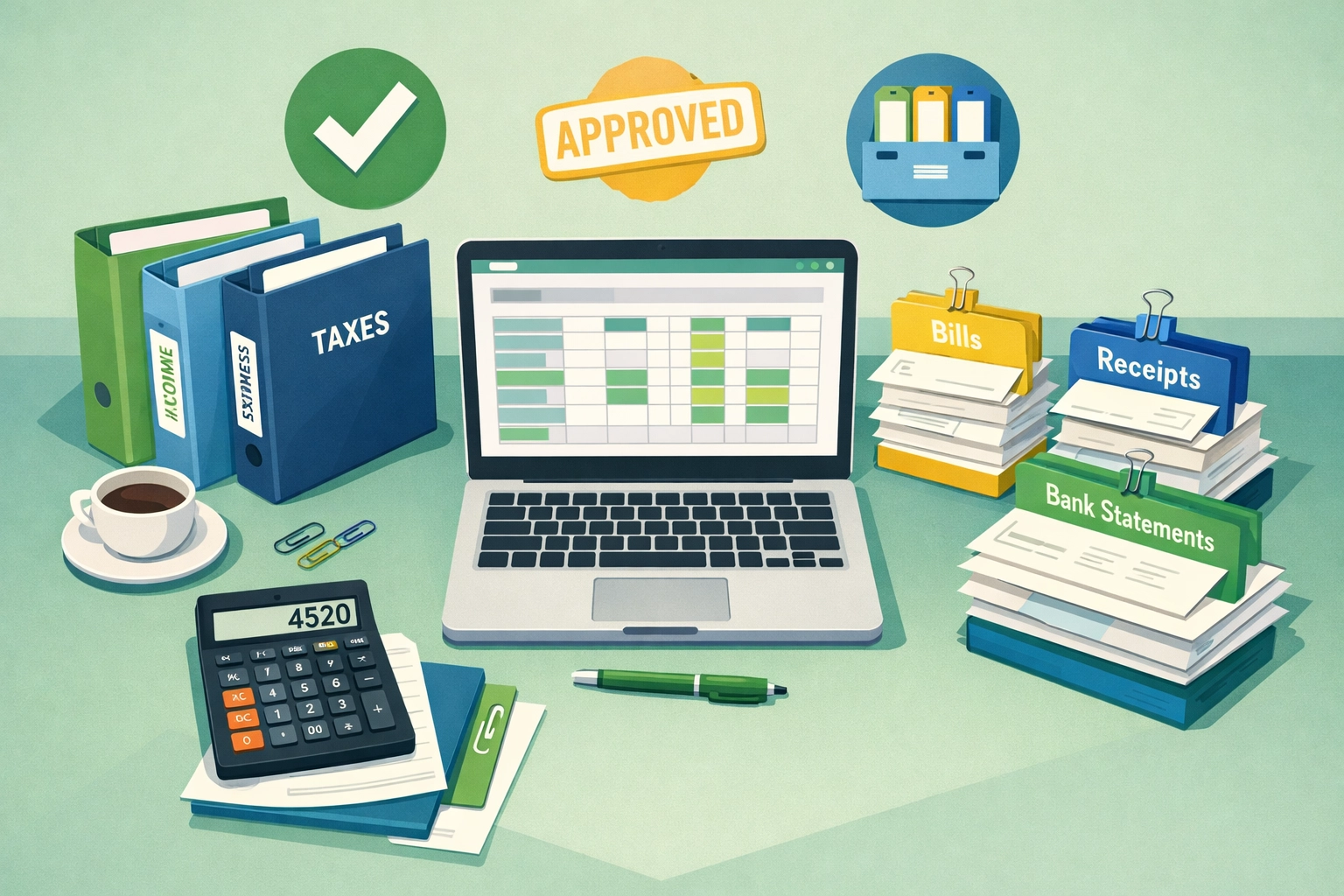
Mistake #4: Claiming Non-Qualified Expenses
Business owners frequently blur the line between personal and business expenses. Family vacations labeled as "business travel." Personal clothing written off as "uniforms." Your daily commute classified as "business mileage."
The IRS perspective: Personal expenses do not become business deductions just because you own an LLC. The IRS scrutinizes deductions that don't align with your actual business activity.
How tax pros catch it: Tax professionals apply the "ordinary and necessary" test to every expense. Is this expense normal for your type of business? Is it required to operate your business? If you can't answer yes to both questions, it shouldn't be on your return.
They'll ask pointed questions: "Did your spouse attend this conference?" "Was this trip primarily for vacation or business?" "Can you wear these clothes outside of work?" These questions protect you from audit trouble.
Mistake #5: Calculation Errors and Missed Credits
The IRS reports that miscalculations are the biggest problem with tax returns. Complex credits like the Child Tax Credit and Earned Income Tax Credit (EITC) trip up thousands of filers every year. Selecting the wrong filing status compounds these errors.
Common calculation problems:
- Math errors in addition and subtraction
- Transferring numbers incorrectly between forms
- Misunderstanding phase-out thresholds for credits
- Choosing single when married filing separately would save money
- Missing eligibility for education credits or energy credits
How tax pros catch it: Professional tax software includes built-in error checking, but experienced preparers go further. They manually review calculations for complex credits. They run comparison scenarios to determine your optimal filing status. They ask about life changes: new child, college tuition, home improvements: that trigger additional credits.
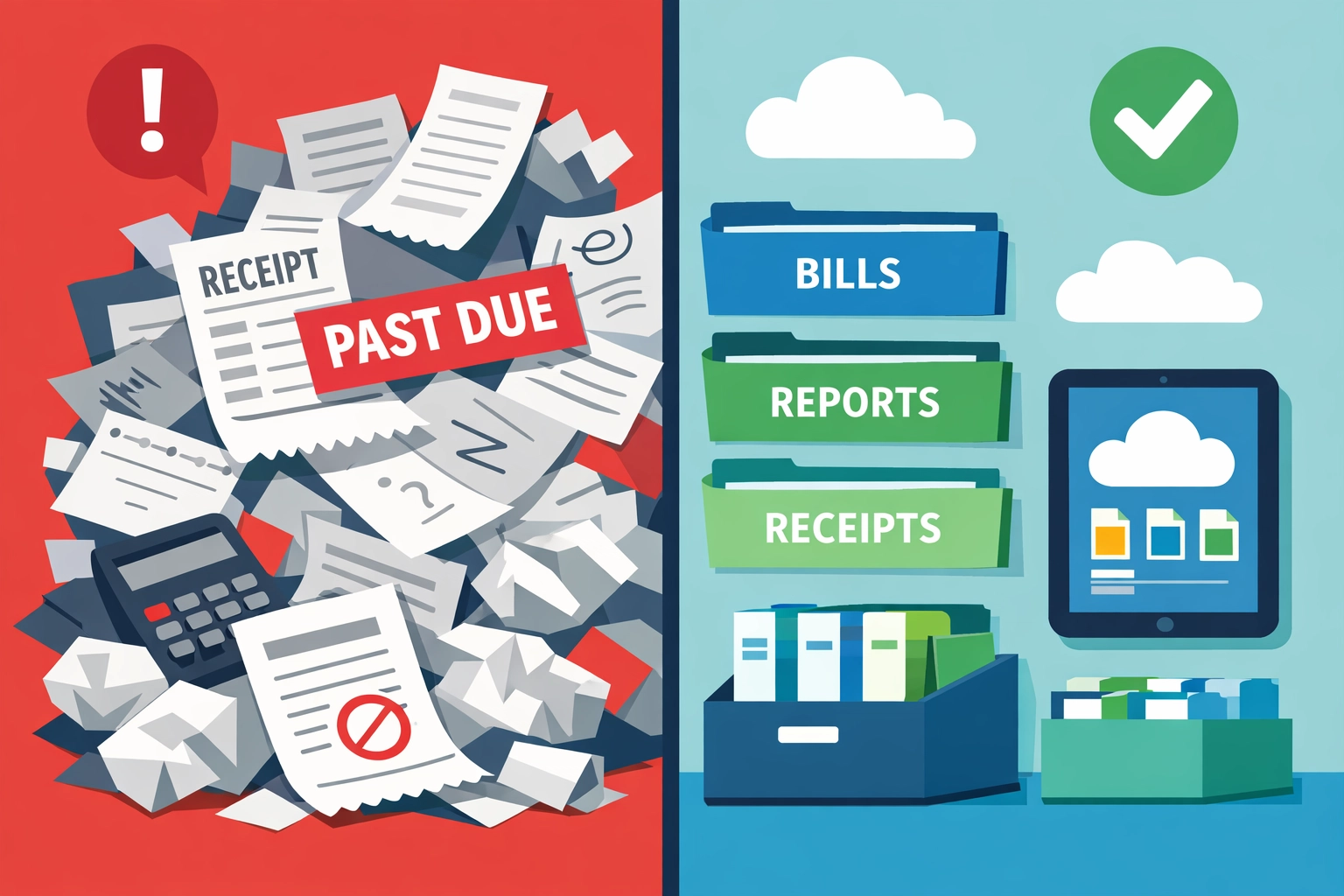
Mistake #6: Poor Record-Keeping
Failing to maintain organized records throughout the year results in missed deductions, inaccurate reporting, and increased audit risk. When the IRS comes knocking, "I think I spent about…" doesn't cut it.
What you need: Receipts for business expenses over $75. Bank statements showing deposits. Mileage logs with dates, destinations, and business purposes. Documentation of home office square footage. Proof of charitable contributions.
How tax pros catch it: During your initial consultation, experienced preparers assess the quality of your records. If documentation is missing or incomplete, they'll tell you exactly what you need. They won't guess at numbers or claim deductions without support.
Professional preparers also educate clients about record-keeping systems that prevent future problems. They recommend apps, spreadsheets, and filing methods that make next year's tax preparation smoother.
Mistake #7: Missed Estimated Tax Payments
Self-employed individuals, LLC owners, and freelancers must make quarterly estimated tax payments. Missing these payments triggers penalties and interest: even if you pay the full amount by the April deadline.
The penalty problem: The IRS calculates underpayment penalties based on when you should have paid throughout the year. Paying everything in April doesn't eliminate penalties for Q1, Q2, and Q3 underpayments.
How tax pros catch it: Professional tax preparers review your prior year return and current year income to calculate required estimated payments. They provide a payment schedule with specific amounts and due dates. Many offer reminder services to ensure you never miss a quarterly deadline.
They also help you adjust estimates mid-year if your income changes, preventing overpayment or underpayment.
How the IRS Detection System Works
Understanding how the IRS catches errors helps explain why professional preparation matters.
Automated matching: Every Social Security number, 1099 form, and W-2 gets matched electronically against your return. Discrepancies trigger immediate notices.
Statistical analysis: IRS systems flag returns with deductions significantly higher than average for your income level and industry. These returns face higher audit probability.
Manual review triggers: When automated systems can't verify information due to errors or mismatches, your return enters a queue for human review. This delays refunds by weeks or months.
Documentation requests: During audits, the IRS demands receipts, logs, and proof of business purpose for every claimed expense. Missing documentation means disallowed deductions plus penalties and interest.
The Bottom Line: Professional Preparation Saves Money
The IRS issues most refunds within 21 days: but only for error-free returns. Mistakes are the top cause of delays, penalties, and audits.
Professional tax preparers serve as your first line of defense. They verify information before submission, not after the IRS finds problems. They claim every legitimate deduction while avoiding audit triggers. They keep you compliant with quarterly payment requirements.
The cost of professional preparation? Typically less than a single IRS penalty. The value of accurate returns, maximized refunds, and audit protection? Priceless.
Ready to avoid these seven mistakes? Contact Jose's Tax Service for expert preparation that catches errors before they become problems. Visit josestaxservice.com or schedule your consultation today. Our experienced team ensures accuracy, maximizes your refund, and gives you peace of mind throughout tax season.
Don't let preventable mistakes cost you time and money. File it right the first time.

Leave a Reply
You must be logged in to post a comment.