
Concierge Tax Planning in 2026: The Ultimate 5-Step Guide to Year-Round Tax Savings
Tax season doesn't have to be a once-a-year scramble. If you're still treating tax preparation like a frantic April sprint, you're leaving serious money on the table.
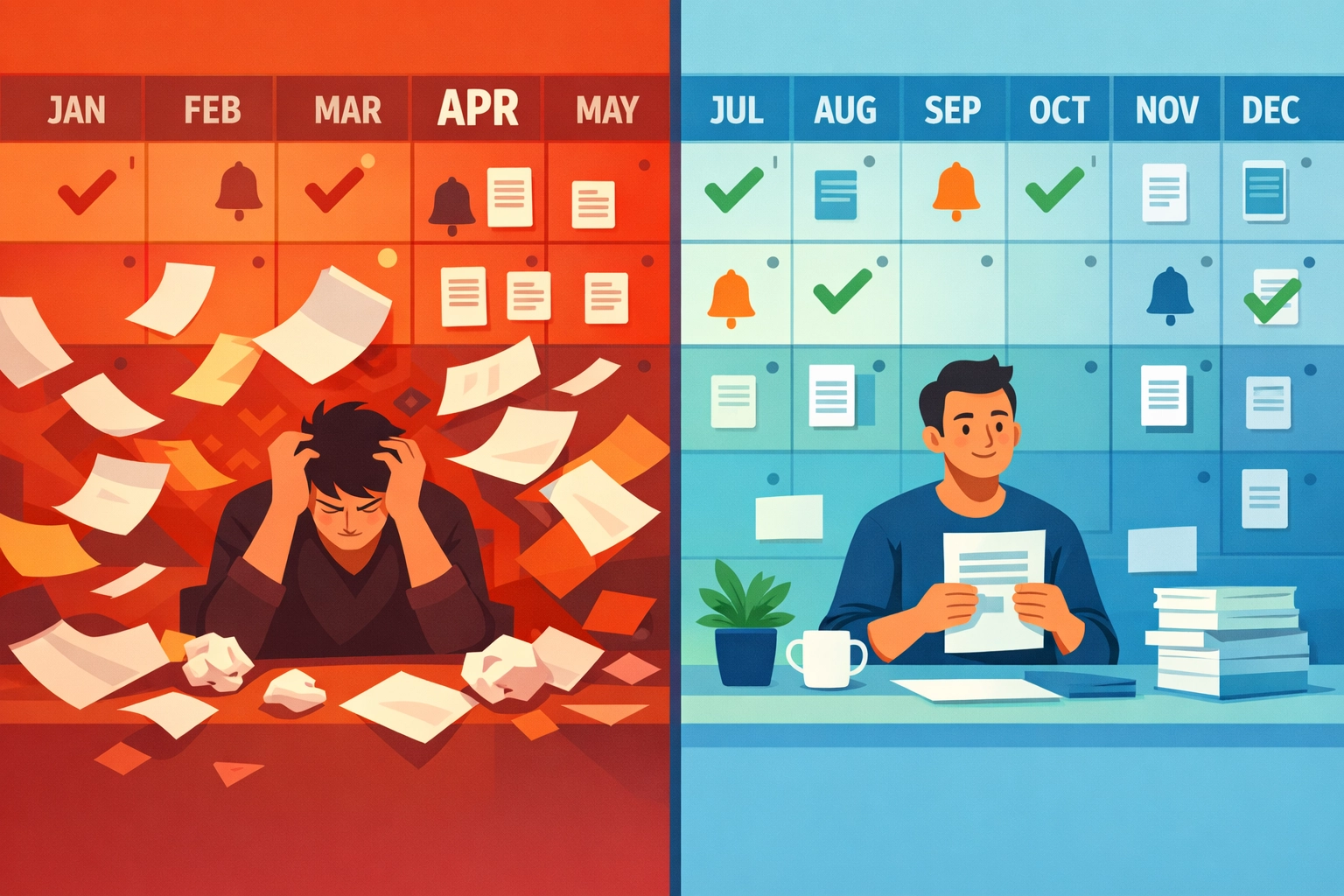
Concierge tax planning flips the traditional tax prep model on its head. Instead of filing returns and forgetting about taxes for 11 months, this high-touch approach coordinates year-round strategy, compliance monitoring, and proactive planning to maximize your tax refund and minimize your liability: every single quarter.
Here's your complete 5-step guide to implementing concierge tax planning in 2026.
Step 1: Establish Your Dedicated Tax Planning Partnership
The foundation of concierge tax planning starts with selecting the right tax professional. This is not about finding the cheapest tax preparer near you or the fastest online service.
What to look for:
- Licensed, full-time tax professionals (not seasonal workers)
- Limited client loads: typically 100 clients per year or fewer
- Year-over-year continuity with the same preparer
- Proactive communication approach, not just reactive filing
Your concierge tax pro should assign you to a dedicated preparer who becomes intimately familiar with your financial situation. This continuity allows your tax professional to spot opportunities and risks that a different preparer would miss each year.
Action items:
- Schedule initial consultations with potential tax advisors
- Request information about their client load and year-round availability
- Confirm they provide strategy sessions beyond basic tax return preparation
- Verify licensing and certifications (CPA, EA, or tax attorney credentials)

Step 2: Conduct Your Tax Season Kick-Off Strategy Session
Once you've established your partnership, the first critical step happens before tax season officially begins. Schedule a comprehensive kick-off consultation: ideally in January or early February 2026.
This session should address:
- Major life changes from the previous year (marriage, divorce, home purchase, business launch)
- Income changes and new revenue streams
- Investment activity and capital gains/losses
- Deduction opportunities you may have missed
- Estimated tax payment requirements for the current year
Your tax preparer should review:
- Prior-year return accuracy and identify any missed opportunities
- Carryforward deductions and credits available
- Upcoming deadlines for quarterly estimated payments
- Tax law changes affecting your 2026 filing
The goal is strategic alignment. Your concierge tax pro needs to understand not just your current tax situation, but your financial goals for the year ahead. This allows them to recommend timing strategies for income recognition, deduction acceleration, and retirement contributions.
Critical question to ask: "Based on my situation, what proactive moves should I make in Q1 to maximize my tax refund?"
Step 3: Implement Year-Round Monitoring and Compliance Tracking
Here's where concierge tax planning separates itself from basic tax preparation services. Your tax professional actively monitors your tax compliance status throughout the entire year.
What year-round monitoring includes:
- IRS correspondence tracking and response coordination
- State tax notice monitoring and resolution
- Quarterly estimated tax deadline reminders
- Tax document collection reminders (W-2s, 1099s, K-1s)
- Foreign asset reporting deadlines (FBAR, FATCA) for international accounts
If the IRS sends a notice, your concierge tax preparer receives it, analyzes it, and coordinates the appropriate response: often before you even know there's an issue. This prevents small compliance problems from escalating into penalties and interest charges.
Set up automated systems:
- Shared document portal for tax-related documents
- Calendar reminders for quarterly payment deadlines
- Monthly or quarterly check-in calls scheduled in advance
- Email alerts for tax law changes affecting your situation
This continuous monitoring approach can save thousands in avoided penalties and interest charges that DIY filers and basic tax prep clients frequently incur.
Step 4: Execute Mid-Year Tax Optimization Reviews
Don't wait until December to think about tax planning. Schedule a comprehensive mid-year review: ideally in June or July 2026.
This review session analyzes:
- Year-to-date income compared to projections
- Withholding adequacy to avoid underpayment penalties
- Estimated tax payment adjustments needed
- Retirement contribution optimization opportunities
- Business expense tracking and documentation gaps
For business owners and self-employed individuals:
- Review quarterly profit and loss statements
- Identify equipment purchases that qualify for Section 179 deductions
- Analyze home office deduction calculations
- Evaluate retirement plan contribution limits and timing
- Assess estimated tax payment requirements for remaining quarters
For W-2 employees with complex situations:
- Adjust W-4 withholding if needed
- Maximize pre-tax retirement contributions (401(k), HSA, FSA)
- Review charitable giving strategies for itemized deductions
- Evaluate capital gain harvesting or loss harvesting opportunities
The mid-year review allows you to course-correct before it's too late. If you're on track for a massive tax bill, you have six months to implement strategies that reduce it. If you're over-withholding, you can adjust and increase your take-home pay immediately.
Step 5: Complete Year-End Tax Planning and Preparation
The final step in the concierge tax planning cycle happens in Q4: specifically October through December 2026.
Your year-end planning session should address:
- Final income and deduction timing strategies
- Retirement account contribution maximization
- Capital gain and loss harvesting decisions
- Charitable contribution bunching strategies
- Business equipment purchases and depreciation planning

Critical year-end actions:
- Make final estimated tax payments by January 15, 2027
- Maximize retirement contributions before December 31
- Execute charitable donations for 2026 tax year deductions
- Review and adjust withholding for final paychecks
- Harvest capital losses to offset gains
Your concierge tax pro should provide specific recommendations with dollar amounts and deadlines. Not vague suggestions: concrete actions you can implement before year-end.
Example recommendations might include:
- "Contribute $7,000 to your traditional IRA by December 31 to reduce taxable income"
- "Sell XYZ stock to harvest $3,000 in capital losses before year-end"
- "Make your final 2026 estimated tax payment of $4,500 by January 15, 2027"
Once January arrives, your tax preparer already has the full context of your financial year and can efficiently prepare your return with maximum accuracy and optimization.
Who Benefits Most from Concierge Tax Planning?
Concierge tax planning delivers the highest value for:
- High-net-worth individuals and families with complex financial situations
- Business owners managing multiple income streams and deductions
- Americans with foreign income, assets, or international tax obligations
- Individuals approaching major life transitions (retirement, business sale, inheritance)
- Anyone who's experienced IRS notices, penalties, or audit issues in the past
If you've ever thought "I'm probably paying too much in taxes" or "I wish I had made that decision differently last year," concierge tax planning addresses exactly those concerns: before they cost you money.
The Bottom Line: Year-Round Savings Add Up
The difference between basic tax preparation and concierge tax planning comes down to timing and attention. Basic tax prep is reactive: you hand over documents in April and hope for the best. Concierge tax planning is proactive: your tax professional works alongside you all year to identify opportunities, avoid problems, and maximize your tax refund.
For 2026, consider whether your current tax preparer near you provides true year-round service or just annual filing. The investment in concierge tax planning typically pays for itself through reduced tax liability, avoided penalties, and strategic optimization that DIY tax software simply cannot replicate.
Ready to implement concierge tax planning for 2026? Start by scheduling your tax season kick-off consultation. The sooner you establish your year-round partnership, the more opportunities you'll have to maximize your tax savings before April 15 arrives.

Leave a Reply
You must be logged in to post a comment.