
Is Your 2026 Tax Planning Working? Here's What New Haven Taxpayers Need to Know Right Now
New Haven, CT : February 11, 2026 : The 2026 tax season brings significant changes that could save New Haven taxpayers thousands of dollars, but many residents may be missing critical deductions introduced by the One Big Beautiful Bill Act (OBBBA). With the IRS operating at reduced capacity and April 15 approaching fast, taxpayers need to act now to maximize their refunds.
Major Tax Deductions You Cannot Afford to Miss!
The One Big Beautiful Bill Act has created four new deduction opportunities that apply to millions of taxpayers. Review each category carefully to determine which deductions apply to your situation.
Overtime Pay Deduction
The overtime pay deduction represents one of the most substantial tax savings opportunities for 2026. An estimated 17 million taxpayers nationwide qualify for this deduction, with average tax savings reaching $1,400.
Who qualifies: Employees who worked overtime hours during 2025 and received overtime compensation on their W-2 forms.
Action required: Review Box 14 on your W-2 form where employers may report overtime wages separately. If your employer did not break out overtime pay, gather your pay stubs showing overtime hours worked and hourly rates paid.

Tips Deduction
Service industry workers in New Haven's restaurant, hospitality, and personal service sectors should examine the new tips deduction. Five million taxpayers will claim this deduction with average tax savings of approximately $1,400.
Who qualifies: Employees who received tip income reported on Form W-2 (Box 7) or through direct tip reporting.
Action required: Compile all tip records, including cash tips you reported to your employer and credit card tips automatically reported. Keep tip logs and documentation for IRS verification.
Senior Deduction
Connecticut taxpayers aged 65 and older can now claim a senior deduction ranging from $6,000 to $12,000, depending on filing status and income level.
Who qualifies: Taxpayers who turned 65 before January 1, 2026, or will turn 65 by December 31, 2026.
Action required: Verify your birthdate on your tax return matches IRS records. Married couples filing jointly where both spouses qualify may claim the maximum deduction.
Auto Loan Interest Deduction
A new auto loan interest deduction has been introduced for 2026, creating tax planning opportunities for taxpayers with vehicle financing.
Who qualifies: Taxpayers who paid interest on auto loans during 2025. Specific income limitations and vehicle use requirements apply.
Action required: Request a year-end interest statement from your auto lender showing total interest paid in 2025. Form 1098 or similar documentation will be required.
SALT Cap Increase Creates Planning Opportunities
The state and local tax (SALT) deduction cap has temporarily increased above the $10,000 limit that applied from 2018 through 2024. New Haven taxpayers who itemize deductions should recalculate whether itemizing provides greater tax savings than the standard deduction.
Connecticut considerations: Connecticut residents face significant property taxes and state income taxes that frequently exceeded the previous $10,000 SALT cap. The increased cap may make itemizing more beneficial for middle and upper-income taxpayers.
Action required: Total your 2025 property tax payments, state income tax payments, and state income tax withholding. Compare your total itemized deductions against the standard deduction ($14,600 for single filers, $29,200 for married filing jointly in 2026).
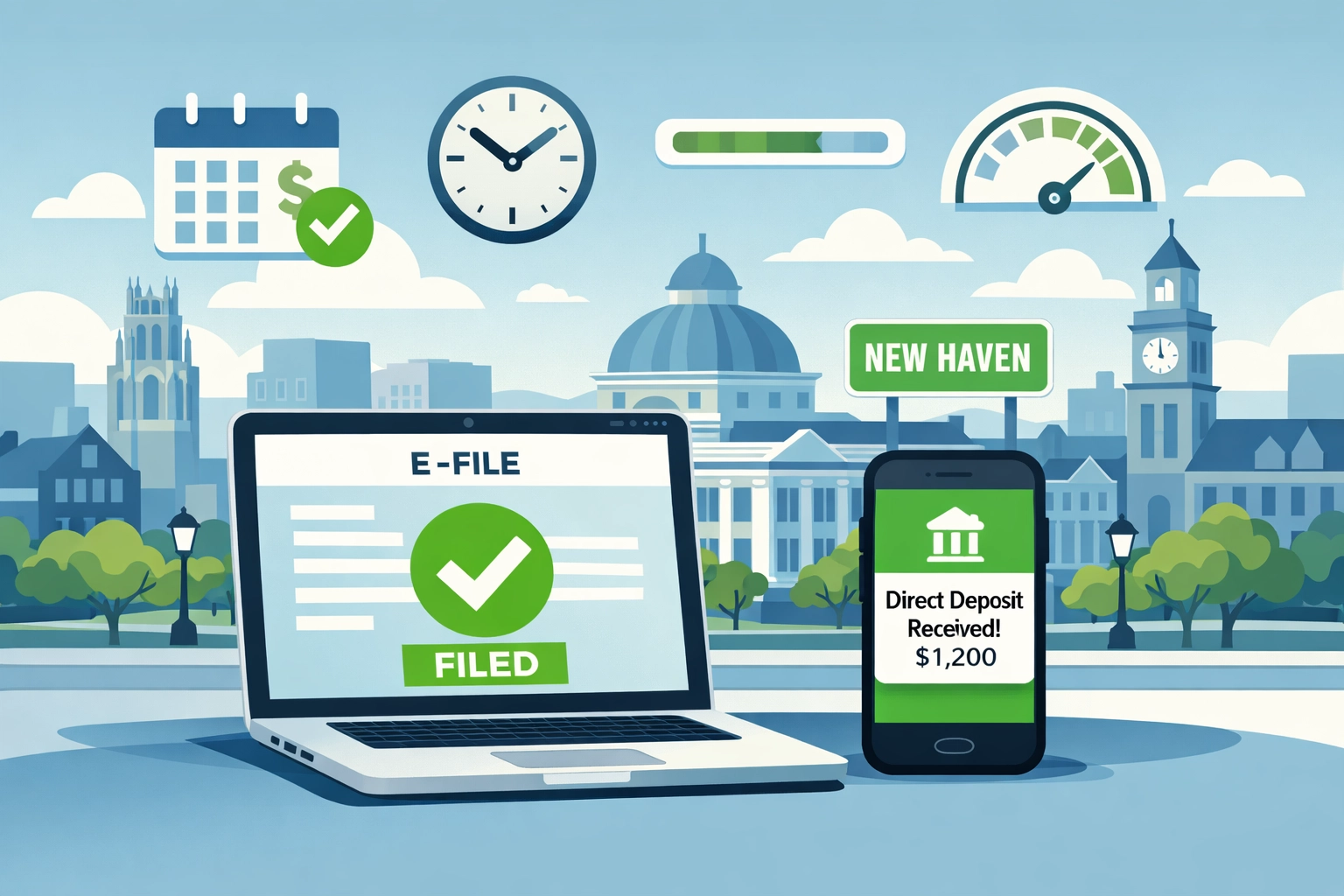
IRS Service Delays Require Strategic Filing Approach!
The IRS is operating with 27% fewer employees in 2026 compared to previous years. This staffing reduction has created significant delays in phone support, in-person assistance, and paper return processing.
Critical Filing Deadlines
- February 11-March 15: Optimal filing window to avoid peak-season delays
- March 16-April 15: Peak filing period with longer processing times
- April 15, 2026: Tax filing deadline for most taxpayers
Recommended Filing Strategy
File electronically with direct deposit. Electronic filing with direct deposit ensures refund processing within 21 days. Paper returns may face processing delays of 8-12 weeks during peak season.
Avoid phone support dependency. With reduced IRS staffing, phone wait times frequently exceed 30-45 minutes. Use IRS online tools and resources instead.
Prepare complete documentation before filing. Missing forms or incomplete information triggers IRS correspondence that can delay refunds by 60-90 days.
Required Documentation Checklist
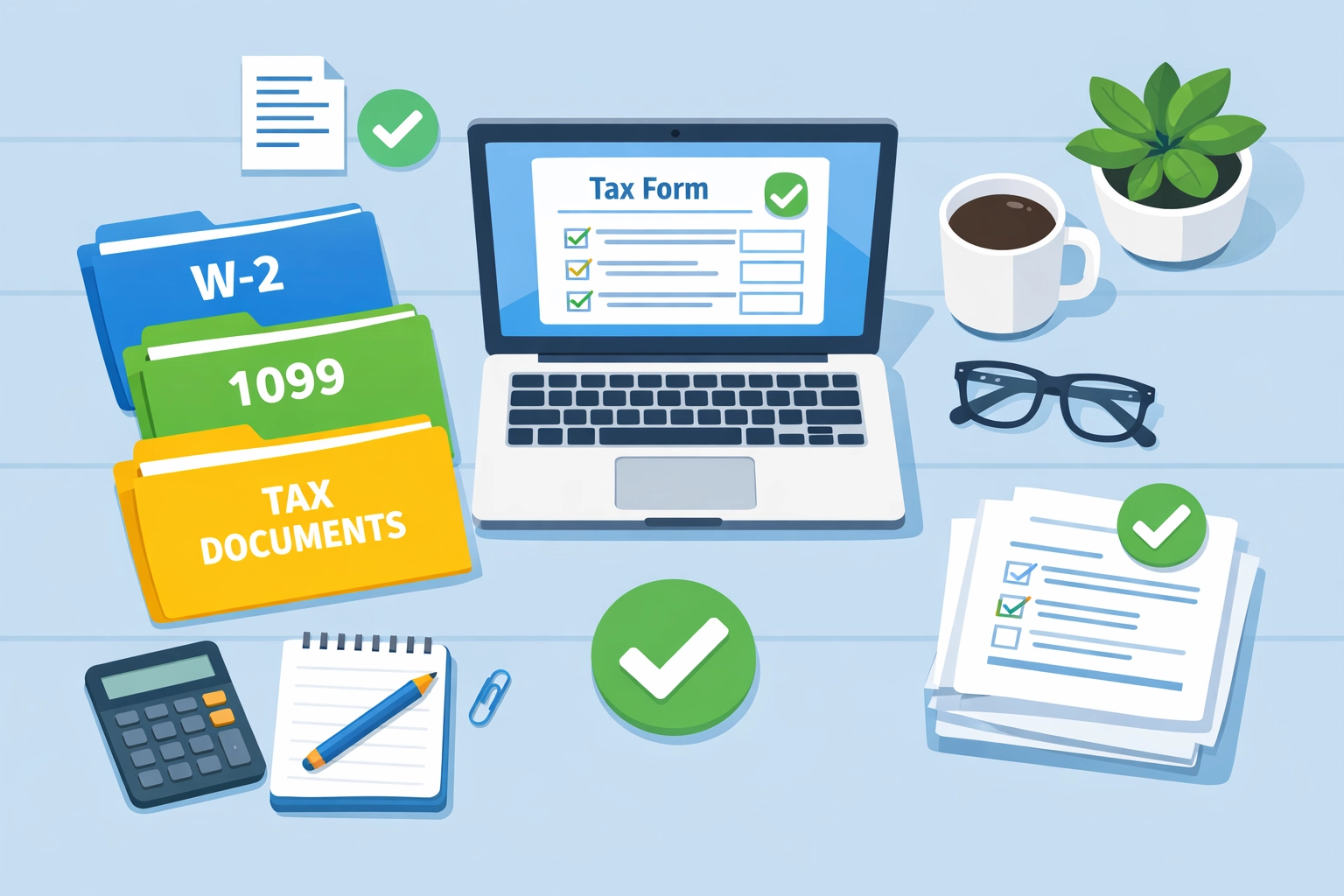
Gather these documents before starting your tax preparation in New Haven:
Income documents:
- Form W-2 from all employers
- Form 1099-NEC for independent contractor income
- Form 1099-INT for interest income
- Form 1099-DIV for dividend income
- Form 1099-G for unemployment compensation or state tax refunds
- Schedule K-1 for partnership or S-corporation income
Deduction documentation:
- Mortgage interest statements (Form 1098)
- Property tax payment records
- Charitable contribution receipts
- Medical expense receipts exceeding 7.5% of adjusted gross income
- Auto loan interest statements
Business owners additional requirements:
- Complete profit and loss statement
- Business expense receipts organized by category
- Home office measurement documentation
- Vehicle mileage logs
- Quarterly estimated tax payment records
Free Tax Preparation Resources for New Haven Residents
Connecticut taxpayers can access free tax preparation assistance through the Volunteer Income Tax Assistance (VITA) program. VITA sites operate throughout New Haven County and provide free tax preparation for taxpayers earning $64,000 or less annually.
VITA eligibility: Taxpayers with household income below $64,000, persons with disabilities, limited English-speaking taxpayers, and elderly taxpayers qualify for free assistance.
Services provided: IRS-certified volunteers prepare federal and Connecticut state tax returns, file returns electronically, and help taxpayers claim all eligible deductions and credits.
How to locate VITA sites: Visit the IRS VITA locator tool online or call 1-800-906-9887 for site locations and appointment scheduling.
When Professional Tax Help Makes Financial Sense
Complex tax situations require professional expertise to maximize deductions and ensure compliance. Consider professional tax preparation from Jose's Tax Service if your situation includes:
- Multiple income sources requiring Schedule C business reporting
- Rental property income requiring Schedule E
- Stock sales and capital gains calculations
- Complex itemized deductions near the standard deduction threshold
- First-time business owner filing requirements
- Estate or trust income reporting
Connecticut case study: A New Haven small business owner working with professional tax preparation achieved $12,400 in tax savings by properly documenting and claiming the new overtime, senior, and business deductions introduced in 2026.
Professional tax preparation ensures: Accurate deduction calculations, proper form completion, electronic filing with faster refunds, audit support if IRS correspondence occurs, and tax planning advice for 2026 estimated payments.
Connecticut Estate Planning Considerations
Connecticut residents with significant assets should review estate planning in light of 2026 tax law changes.
Federal estate tax exemption: The federal estate tax exemption has increased to $15 million per person ($30 million for married couples). This exemption applies to estates of decedents dying in 2026.
Connecticut estate tax: Connecticut maintains a separate 12% state estate tax that applies regardless of federal exemption levels. The Connecticut estate tax begins at lower asset thresholds than federal estate tax.
Action required: Taxpayers with estates exceeding $7.1 million (Connecticut's exemption amount) should consult with estate planning attorneys to implement tax-minimizing strategies. Trust structures, lifetime gifting, and charitable planning can reduce Connecticut estate tax liability.
Maximize Your Tax Refund Before April 15!
Take these final action steps before the April 15 deadline:
- Review all four new deduction categories (overtime, tips, senior, auto loan interest) and determine which apply to your situation
- Gather complete documentation for all income sources and deduction claims
- File electronically by early March to avoid peak-season delays and receive your refund within 21 days
- Consider professional tax preparation for complex situations or new deductions you haven't claimed previously
- Calculate SALT deduction benefits if you itemize and paid significant Connecticut property and income taxes
The 2026 tax season offers substantial savings opportunities through new deductions, but taxpayers must act quickly given IRS processing delays. Don't leave money on the table: review your tax planning strategy now and file before peak season creates unnecessary delays.
Need help maximizing your 2026 tax refund? Contact Jose's Tax Service for professional tax preparation and planning assistance. Our team specializes in Connecticut tax requirements and helps New Haven taxpayers claim every deduction they deserve.

Leave a Reply
You must be logged in to post a comment.