
Where's My Refund? Track Your 2026 Tax Refund Like a Pro
NEW HAVEN, CT – February 7, 2026 : The Internal Revenue Service (IRS) provides taxpayers with a dedicated tracking tool to monitor the status of their 2026 tax refunds. Understanding how to use this system effectively can eliminate unnecessary anxiety and help you plan your finances with confidence.
What Is the IRS "Where's My Refund?" Tool?
The "Where's My Refund?" tool is the official IRS application designed to provide real-time updates on your tax refund status. This free service is available through two channels:
- IRS.gov website – Access the web-based tracker from any internet-connected device
- IRS2Go mobile app – Download the official app for iOS or Android devices
Both platforms deliver identical information and update simultaneously. The tool displays your refund progress through three distinct phases, allowing you to monitor your return from acceptance to payment disbursement.
Required Information to Track Your Refund
Before accessing the "Where's My Refund?" tool, gather the following three pieces of information:
- Social Security Number (SSN) or Individual Taxpayer Identification Number (ITIN) – Enter the primary SSN or ITIN listed on your tax return
- Filing Status – Select the exact status you claimed (Single, Married Filing Jointly, Married Filing Separately, Head of Household, or Qualifying Surviving Spouse)
- Exact Refund Amount – Input the whole dollar amount of your expected refund as shown on your tax return (do not include cents)
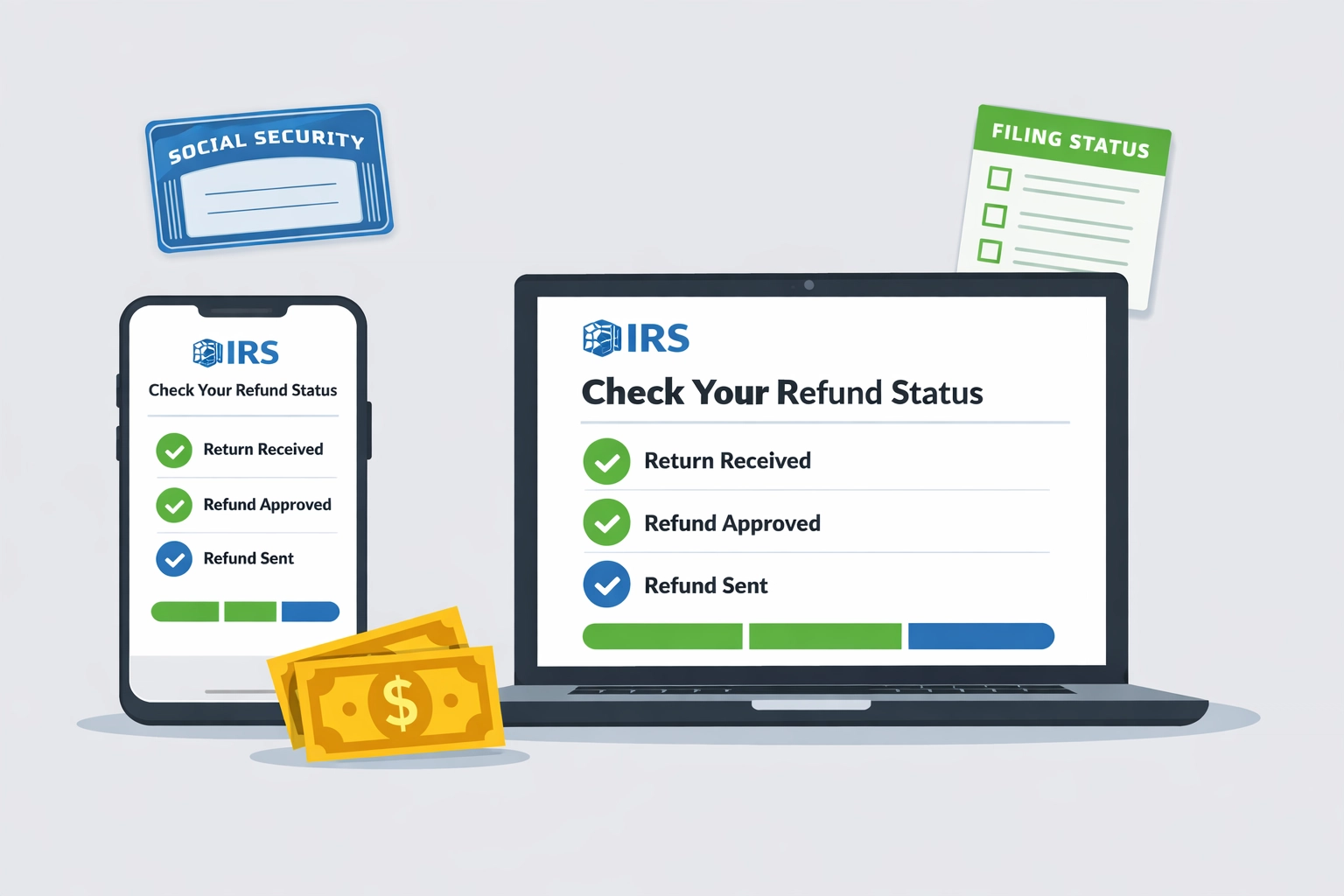
These credentials authenticate your identity and protect your financial information. Double-check each entry for accuracy. Incorrect information will prevent access to your refund status.
When Can You Start Checking Your Refund Status?
Timing matters when tracking your tax refund. The IRS system requires processing time before information becomes available:
For Current-Year Returns:
- E-filed returns – Status available within 24 hours of IRS acceptance
- Paper returns – Status available approximately 4 days after the IRS receives your mailed return
For Prior-Year Amended Returns:
- E-filed amended returns – Status available 3 to 4 days after submission
- Paper amended returns – Processing takes significantly longer, often several weeks before status updates appear
The IRS does not process returns instantaneously. Electronic filing (e-file) consistently provides faster processing and refund disbursement compared to paper filing methods.
Understanding the Three Refund Status Phases
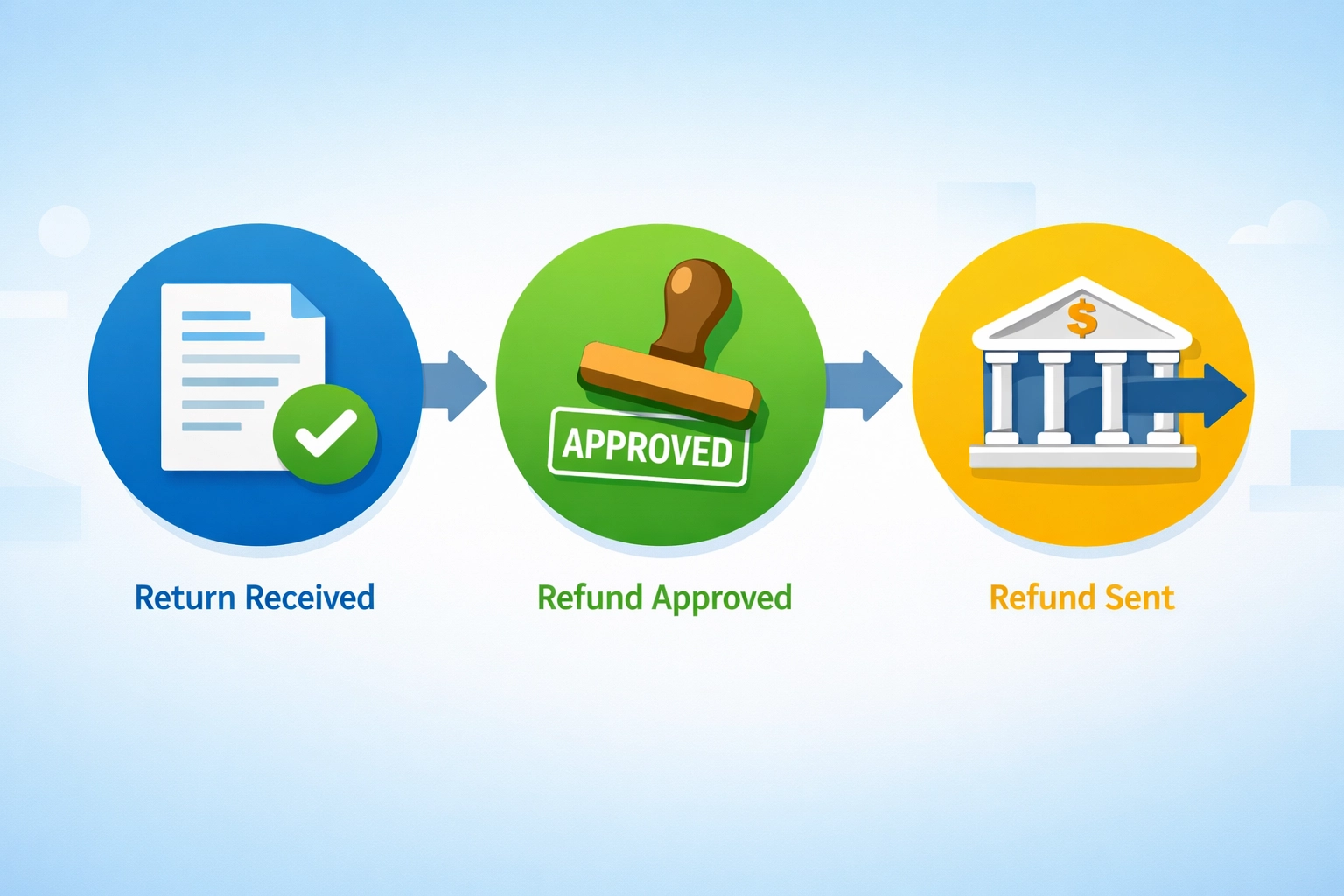
The "Where's My Refund?" tool organizes processing into three sequential phases:
Phase 1: Return Received
Your tax return has been accepted by IRS systems and entered the processing queue. The IRS verifies your information and begins calculations.
Phase 2: Refund Approved
The IRS has completed processing your return, confirmed the refund amount, and approved payment. Your refund is scheduled for disbursement.
Phase 3: Refund Sent
The IRS has transmitted your refund payment. For direct deposits, funds have been sent to your financial institution. For paper checks, the Treasury Department has mailed your refund to the address on your return.
Each phase represents a checkpoint in the refund process. Most taxpayers progress through all three phases without complications.
Expected Refund Timelines for 2026
Standard processing timelines provide a framework for when to expect your refund:
Electronic Filing with Direct Deposit:
- Most refunds issued within 21 days of IRS acceptance
- Fastest refund method available
Electronic Filing with Paper Check:
- Refunds typically issued within 21 days of acceptance
- Additional 2 to 5 days for mail delivery
- Potential delays due to postal service processing
Paper Filing with Direct Deposit:
- Processing takes 4 to 8 weeks or longer
- Significantly slower than electronic filing
Paper Filing with Paper Check:
- Processing takes 4 to 8 weeks or longer
- Additional mail delivery time required
- Longest refund timeline
These timelines represent typical processing under normal circumstances. Various factors can extend these timeframes.
How Often Does the IRS Update Refund Information?
The "Where's My Refund?" tool updates once every 24 hours, typically overnight. Checking multiple times per day will not yield new information. The system does not provide real-time updates.
Plan to check your refund status once daily at most. Excessive inquiries do not accelerate processing or provide additional details beyond what the system displays during the previous 24-hour period.
Common Reasons for Refund Delays
Several circumstances can extend processing time beyond standard timelines:
Return-Related Issues:
- Mathematical errors or calculation mistakes
- Incomplete forms or missing information
- Inconsistencies between reported income and third-party documents (W-2s, 1099s)
- Claims requiring additional review or verification
Security and Fraud Prevention:
- Suspected identity theft or fraud indicators
- Returns flagged for additional authentication
- Taxpayer Protection Program holds
Special Credits and Circumstances:
- Earned Income Tax Credit (EITC) claims – Returns held until mid-February by law
- Additional Child Tax Credit (ACTC) claims – Same mid-February hold applies
- First-time homebuyer credit claims
- Amended returns requiring manual review
Banking and Payment Processing:
- Incorrect bank account information for direct deposit
- Closed or invalid bank accounts
- Weekend and holiday processing delays at financial institutions

If your refund status shows no updates after the expected timeframe, the IRS may require additional documentation or verification before releasing your refund.
What to Do If Your Refund Is Delayed
Follow these steps if your refund exceeds normal processing timelines:
- Wait for the Initial Processing Period – Allow at least 21 days for e-filed returns or 8 weeks for paper returns before contacting the IRS
- Check for IRS Correspondence – Review mail for notices requesting additional information or explaining delays
- Verify Your Information – Confirm all entries in the "Where's My Refund?" tool match your tax return exactly
- Contact the IRS – Call the refund hotline at 1-800-829-1954 only after the standard processing period has elapsed
- Respond to IRS Requests Promptly – Submit any requested documentation immediately to avoid further delays
The IRS processes millions of returns during tax season. Patience during peak filing periods prevents unnecessary inquiries that strain IRS resources.
Banking Processing Times After IRS Sends Your Refund
Once the IRS transmits your refund, your financial institution requires additional processing time:
Direct Deposit Timeline:
- 2 to 5 business days after IRS transmission
- Weekend and holiday processing not included
- Some banks post deposits earlier, but this is not guaranteed
Paper Check Timeline:
- Several weeks for mail delivery
- Postal service delays can extend delivery time
- Lost checks require additional processing to reissue
Contact your financial institution if your refund does not appear within 5 business days of the "Refund Sent" status update.
How Jose's Tax Service Helps You Track and Optimize Your Refund
At Jose's Tax Service, we don't just prepare your return and send you on your way. Our team provides comprehensive refund tracking assistance and optimization strategies:
Pre-Filing Refund Optimization:
- Identify all eligible deductions and credits before filing
- Maximize your refund amount through strategic tax planning
- Ensure accurate filing to prevent processing delays
Post-Filing Support:
- Monitor your refund status and alert you to any issues
- Communicate with the IRS on your behalf if delays occur
- Resolve discrepancies quickly to expedite processing
Direct Deposit Setup:
- Verify banking information accuracy to prevent deposit errors
- Explain split refund options for savings and checking accounts
- Ensure fastest possible refund delivery
Our concierge approach means you have a dedicated tax professional managing your return from preparation through refund receipt. Visit Jose's Tax Service to learn how our team can streamline your 2026 tax filing experience.
Key Takeaways for Tracking Your 2026 Tax Refund
Follow these essential guidelines to track your refund effectively:
- File electronically and select direct deposit for the fastest refund processing
- Gather your SSN/ITIN, filing status, and exact refund amount before using the tracking tool
- Check your refund status once daily, as the system updates every 24 hours
- Allow 21 days for e-filed returns and 8 weeks for paper returns before contacting the IRS
- Respond immediately to any IRS correspondence requesting additional information
- Verify your banking information accuracy to prevent deposit errors
Understanding the refund tracking process eliminates uncertainty and helps you plan your finances with confidence. The IRS provides the tools: knowing how to use them strategically ensures you receive your refund as quickly as possible.
For professional assistance with your 2026 tax return and refund tracking, contact Jose's Tax Service today. Our team handles the details so you can focus on what matters most.

Leave a Reply
You must be logged in to post a comment.