
Tax Planning 101: Your New Haven Beginner's Guide to Staying Ahead in 2026
Tax planning is not a once-a-year activity. For New Haven residents navigating the 2026 tax season, understanding local and state tax changes can mean the difference between maximizing your refund and leaving money on the table. This guide breaks down the essential tax planning strategies you need to implement right now.
What New Haven Property Owners Need to Know!
New Haven's property tax rate increased by 0.9 mills for fiscal year 2025-26, moving from 38.50 to 39.40 mills. This represents a 2.3% increase that directly affects homeowners across the city.
Calculate your impact by multiplying your property's assessed value by the mill rate. For a home assessed at $200,000, the increase translates to approximately $180 in additional annual property tax.
Context matters: New Haven's rate remains lower than Bridgeport, Hartford, and Waterbury, and comparable to Hamden and West Haven. If you relocated from these municipalities, your tax burden may actually decrease.
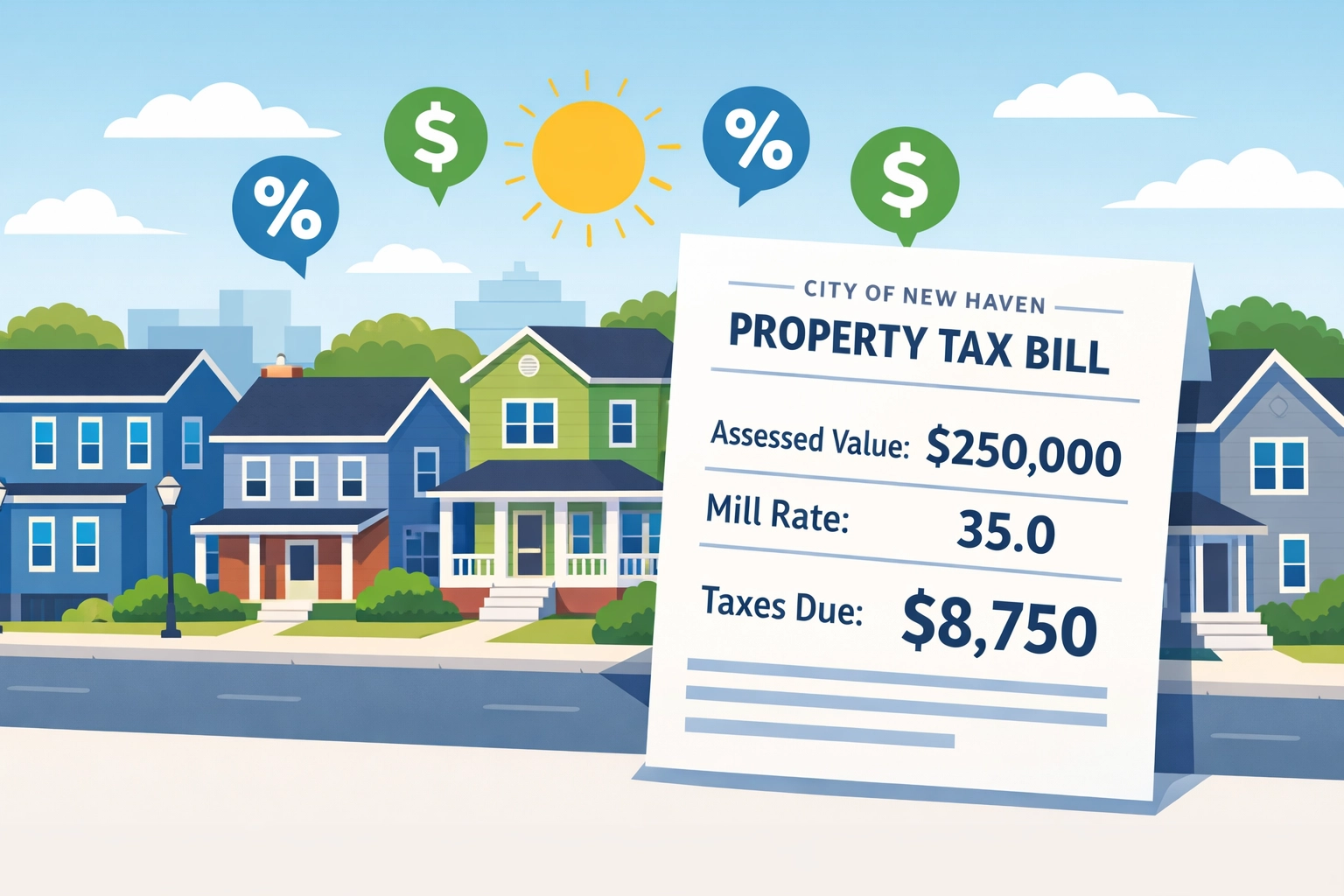
Connecticut offers partial relief through an increased property tax credit. The state credit rose to $350 in 2026, up $50 from the previous year. Eligible residents can claim this credit when filing their state income tax returns.
Action required: File Form CT-1040 and complete Schedule 1 to claim your property tax credit. Double-check that your municipality reported your property tax payments to the state: errors in reporting can delay or deny your credit.
Connecticut's Major Tax Updates for 2026!
Connecticut implemented substantial tax changes affecting middle-income earners and working families. The state passed its largest middle-class income tax cut in history, reducing rates across several brackets.
Working families earning below specific thresholds may qualify for complete elimination of state income tax liability. Review the updated tax tables published by the Connecticut Department of Revenue Services to determine your bracket.
Calculate your savings: Compare your 2025 tax liability to projected 2026 liability using the new rates. If you're paying estimated taxes quarterly, adjust your payments to avoid overpayment.
The Pass-Through Entity (PTE) tax election provides significant benefits for business owners. This provision allows eligible entities to pay Connecticut state income tax at the business level rather than the individual level, creating a valuable federal tax deduction.
Why this matters: The federal State and Local Tax (SALT) deduction caps individual deductions at $10,000. The PTE election bypasses this limitation, potentially saving business owners thousands in federal taxes.

Estate Planning Changes You Cannot Ignore!
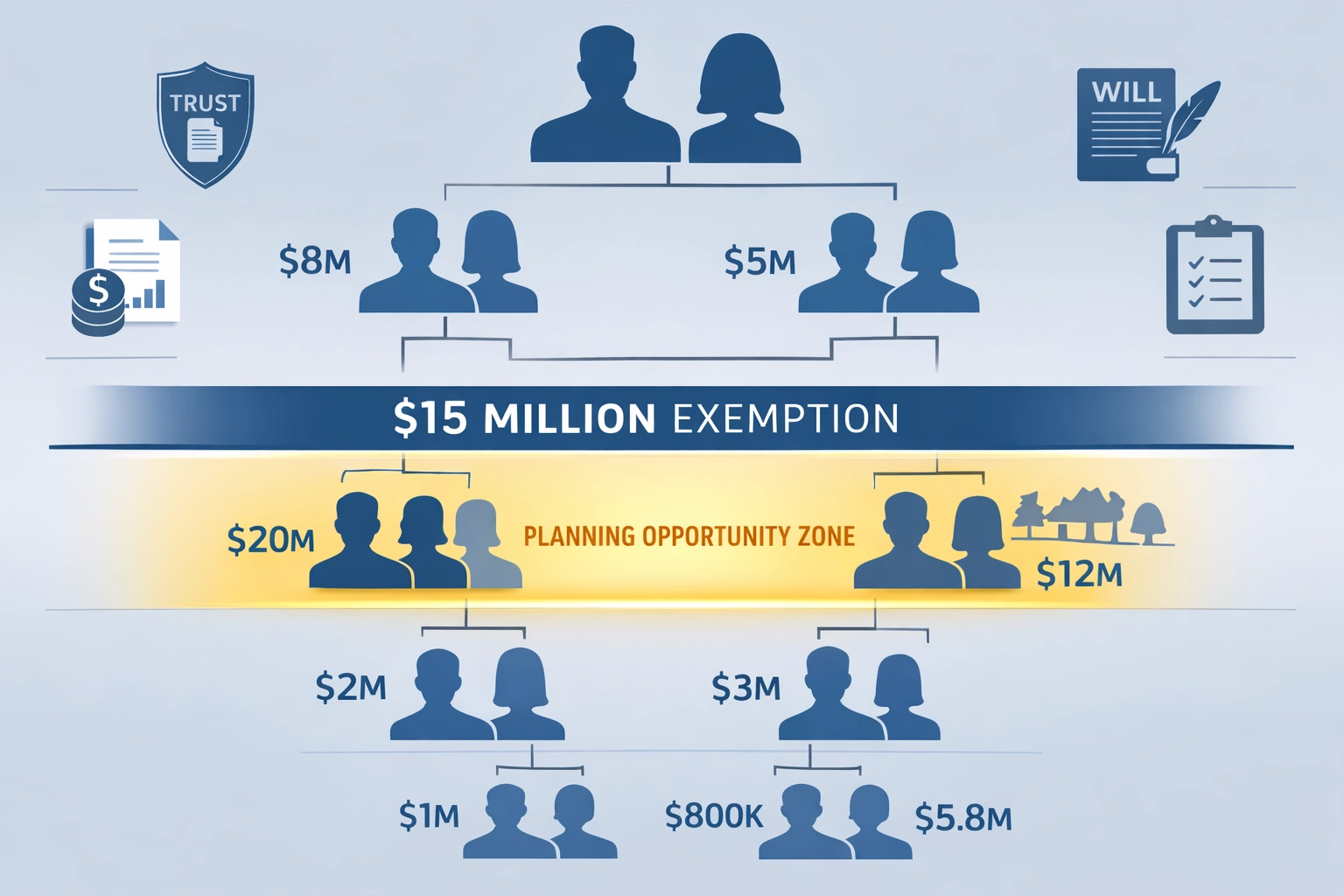
Connecticut's estate tax exemption increased to $15 million per individual ($30 million for married couples) as of January 1, 2026. This matches the federal exemption level and provides substantial relief for estate planning.
Critical distinction: Connecticut does not allow portability between spouses. When one spouse dies, any unused portion of their $15 million exemption vanishes: it cannot transfer to the surviving spouse.
This creates unique planning challenges. A married couple with a $25 million estate faces potential Connecticut estate tax exposure if proper planning is not implemented before the first spouse's death.
Consider these foundational strategies:
Update beneficiary designations immediately. Retirement accounts, life insurance policies, and payable-on-death bank accounts pass directly to named beneficiaries, overriding instructions in your will. Outdated beneficiary forms can trigger unintended tax consequences.
Establish proper trust structures. Credit shelter trusts and other estate planning vehicles can preserve both spouses' exemptions despite Connecticut's no-portability rule. Consult with an estate planning attorney familiar with Connecticut law.
Leverage annual gifting. You can gift $19,000 per recipient annually without triggering gift tax or reducing your lifetime exemption. Systematic gifting over multiple years reduces estate size while transferring wealth to beneficiaries.
Warning: Combined federal and Connecticut estate taxes can reach 47.2% on assets exceeding both exemption thresholds. Estates valued above $15 million require professional planning to minimize tax exposure.
Strategic Moves for New Haven Business Owners!
Business owners face unique tax planning opportunities in 2026. Implement these strategies before year-end to maximize deductions and minimize liability.
Review your entity structure. The PTE tax election benefits S corporations, partnerships, and LLCs taxed as partnerships or S corporations. Sole proprietorships and C corporations are not eligible.
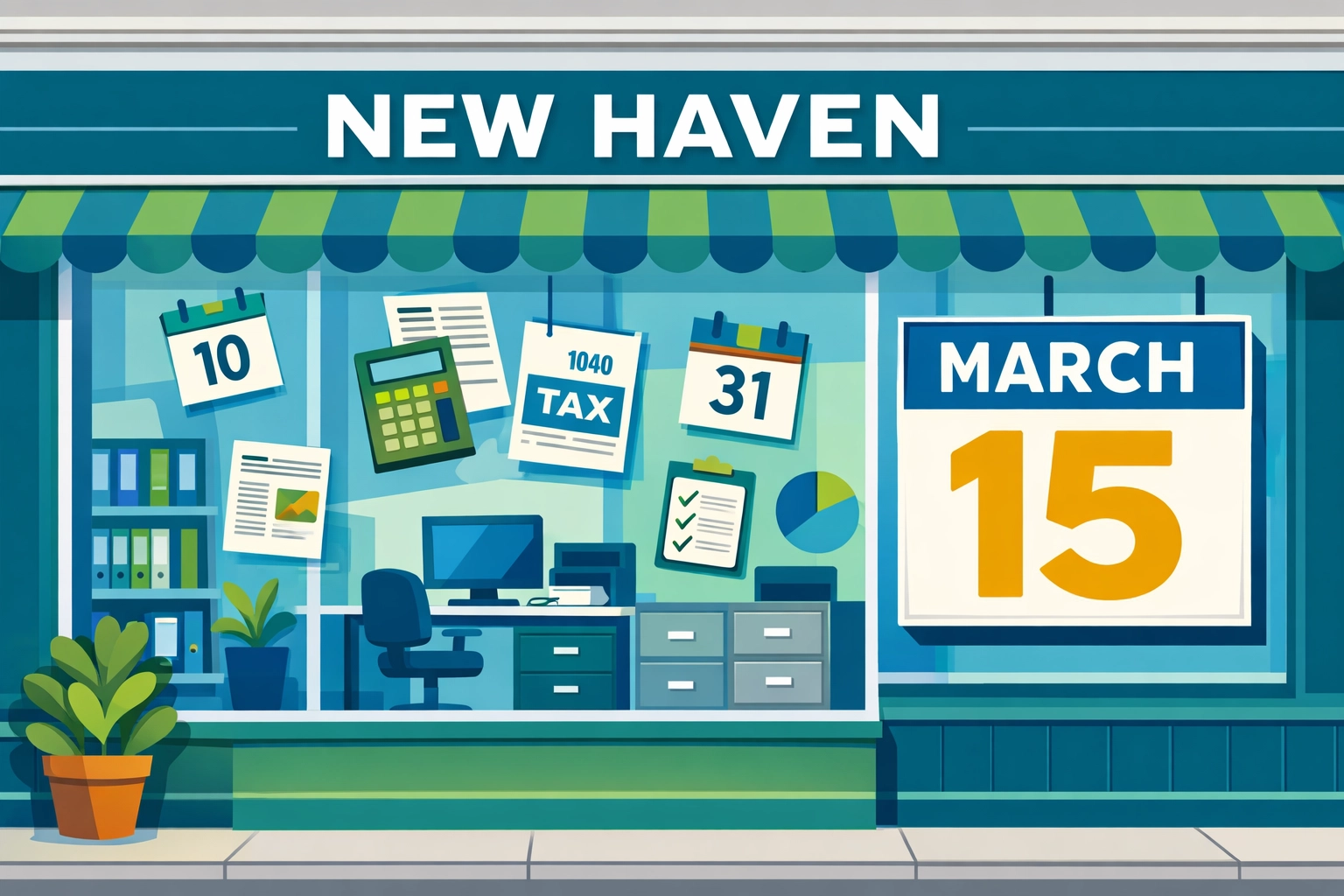
Timing matters: Connecticut requires PTE election by March 15 for calendar-year entities. Missing this deadline eliminates the deduction opportunity for the entire year.
Accelerate deductible expenses into 2026 when beneficial. Prepaying expenses like insurance, rent, or professional services can increase current-year deductions if you use cash-basis accounting.
Purchase qualifying equipment and assets before December 31 to claim Section 179 deductions or bonus depreciation. The federal Section 179 deduction allows immediate expensing of up to $1,220,000 in qualifying property purchases.
Caution: Section 179 deductions cannot create a business loss. Calculate your business income carefully to avoid wasted deductions that carry forward unnecessarily.
Year-Round Tax Planning for Maximum Refunds!
Effective tax planning extends beyond December. Implement these practices throughout the year to stay ahead and maximize your tax refund.
Adjust withholding quarterly. Review your paychecks after major life events: marriage, divorce, birth of a child, home purchase. Submit updated Form W-4 to your employer to align withholding with actual tax liability.
Track deductible expenses monthly. Maintain organized records of charitable contributions, medical expenses, business costs, and other deductible items. Waiting until tax season creates chaos and missed deductions.
Contribute to retirement accounts consistently. Traditional IRA contributions reduce taxable income while building retirement savings. For 2026, contribution limits are $7,000 ($8,000 if age 50 or older).
Monitor estimated tax requirements. Self-employed individuals and those with significant non-wage income must pay estimated taxes quarterly. Underpayment can trigger penalties even if you ultimately receive a refund.
Schedule mid-year tax projections with a tax professional. A June or July review identifies planning opportunities while time remains to implement strategies before year-end.
Your Action Plan for 2026 Tax Success!
Start with documentation. Gather last year's tax return, recent pay stubs, property tax bills, and investment account statements. These documents provide baseline information for planning.
Schedule a consultation with a qualified tax professional familiar with Connecticut and New Haven regulations. Local expertise matters when navigating municipal property taxes and state-specific deductions.
Review and update estate planning documents if your assets exceed $10 million or you've experienced major life changes. Estate plans require regular maintenance to remain effective.
Set calendar reminders for key tax deadlines:
- March 15: PTE election deadline for calendar-year entities
- April 15: Individual income tax filing deadline
- Quarterly estimated tax payment dates
Implement a record-keeping system that tracks deductible expenses throughout the year. Mobile apps, cloud storage, or traditional filing systems all work: consistency matters more than methodology.
Final reminder: Tax law changes frequently. The strategies outlined here reflect current 2026 regulations, but future legislative action may alter these provisions. Maintain regular contact with your tax advisor to stay informed of changes affecting your specific situation.
For personalized guidance on your 2026 tax planning strategy, contact Jose's Tax Service to schedule your consultation. Our New Haven team specializes in maximizing refunds while ensuring full compliance with local, state, and federal tax requirements.

Leave a Reply
You must be logged in to post a comment.