
Smart Tax Strategies for New Haven's Self-Employed and Freelancers in 2026
If you're self-employed or freelancing in New Haven this year, your tax situation just got more complicated: and more opportunity-filled. The 2026 tax year brings significant changes that can either save you thousands or cost you in penalties if you're not prepared.
Here's what you need to know right now.
Understanding Self-Employment Tax in 2026!
Self-employment tax stands at 15.3% for 2026: covering both Social Security (12.4%) and Medicare (2.9%) portions. Unlike W-2 employees who split this cost with employers, you're responsible for the full amount.
Calculate your self-employment tax on 92.35% of your net earnings. If you earned $50,000 in net profit, you'll owe approximately $7,065 in self-employment tax alone, separate from your income tax liability.
The good news: You can deduct half of this self-employment tax as an adjustment to income, even without itemizing deductions. This deduction reduces your taxable income directly on Form 1040.
Quarterly Estimated Tax Payments: Don't Miss These Deadlines!
The IRS requires quarterly payments if you expect to owe $1,000 or more in taxes for 2026. Missing these deadlines triggers penalties and interest charges that accumulate quickly.
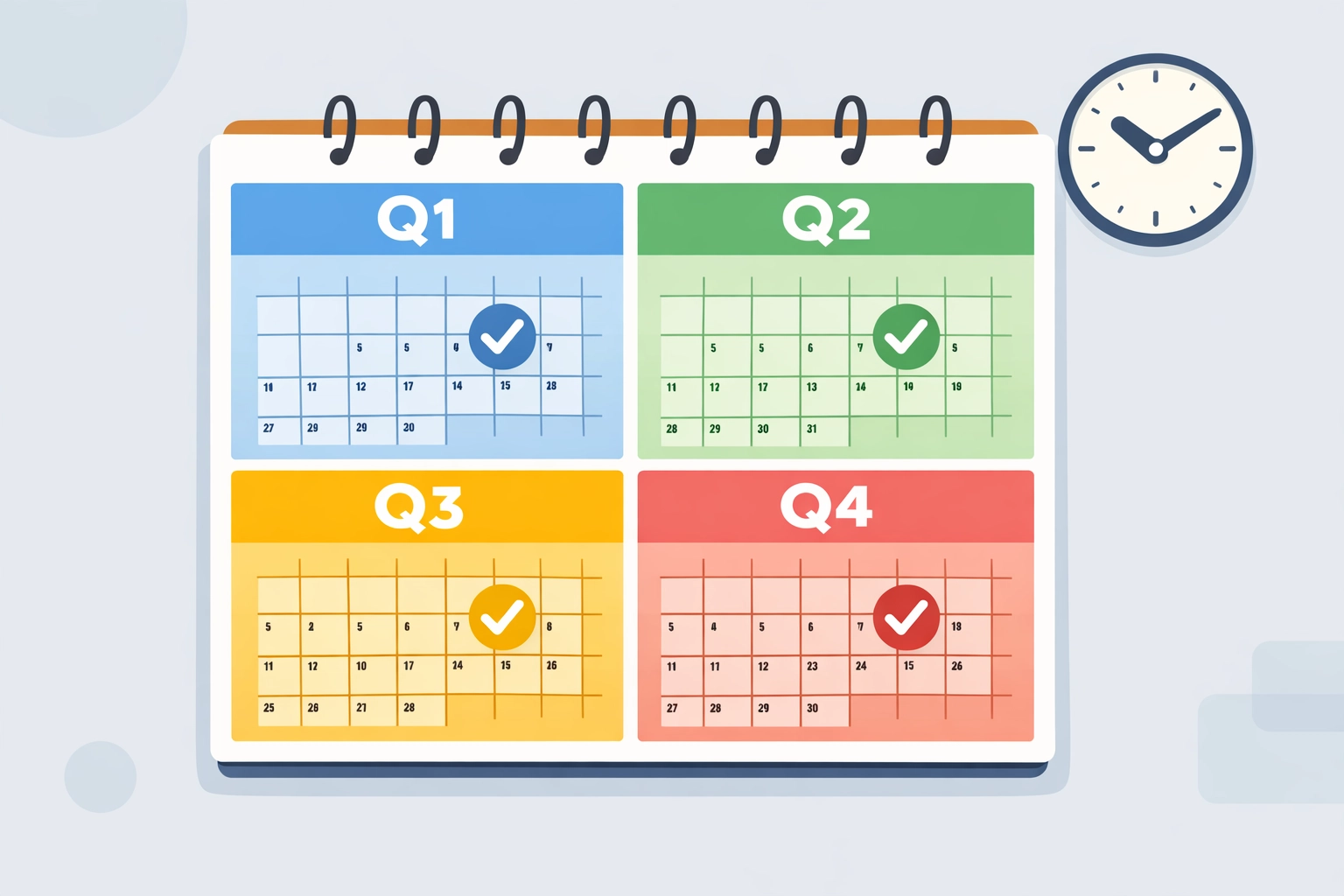
2026 Quarterly Payment Schedule:
- Q1: April 15, 2026
- Q2: June 15, 2026
- Q3: September 15, 2026
- Q4: January 15, 2027
Calculate your quarterly payments using Form 1040-ES. Base your estimates on either 90% of your current year's tax liability or 100% of last year's total tax (110% if your adjusted gross income exceeded $150,000).
Use the IRS Direct Pay system or the Electronic Federal Tax Payment System (EFTPS) to submit payments electronically. Paper vouchers work, but electronic payments provide instant confirmation and eliminate mail-related delays.
Connecticut Requirement: File quarterly estimated taxes with Connecticut using Form CT-1040ES if you expect to owe more than $1,000 in state income tax. Connecticut deadlines mirror federal due dates.
The Qualified Business Income Deduction: Your Biggest Break!
The Qualified Business Income (QBI) deduction allows you to deduct up to 20% of your qualified business income, whether you itemize or take the standard deduction.
Starting in 2026, a new minimum deduction rule applies: If you materially participate in your business and have at least $1,000 in QBI, you're guaranteed a minimum $400 deduction. This provision protects lower-income self-employed workers who previously saw reduced benefits.
The deduction applies to sole proprietorships, partnerships, S corporations, and some trusts and estates. Calculate your QBI deduction on Form 8995 (simplified version) or Form 8995-A (complex version with phase-outs and limitations).
Phase-Out Thresholds: High earners face reduced deductions once taxable income exceeds $197,300 (single filers) or $394,600 (joint filers) in 2026. Specified Service Trade or Business (SSTB) owners: including doctors, lawyers, accountants, and consultants: face additional restrictions above these thresholds.
Home Office Deduction: Two Methods Available!
If you work from home in New Haven, claim the home office deduction using either the simplified or actual expense method.
Simplified Method:
- Multiply your office square footage (up to 300 sq ft) by $5 per square foot
- Maximum annual deduction: $1,500
- No depreciation calculations required
- File using Form 8829
Actual Expense Method:
- Deduct proportional shares of mortgage interest or rent, utilities, insurance, repairs, and depreciation
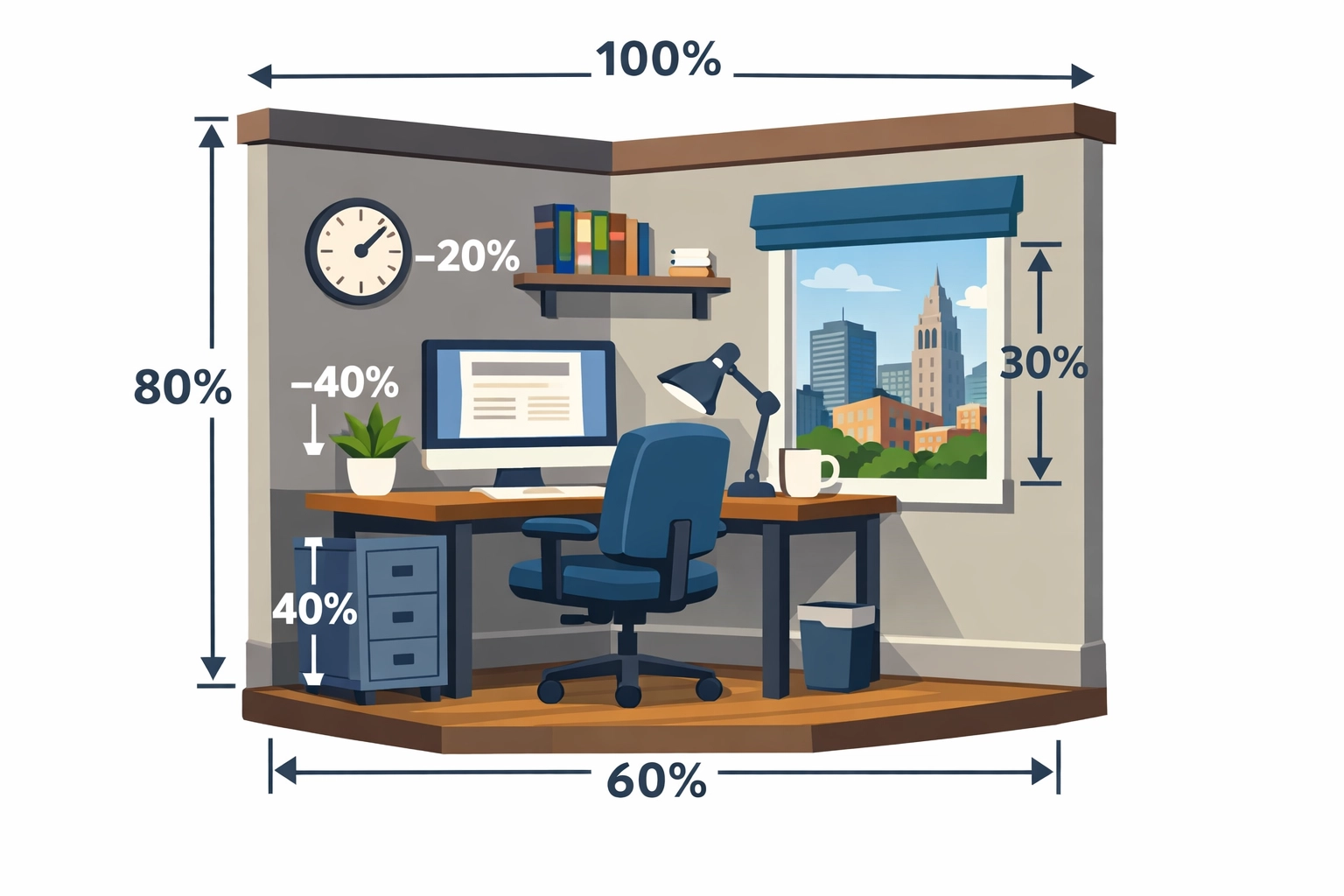
- Calculate business use percentage (office square footage ÷ total home square footage)
- Apply this percentage to eligible expenses
- Potentially higher deduction for larger office spaces
- Requires detailed record-keeping
Your space must be used regularly and exclusively for business. Occasional or incidental use disqualifies the deduction. "Exclusive use" means the space serves no other purpose: no spare bedroom that doubles as an office when guests aren't visiting.
Health Insurance Premium Deduction: 100% Coverage!
Deduct 100% of your health insurance premiums without itemizing, including medical, dental, and long-term care coverage for yourself, your spouse, and dependents.
Requirements:
- Show net self-employment income
- Not be eligible for employer-sponsored coverage through your own job or your spouse's employer
- Coverage must be established under your business
Enter this deduction on Schedule 1 (Form 1040) as an adjustment to income. This powerful benefit significantly reduces your adjusted gross income (AGI), which affects eligibility for other tax credits and deductions.
Tip Income Relief: New Deduction for Service Workers!
If you work in traditionally tipped occupations: hairstyling, rideshare driving, food delivery, personal services: you can deduct up to $25,000 in qualified tips through 2028.
Eligibility Requirements:
- Valid Social Security number
- Net self-employment income
- Work in an occupation that customarily received tips before December 31, 2024
The deduction phases out above $150,000 modified adjusted gross income (MAGI) for single filers or $300,000 MAGI for joint filers. Calculate your phase-out reduction carefully to avoid claiming excess deductions.
This provision provides significant relief for New Haven's service economy workers, including restaurant delivery drivers, salon professionals, and transportation providers.
Business Expense Deductions: Every Dollar Counts!
Every legitimate business expense reduces both your self-employment tax and income tax liability. Deductible ordinary and necessary expenses include:
- Office supplies and equipment
- Computers and software
- Professional development and continuing education
- Business insurance premiums
- Marketing and advertising costs
- Professional services (legal, accounting, consulting)
- Business travel and meals (subject to limitations)
- Vehicle expenses (standard mileage rate or actual expenses)
- Business-related phone and internet services
The standard mileage rate for 2026 applies to business vehicle use. Track all business miles using a mileage log or app. The actual expense method requires detailed records of all vehicle-related costs and calculation of business use percentage.
Meals and Entertainment: Business meals remain 50% deductible in 2026. Document the business purpose, attendees, and discussion topics for each meal expense.
Retirement Contributions: Reduce Taxes While Building Wealth!
Self-employed retirement plans offer substantial tax benefits while securing your financial future.
SEP-IRA Contributions:
- Contribute up to the lesser of $70,000 or 25% of compensation (2025 limits likely continuing into 2026)
- Deduct contributions as business expenses
- No annual filing requirements
- Easy to establish and maintain
Solo 401(k) Plans:
- Higher contribution limits than SEP-IRAs
- Employee deferrals up to $23,000 (plus $7,500 catch-up if age 50+)
- Employer profit-sharing contributions up to 25% of compensation
- Total contribution limit: $70,000 ($77,500 with catch-up)
Make contributions by your tax filing deadline (including extensions) to claim deductions for 2026. These contributions reduce your adjusted gross income, lowering your overall tax burden.
Record-Keeping Requirements: Protect Yourself in an Audit!
Solid documentation protects you during IRS audits and ensures you capture all eligible deductions.
Maintain These Records:
- Bank statements and credit card statements
- Receipts for all business expenses
- Invoices and payment records
- Mileage logs for vehicle expenses
- Home office measurements and calculations
- Form 1099-NEC from clients (payment threshold: $600)
- Business license and registration documents
Store records for at least three years from your filing date. The IRS can audit returns up to three years old under normal circumstances, or six years for substantial underreporting.
Use accounting software like QuickBooks Self-Employed or FreshBooks to track income and expenses automatically. Digital record-keeping simplifies tax preparation and provides instant access to documentation if needed.
New Haven-Specific Considerations!
Connecticut requires separate state tax filings with unique provisions affecting self-employed workers.
File Connecticut Form CT-1040 by April 15, 2027 (for tax year 2026). Connecticut doesn't offer a state-level QBI deduction, so your state taxable income will differ from your federal calculation.
Connecticut Business Entity Tax: If you operate as a partnership or S corporation, file Connecticut Form CT-1065/CT-1120SI and pay the Business Entity Tax annually.
Local New Haven business licenses and permits may be required depending on your industry. Check with the City of New Haven's Economic Development office to ensure compliance with local regulations.
How Jose's Tax Service Provides Personalized Care for the Self-Employed!
Navigating self-employment taxes requires expertise and attention to detail. One missed deduction or late quarterly payment can cost you hundreds: or thousands: in unnecessary taxes and penalties.
Jose's Tax Service specializes in helping New Haven's self-employed workers and freelancers maximize deductions while staying compliant with federal, state, and local requirements. We provide:
- Quarterly tax planning sessions to optimize estimated payments
- Year-round consultation on deductible expenses
- Complete tax preparation with self-employment tax expertise
- Audit support and representation
- Retirement planning strategies that reduce current-year taxes
Our personalized approach means you're not just another return in the pile. We take time to understand your unique business situation and craft tax strategies that work for your specific circumstances.
Take Action Now: Schedule your consultation at Jose's Tax Service before the April quarterly deadline. Don't leave money on the table or risk penalties from late payments.
The 2026 tax year offers unprecedented opportunities for self-employed New Haven residents: but only if you plan strategically and execute flawlessly. Start now to maximize your deductions and minimize your tax burden.

Leave a Reply
You must be logged in to post a comment.