
2026 Tax Prep: How to Organize Your Records for a Stress-Free Filing
New Haven, CT , January 2026 , Tax season is here. For many New Haven taxpayers and small business owners, the thought of gathering documents and filing returns can feel overwhelming. But here's the truth: a little organization now can save you hours of stress later and help you maximize your tax refund.
At Jose's Tax Service, we've helped countless clients in the New Haven area navigate tax preparation with confidence. This tax update breaks down exactly how to organize your tax records for a smooth, stress-free tax filing in 2026.
Let's get started.
Why Organizing Tax Records Matters!
Before diving into the how-to, understand why this step is critical.
Disorganized records lead to:
- Missed deductions that could have put money back in your pocket
- Filing delays that push back your refund
- Errors on your return that may trigger IRS audits or penalties
- Unnecessary stress during an already busy season
Organized records, on the other hand, help you file accurately, claim every deduction you deserve, and get your refund faster. Whether you're a W-2 employee, a freelancer, or a New Haven small business owner, proper tax planning starts with having your documents in order.

Step 1: Create Your 2026 Tax Document Folder
Start with a simple system. Create one dedicated folder, physical or digital, labeled "2026 Tax Documents." This becomes your single source of truth for everything related to your return.
Pro tip: Use subfolders or dividers to separate documents by category:
- Personal Information
- Income Documents
- Deductions and Expenses
- Business Records (if applicable)
This structure makes retrieval quick and prevents lost paperwork when you're ready for tax preparation.
Step 2: Gather Your Personal Information
Before you touch any financial documents, collect the basics. You'll need:
- Full legal name, Social Security Number (SSN), and date of birth
- The same information for your spouse (if filing jointly)
- SSNs and birth dates for all dependents
- A copy of last year's tax return for reference
- Bank account and routing numbers for direct deposit
- Current mailing address and contact information
Why this matters: Incorrect or missing personal information can delay processing. Double-check that all SSNs are accurate before filing.
Step 3: Collect All Income Documents
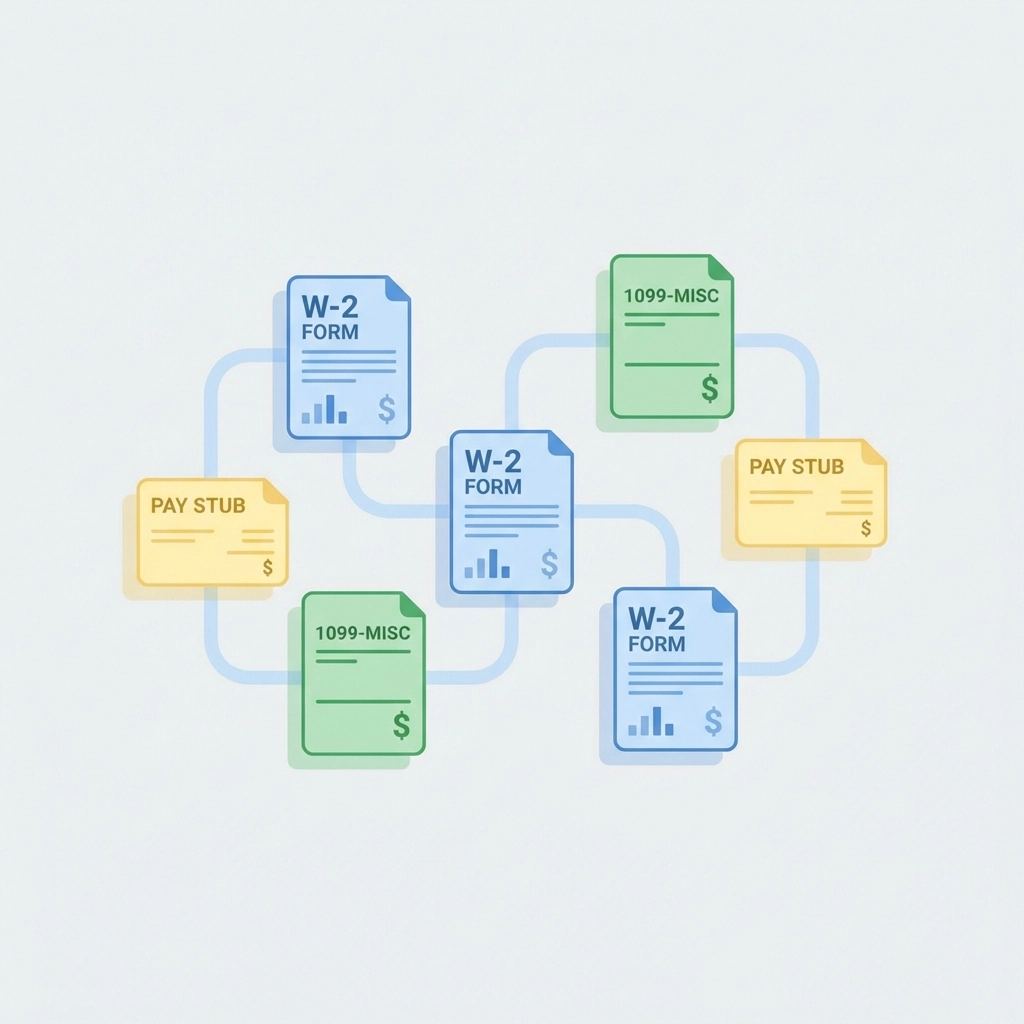
The IRS receives copies of your income forms. Your reported earnings must match. Gather records for every income source:
For employees:
- W-2 forms from all employers
For freelancers, contractors, and gig workers:
- Form 1099-NEC (nonemployee compensation)
- Form 1099-MISC (miscellaneous income)
- Form 1099-K (payment card and third-party transactions)
For investors:
- Form 1099-INT (interest income)
- Form 1099-DIV (dividends)
- Form 1099-B (investment sales)
- Consolidated brokerage statements
Other income:
- SSA-1099 or RRB-1099 (Social Security benefits)
- Rental income records with related expenses
- Retirement account distribution statements (Form 1099-R)
Warning: Failure to report all income sources may lead to penalties and delayed refunds. Cross-reference your records with bank deposits to ensure nothing is missed.
Step 4: Organize Your Deduction and Expense Records
This is where you can maximize your tax refund. Deductions reduce your taxable income, which means more money stays in your pocket.
Collect documentation for:
- Charitable donations , Cash contributions and non-cash donations with receipts
- Medical and dental expenses , Bills, insurance statements, prescription costs
- Mortgage interest , Form 1098 from your lender
- Property taxes , Annual statements from the City of New Haven or your municipality
- Education expenses , Form 1098-T (tuition) and Form 1098-E (student loan interest)
- Childcare expenses , Provider name, address, tax ID, and payment records
- Health insurance , Forms 1095-A, 1095-B, or 1095-C
- Home improvements , Receipts for energy-efficient upgrades that may qualify for credits
Reminder: Keep digital copies of all receipts. Paper fades, but a scanned document lasts forever.
Step 5: Compile Self-Employment and Business Records
New Haven small business owners and self-employed individuals have additional requirements. Gather:
- Profit and Loss Statement (P&L) for the year
- Balance Sheet
- Business Employer Identification Number (EIN)
- Quarterly estimated tax payment records
- Payroll records and 1099s issued to contractors
- Vehicle mileage logs for business use deductions
- Home office measurements and related expenses
Important: Maintain clear separation between personal and business expenses. Commingled records can complicate your return and raise red flags during an audit.

Step 6: Verify Everything Before Filing
Before you submit your return, or hand your documents to a tax professional, complete a verification check:
- Confirm all income documents match your reported earnings
- Ensure expense totals align with your receipts and bank statements
- Verify carry-forward items from prior years (depreciation, capital losses, etc.)
- Check that all forms are signed and dated
- Review direct deposit information for accuracy
This step catches errors before they become problems. A few minutes of review can prevent weeks of back-and-forth with the IRS.
Step 7: Complete Your Final Pre-Submission Review
Take one last look before filing:
- Verify your signature (and your spouse's, if filing jointly)
- Confirm all dependents are listed with correct SSNs
- Double-check payment or refund details
- Ensure you've selected the correct filing status
Deadline reminder: The federal tax filing deadline for 2026 returns is Tuesday, April 15, 2026. Extensions are available but must be requested before this date. Filing late without an extension may lead to penalties.
How Jose's Tax Service Helps New Haven Taxpayers
Even with organized records, tax preparation can feel complicated. That's where we come in.
At Jose's Tax Service, we specialize in helping New Haven individuals, families, and small business owners navigate tax season with ease. Our team reviews your documents, identifies every eligible deduction, and ensures your return is filed accurately and on time.
What we offer:
- Personalized tax planning consultations
- Expert preparation for individuals and businesses
- Year-round support for tax updates and questions
- Stress-free filing experience from start to finish
Whether you're a first-time filer or a seasoned business owner, we're here to help you maximize your tax refund and minimize your stress.

Your 2026 Tax Organization Checklist
Use this quick reference to stay on track:
| Category | Documents Needed |
|---|---|
| Personal Info | SSNs, prior return, bank details |
| Income | W-2s, 1099s, investment statements |
| Deductions | Receipts, Form 1098, property tax bills |
| Business | P&L, EIN, mileage logs, payroll records |
| Verification | Cross-check all totals, sign forms |
Take Action Now!
Don't wait until April to start organizing. Begin today and set yourself up for a stress-free tax filing experience in 2026.
Need help? Contact Jose's Tax Service for expert tax preparation in New Haven. We'll take the stress out of tax season so you can focus on what matters most.

Leave a Reply
You must be logged in to post a comment.