
Why Year-Round Tax Planning is Your New Best Friend in 2026
New Haven, CT – January 2026 – Let's be honest. Most of us treat tax season like a dentist appointment, something we know we need to do but keep putting off until the last possible moment. Then April rolls around, and suddenly we're scrambling through shoeboxes of receipts, wondering why we didn't get our act together sooner.
Here's the thing: waiting until April to think about your taxes is like showing up to a marathon without training. Sure, you might cross the finish line, but it's going to hurt a lot more than it needs to.
In 2026, year-round tax planning isn't just a nice-to-have: it's your secret weapon for keeping more money in your pocket. And if you're a small business owner or individual here in New Haven, this matters more than ever.
What Changed in 2026? A Lot, Actually!
The One Big Beautiful Bill Act (OBBBA) shook things up in some major ways this year. We're talking about permanent changes that affect how you should think about your finances throughout the entire year: not just during tax season.
Here's what you need to know:
The federal estate and gift tax exemption jumped to $15 million per individual ($30 million for married couples). And the best part? There's no sunset date. That means you can take your time with wealth transfer strategies instead of rushing decisions at year-end.
Qualified Business Income (QBI) deductions for pass-through business owners now have expanded phaseout ranges.
Employees can deduct up to $25,000 in tip income and $12,500 in overtime compensation (subject to specific phase-out thresholds).
These aren't small tweaks. These are game-changers that require planning from day one: not a frantic phone call to your tax preparer on April 14th.
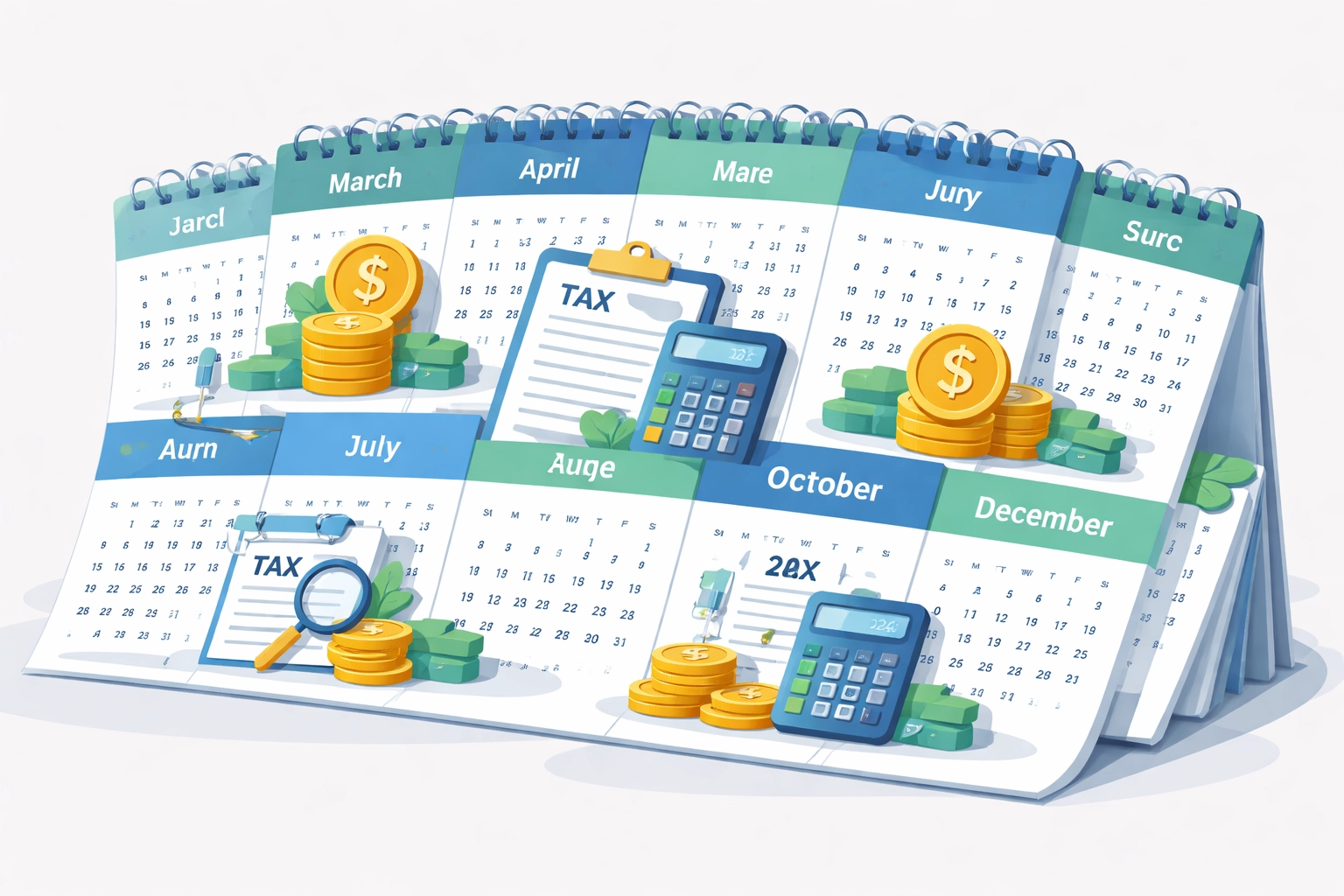
The "April Scramble" vs. The Year-Round Approach
Picture this: It's April 10th. You're staring at a pile of documents, trying to remember if that lunch receipt was a business expense or just a really good burrito. Sound familiar?
Now picture this instead: You've been tracking expenses all year. You made strategic decisions in March, July, and October that positioned you for maximum deductions. When April comes, you're calm, collected, and maybe even a little smug.
The difference between these two scenarios? Planning.
Here's why year-round planning beats the April scramble every single time:
You catch opportunities before they expire. Many tax strategies have deadlines throughout the year: not just in April.
You make better decisions with more time. Rushed decisions rarely equal optimal outcomes.
You reduce stress. Seriously, your blood pressure will thank you.
You maximize deductions legally. When you plan ahead, you can structure your finances to take full advantage of every credit and deduction available to you.
Timing-Dependent Strategies You Can't Ignore!
Some tax strategies require action at specific times throughout the year. Miss these windows, and you're leaving money on the table.
Bunching Charitable Deductions
If your itemized deductions hover near the standard deduction ($30,000 for married filing jointly in 2026), here's a smart move: bunch two years of charitable giving into one year. This pushes you over the standard deduction threshold, letting you claim itemized deductions.
But here's the catch: you need to plan this strategy early in the year to execute it effectively.
1031 Exchanges for Investment Property
Selling investment property? You have just 45 days to identify replacement property for a 1031 exchange. That's not a lot of time to find the right deal. Early-year planning is essential if you're considering this strategy.

Annual Gifting – Use It or Lose It!
The annual gift tax exclusion is one of those "use-it-or-lose-it" opportunities. You can gift up to $19,000 per recipient tax-free, but you cannot carry forward unused amounts to next year.
Coordinating these gifts with retirement account contributions and education savings (like 529 plans) requires attention throughout the year: not just in December when you suddenly remember.
New Haven Small Business Owners: This One's for You
If you run a small business here in New Haven, year-round tax planning isn't optional: it's essential for survival and growth.
Here's what you should be doing throughout 2026:
Track business expenses in real-time. Use accounting software or even a simple spreadsheet. Just don't throw receipts in a drawer and forget about them.
Review your QBI deduction eligibility quarterly. The expanded phaseout ranges mean more business owners can benefit, but you need to understand where you fall.
Plan equipment purchases strategically. Major purchases can significantly impact your tax liability: timing matters.
Document everything from day one. If you're claiming tip income deductions or overtime compensation deductions, you need documentation from the first paycheck forward.
Meet with a tax professional regularly. Not just once a year. Quarterly check-ins can catch issues before they become expensive problems.
At Jose's Tax Service, we work with New Haven small business owners year-round: not just during the spring rush. Because we know that the best tax outcomes come from consistent planning, not last-minute miracles.

Flexible Contribution Opportunities to Leverage All Year
Some of the best tax-saving tools give you flexibility throughout the year. Here's how to use them wisely:
Health Savings Accounts (HSAs)
HSAs are genuinely underrated. Here's a pro strategy: pay medical expenses out-of-pocket, keep your receipts, and let your HSA grow tax-free. Then reimburse yourself in retirement from that tax-free account. We're talking potentially decades of tax-free growth.
But this only works if you're planning ahead and making contributions consistently throughout the year.
Retirement Account Contributions
Whether you're contributing to a 401(k), IRA, or SEP-IRA, timing and strategy matter. Traditional versus Roth decisions should be coordinated with your income projections throughout the year: not decided at the last minute.
Dependent Care Credits
If you have childcare expenses, make sure you're tracking these from January forward. The credits available can make a real difference in your tax liability.
The Bottom Line: Stop Treating Taxes Like a One-Time Event
Here's the truth that many people don't want to hear: taxes are a year-round consideration. The decisions you make in January, June, and September directly impact what you owe (or get back) in April.
The interconnected changes from the OBBBA mean that everything: from investment property acquisitions to business equipment purchases to charitable giving amounts: affects your overall tax liability. Consistent planning beats last-minute scrambling every single time.
Your Year-Round Tax Planning Checklist
To help you get started, here's a simple framework:
January – March:
- Review last year's return and identify improvement opportunities
- Set up tracking systems for expenses and income
- Make Q1 estimated tax payments if applicable
April – June:
- File your return (or extension) and analyze what worked
- Adjust withholdings if necessary
- Review mid-year income projections
July – September:
- Conduct a mid-year tax review
- Evaluate charitable giving strategy
- Assess business equipment needs
October – December:
- Finalize year-end strategies
- Max out retirement contributions
- Execute charitable giving plans
- Gather documents for the upcoming filing season
Ready to Make 2026 Your Best Tax Year Yet?
You don't have to figure this out alone. At Jose's Tax Service, we're here to help New Haven residents and small business owners navigate tax planning throughout the entire year: not just during the April crunch.
Stop treating your taxes like a once-a-year emergency. Start treating them like the year-round financial tool they actually are.
Your wallet: and your stress levels( will thank you.)

Leave a Reply
You must be logged in to post a comment.