
Organize Your Records: 5 Steps to a Stress-Free 2026 Tax Season
New Haven, CT : January 19, 2026 : The 2026 tax filing season officially opens on January 26, 2026, with the filing deadline set for April 15, 2026. For New Haven residents and small business owners, now is the time to get your records in order. A little preparation goes a long way toward maximizing your refund and minimizing your stress.
At Jose's Tax Service, we see it every year: clients who organize their documents early breeze through tax season, while those who scramble at the last minute often miss deductions and face unnecessary headaches. The good news? Getting organized doesn't have to be complicated.
Here are five practical steps to set yourself up for a smooth, stress-free 2026 tax season.
Step 1: Gather Your Personal Information and Core Documents!
Before you do anything else, collect the basics. This foundational step ensures you have everything needed to file accurately and on time.
Start with personal identification documents:
- Social Security numbers for yourself, your spouse, and all dependents
- Current addresses and dates of birth for everyone on your return
- A copy of last year's tax return (for reference and AGI verification)
- Your IRS Identity Protection PIN, if applicable
Next, gather all income documents:
- W-2 forms from all employers
- 1099 forms from banks, freelance clients, retirement accounts, and investment platforms
- K-1 forms from partnerships, S corporations, or trusts
- Brokerage statements showing capital gains and losses
- Records of any other income (rental income, alimony received, gambling winnings, etc.)
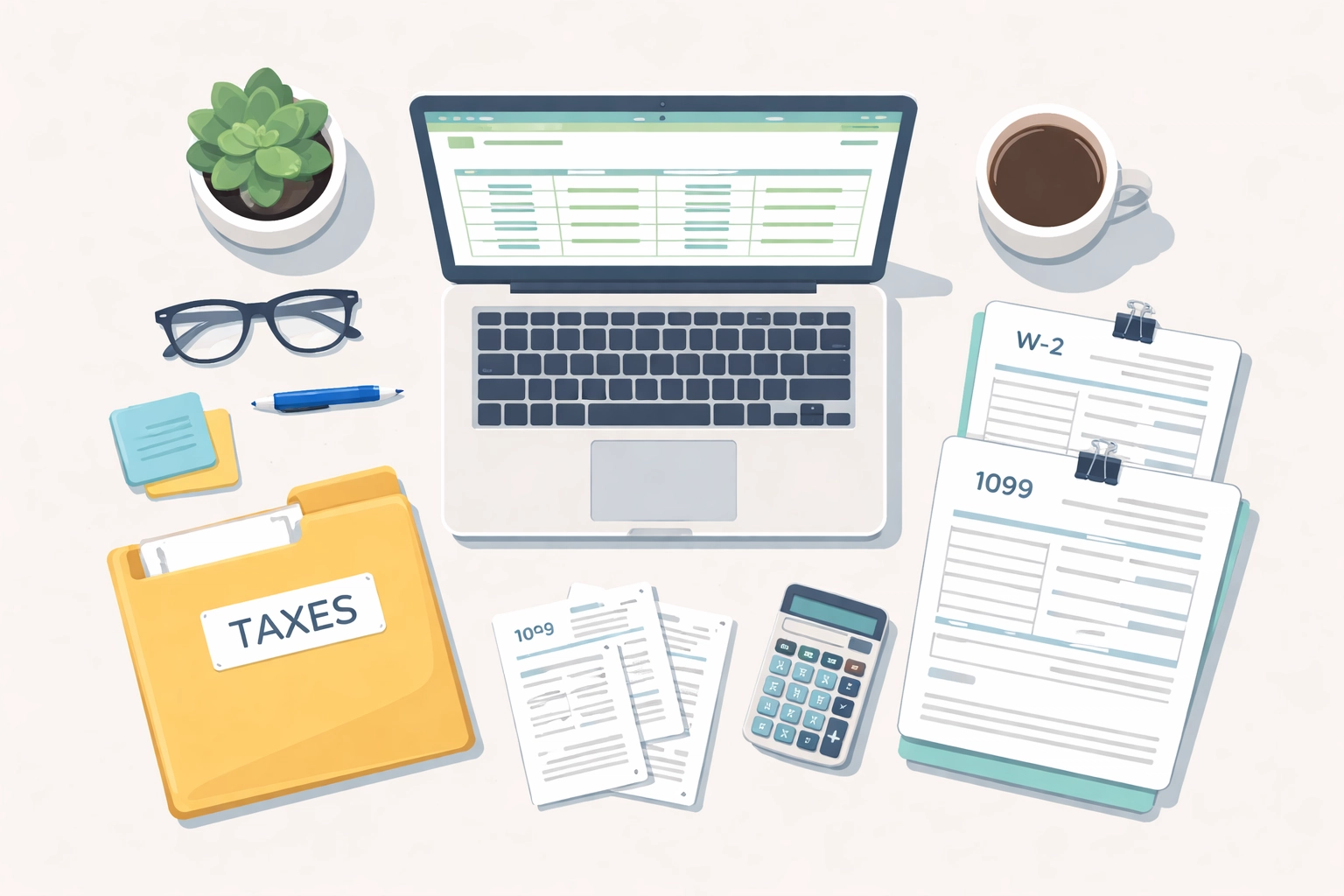
Pro tip: Create a dedicated folder: physical or digital: labeled "2025 Tax Documents." Every time a form arrives in the mail or your inbox, drop it in immediately. This simple habit can save hours of searching later.
Step 2: Collect Your Deduction and Credit Documentation!
This step is where many New Haven taxpayers leave money on the table. Deductions and credits reduce your tax liability, but only if you have the documentation to back them up.
Organize records by deduction type:
Above-the-Line Deductions
- IRA and HSA contribution statements
- Student loan interest documentation (Form 1098-E)
- Educator expense receipts (if you're a teacher)
- Self-employment health insurance premium records
Itemized Deductions
- Mortgage interest statement (Form 1098)
- Property tax payment records
- State and local tax (SALT) payments
- Charitable donation receipts (cash and non-cash)
- Medical and dental expense records exceeding 7.5% of AGI
Credits to Document
- Childcare expense records and provider information (including EIN or SSN)
- Education expenses (Form 1098-T from colleges/universities)
- Energy efficiency expenditures (solar panels, energy-efficient windows, etc.)
- Electric vehicle purchase documentation
For small business owners: Keep detailed records of business expenses, including receipts for supplies, equipment, travel, and home office costs. Mileage logs should be up to date with dates, destinations, and business purposes.
Warning: Missing documentation may lead to disallowed deductions and a smaller refund. The IRS requires substantiation for all claimed deductions: don't rely on memory alone.
Step 3: Document Major Life Events!
Life changes can significantly affect your tax return. If any of the following occurred in 2025, gather the relevant documentation now:
- Marriage or divorce : Marriage certificate or divorce decree
- Birth or adoption of a child : Birth certificate, adoption papers, Social Security card
- Death of a spouse or dependent : Death certificate
- Home purchase or sale : Closing documents (HUD-1 or Closing Disclosure)
- Starting or closing a business : Formation documents, final financial statements
- Job loss or significant income change : Unemployment compensation records (Form 1099-G)
- Retirement account distributions : Form 1099-R
These events can affect your filing status, available credits, and deduction eligibility. Documenting them now prevents missed opportunities and potential errors on your return.

Step 4: Be Patient and Wait for Late Forms!
Here's a mistake we see every year: eager filers submit their returns in late January, only to receive corrected forms in February. Then they're stuck filing an amended return: which can delay refunds by months.
Key dates to remember:
- Employers must send W-2s by January 31, 2026
- Banks and investment firms must issue most 1099s by mid-February
- Corrected forms may arrive several weeks after initial forms
- K-1 forms from partnerships and S corporations often arrive in March or later
Recommendation: If you have investments, receive K-1 income, or work with multiple income sources, mark February 17, 2026 as the earliest date to consider filing. This buffer reduces the risk of needing to amend your return.
For business owners: File your business return first. S corporations and partnerships issue K-1s that flow through to your personal return. Your individual return can't be completed accurately until these forms are finalized.
Patience now saves headaches later.
Step 5: Set Up for Easy Filing and Verify Key Information!
You're almost there. Before you sit down to file: or meet with your tax preparer: complete these final preparation steps:
Verify your direct deposit information:
- Confirm your bank account and routing numbers are current
- Direct deposit speeds up refunds significantly (often within 21 days for e-filed returns)
- If you've changed banks, update your information before filing
Access your IRS Individual Online Account:
- Visit IRS.gov to create or log into your account
- Verify your account information and view any IRS notices
- Check your estimated tax payment history if applicable
Double-check withholding accuracy:
- Compare total withholding on your W-2s against your expected tax liability
- Adjust your W-4 with employers if you consistently owe or receive large refunds
Prepare questions for your tax professional:
- Note any areas of confusion or uncertainty
- Ask about deductions or credits that may apply to your situation
- Discuss tax planning strategies for 2026

Why Organization Leads to Bigger Refunds!
Here's the bottom line: organized taxpayers claim more deductions. When your records are in order, nothing gets overlooked. You're not scrambling to find receipts or guessing at numbers. You're confident, accurate, and positioned to maximize every credit and deduction available to you.
Disorganization, on the other hand, leads to:
- Missed deductions and credits
- Filing errors that trigger IRS notices
- Delayed refunds
- The stress of last-minute scrambles
A few hours of preparation now can mean hundreds: or even thousands: of extra dollars in your refund.
Let Jose's Tax Service Handle the Heavy Lifting!
Not everyone has time to organize receipts and track down forms. That's where we come in.
At Jose's Tax Service, we offer comprehensive bookkeeping and tax preparation support for New Haven residents and small business owners. Whether you need help organizing your records, understanding which deductions apply to your situation, or simply want a professional to handle your return from start to finish: we've got you covered.
Our services include:
- Individual and business tax preparation
- Year-round bookkeeping support
- Tax planning consultations
- IRS notice resolution
Don't let tax season stress you out. Bring us your documents, and we'll take it from there.
Your 2026 Tax Season Checklist!
Use this quick reference to stay on track:
- Gather Social Security numbers and personal information
- Collect all W-2s, 1099s, and K-1s
- Organize deduction and credit documentation
- Document major life events from 2025
- Wait until mid-February before filing (if you have investments or K-1s)
- Verify bank account information for direct deposit
- Access your IRS Online Account
- Schedule an appointment with Jose's Tax Service
Filing season opens: January 26, 2026
Filing deadline: April 15, 2026
Get organized now, and enjoy a stress-free tax season. We'll see you soon!

Leave a Reply
You must be logged in to post a comment.