
Gig Economy Guide: Filing Your 2026 Taxes as a New Haven Freelancer
New Haven, CT – January 20, 2026 – If you're driving for rideshare apps, delivering food, selling crafts online, or freelancing from your New Haven home office, congratulations! You're part of the gig economy. But here's the thing: your taxes work a little differently than they did back when you had a regular W-2 job.
Don't worry. Filing your 2026 taxes as a freelancer doesn't have to be overwhelming. This guide breaks down everything you need to know: from quarterly payments to deductions that can save you serious cash.
You Must Report All Gig Income!
Let's get one thing straight right away: you must report all gig income on your tax return. Yes, all of it. That includes:
- Cash payments
- Checks
- Digital payments (Venmo, PayPal, Zelle)
- Goods or property received as payment
- Virtual currency like Bitcoin
It doesn't matter if a client paid you $50 or $5,000. If you earned it, the IRS expects you to report it.
Here's the filing trigger: If you earn $400 or more in net self-employment income during 2026, you must file a self-employment tax return. Many New Haven freelancers hit that threshold pretty quickly, especially during busy seasons.
If you earn $600 or more from any single gig platform or client, they should send you a Form 1099-NEC or Form 1099-K. But even if you don't receive a 1099, you're still responsible for reporting the income. The IRS knows more than you think!

Understanding Self-Employment Tax
Here's where things get interesting. When you work a traditional job, your employer withholds taxes from your paycheck and pays half of your Social Security and Medicare taxes. As a freelancer? You're on your own.
You owe 15.3% self-employment tax on your net earnings. This breaks down into:
- 12.4% for Social Security
- 2.9% for Medicare
Traditional employees only pay 7.65% because their employer covers the other half. As a gig worker, you wear both hats: employer and employee: so you pay the full amount.
The good news: You can deduct 50% of your self-employment tax when calculating your adjusted gross income. It's not much consolation, but every bit helps!
Quarterly Estimated Tax Payments: Don't Skip These!
This is where many New Haven freelancers get tripped up. Since no employer withholds taxes from your gig income, you must make quarterly estimated tax payments if you expect to owe $1,000 or more in taxes for 2026.
Miss these payments, and you may face penalties and interest charges. Nobody wants that.
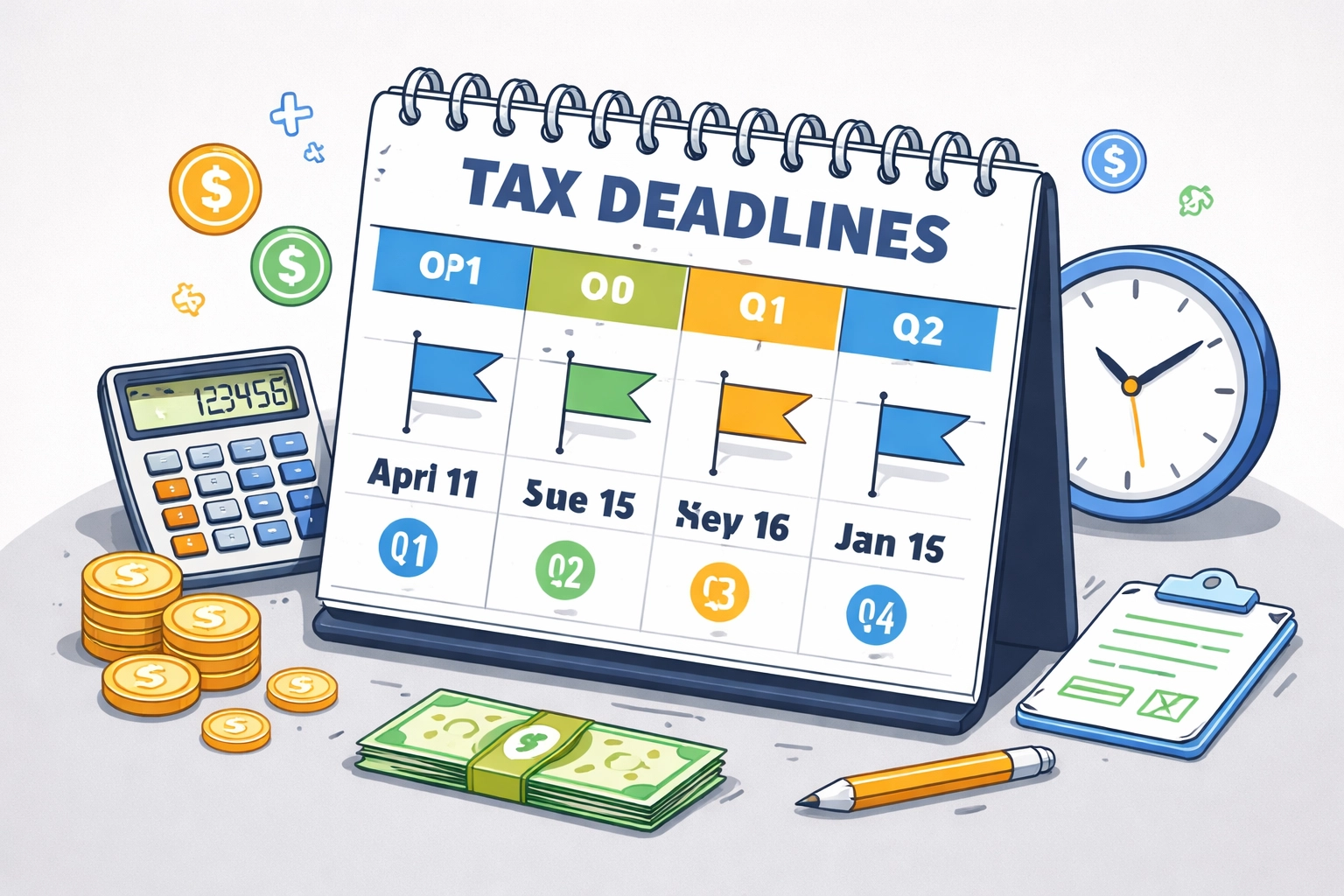
Mark these dates on your calendar:
| Payment Period | Due Date |
|---|---|
| January – March | April 15, 2026 |
| April – May | June 15, 2026 |
| June – August | September 15, 2026 |
| September – December | January 15, 2027 |
How to calculate your quarterly payment:
- Estimate your total gig income for the quarter
- Subtract your estimated business expenses
- Set aside approximately 25-30% of your net income for taxes
- Submit payment using Form 1040-ES
Since today is January 20, 2026, your first quarterly payment deadline is approaching fast. Start organizing your income records and expenses now!
Tax Forms Every New Haven Freelancer Needs
Filing as a gig worker requires a few extra forms compared to traditional employment. Here's what you should have ready:
Schedule C (Form 1040) – This is your bread and butter. Use it to report your gig income and deductible business expenses. Your net profit (or loss) from Schedule C flows directly to your Form 1040.
Schedule SE – This form calculates your self-employment tax. You can't skip it if you have net self-employment earnings of $400 or more.
Form 1040-ES – Use this worksheet and payment vouchers for your quarterly estimated tax payments throughout the year.
Form 1099-NEC and/or 1099-K – You should receive these from clients and platforms that paid you $600 or more. Keep them organized: the IRS receives copies too!
Deductions That Can Lower Your Tax Bill!
Here's where the magic happens. As a freelancer, you can deduct legitimate business expenses from your income, which reduces your taxable income and ultimately your tax bill.
Common deductions for New Haven gig workers:
- Vehicle expenses – Choose between the standard mileage deduction or actual vehicle costs (gas, maintenance, insurance). Keep a mileage log!
- Home office – If you use a dedicated space exclusively for business, you may qualify for this deduction
- Supplies and equipment – Computers, phones, printers, and materials used for your gig work
- Software and subscriptions – Accounting software, design tools, cloud storage, professional memberships
- Health insurance premiums – If you pay for your own coverage and aren't eligible for employer-sponsored insurance
- Parking fees and tolls – Especially relevant for rideshare and delivery drivers
- Advertising and marketing – Website costs, business cards, social media ads
- Professional development – Courses, certifications, and training related to your gig work
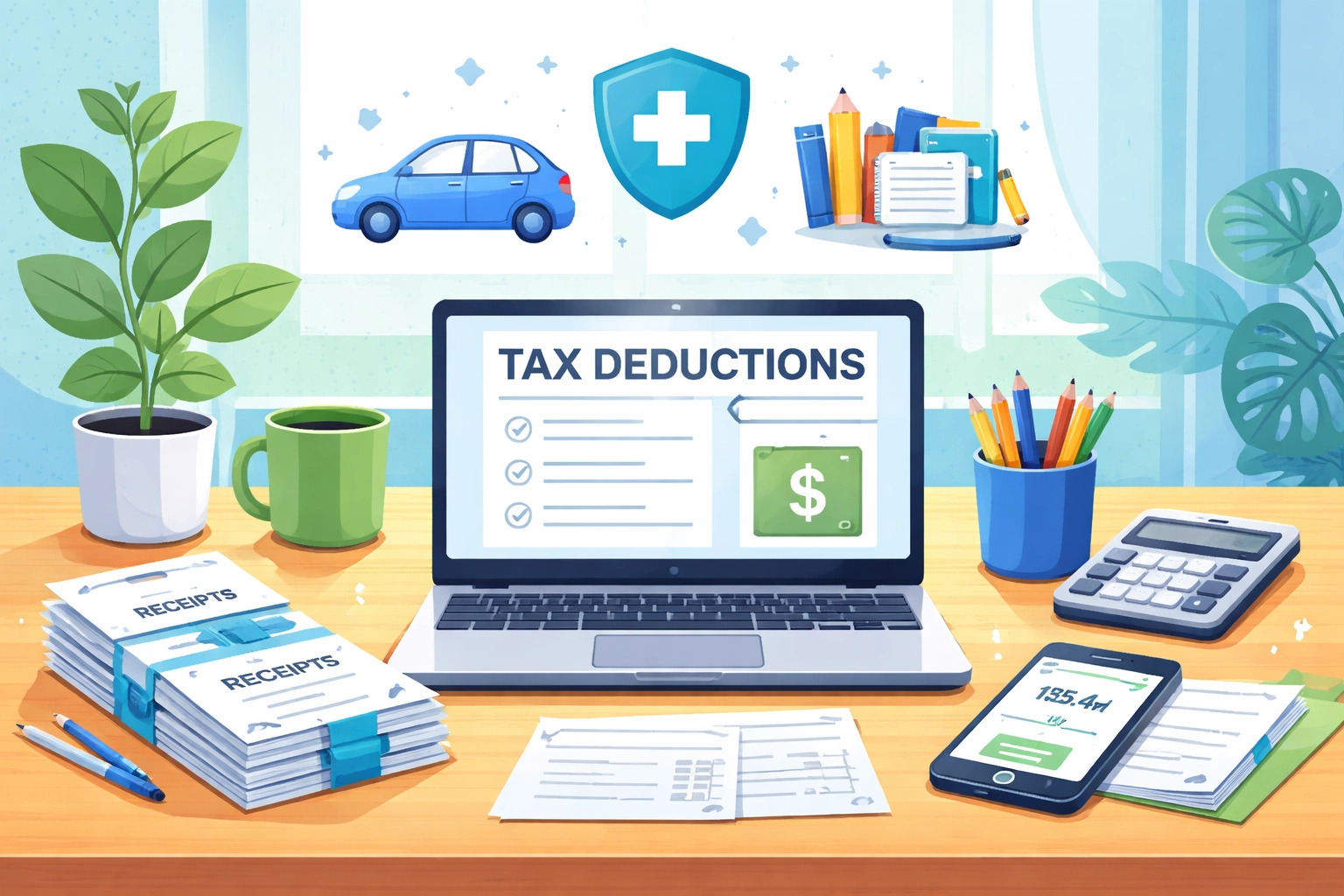
Pro tip: Keep receipts and records for everything. The IRS may ask for documentation if you claim large deductions. A simple spreadsheet or accounting app can make tracking expenses painless.
Common Mistakes to Avoid
Filing taxes as a gig worker comes with some common pitfalls. Here's what to watch out for:
1. Forgetting to report cash income – Just because a client paid you in cash doesn't mean it's invisible to the IRS. Report everything.
2. Missing quarterly payments – This can lead to penalties that add up quickly. Set calendar reminders!
3. Mixing personal and business expenses – Keep separate accounts if possible. It makes tracking deductions much easier and cleaner.
4. Overlooking deductions – Many freelancers leave money on the table by not claiming all eligible expenses. Track everything throughout the year.
5. Ignoring 1099 forms – The IRS receives copies of every 1099 sent to you. Omitting them is a major red flag that can trigger an audit.
Connecticut-Specific Considerations
As a New Haven freelancer, you should also be aware of Connecticut state tax obligations. You'll need to file a Connecticut income tax return in addition to your federal return if you meet the filing threshold.
Connecticut uses a progressive income tax system with rates ranging from 3% to 6.99% depending on your income level. Self-employment income is subject to state income tax, so factor this into your quarterly estimated payments.
Some New Haven freelancers may also need to consider local business registration requirements depending on the nature and scale of their gig work.
Get Personalized Support at Jose's Tax Service!
Look, we get it. Taxes are complicated, and they're even more complicated when you're juggling multiple gigs, tracking expenses, and trying to figure out quarterly payments. That's exactly why Jose's Tax Service exists.
Jose Morales and the team specialize in helping New Haven freelancers and gig workers navigate their unique tax situations. Whether you're a first-time filer or a seasoned independent contractor, personalized support can make all the difference.
What you can expect:
- One-on-one consultations tailored to your gig work
- Help identifying all eligible deductions
- Assistance with quarterly estimated tax planning
- Guidance on Connecticut state tax requirements
- Year-round support: not just during tax season
Don't leave money on the table or risk penalties by going it alone. The gig economy offers incredible flexibility and opportunity, but it also demands a different approach to taxes.
Your first quarterly payment deadline is April 15, 2026. Start preparing now, gather your records, and reach out if you need help. Filing your 2026 taxes as a New Haven freelancer can be smooth and stress-free with the right preparation and support!

Leave a Reply
You must be logged in to post a comment.