
11 Days Left: How to Maximize Your 2025 Tax Refund Before December 31st
Ho, ho, hold on! Before you get too caught up in Christmas shopping and holiday festivities, there's still time to give yourself the best gift of all: a bigger tax refund next year. With just 11 days left until December 31st, smart tax planning can put hundreds or even thousands of extra dollars back in your pocket when you file your 2025 return.
Think of it as your last chance to play Santa for your future self. Whether you're a small business owner in New Haven or filing as an individual, these year-end moves could be the difference between a modest refund and a substantial one that makes next Christmas even merrier.
Why December 31st Matters for Your Tax Refund
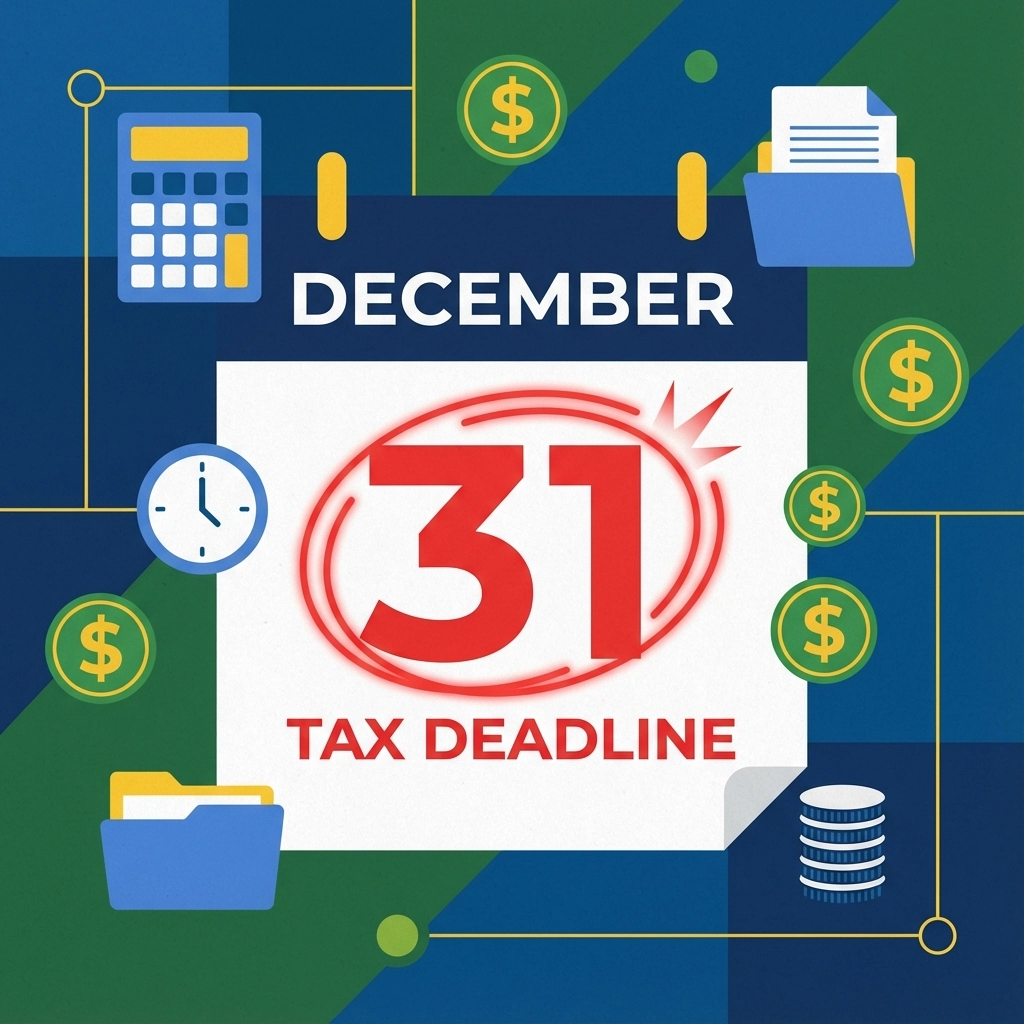
The clock is ticking, and December 31st isn't just New Year's Eve: it's the absolute deadline for most tax-saving strategies that affect your 2025 return. After midnight on January 1st, 2026, these opportunities disappear until next year.
Your tax refund depends on two key factors: how much tax was withheld from your paychecks (or paid through estimated taxes) versus how much you actually owe. The goal is to legally reduce what you owe through deductions, credits, and strategic financial moves: all of which must happen before the calendar year ends.
Last-Minute Business Moves That Maximize Your Refund
Purchase Equipment and Supplies Before Year-End
If you're self-employed or own a small business, December is your final opportunity to make purchases that reduce your taxable income. Under current tax laws, you can often deduct the full cost of business equipment, computers, software, and office supplies purchased and put into service before December 31st.
Consider these business purchases:
- Computer equipment and software
- Office furniture and supplies
- Professional development courses or training
- Business-related subscriptions and memberships
- Tools and equipment for your trade
Pay Outstanding Business Expenses
Gather all your unpaid business bills and pay them before December 31st. This includes:
- Office rent for December
- Professional services (legal, accounting, consulting)
- Business insurance premiums
- Utility bills for your home office
- Outstanding invoices from contractors or suppliers
Maximize Your Home Office Deduction
If you work from home, ensure you're claiming every square foot of legitimate home office space. The simplified method allows you to deduct $5 per square foot (up to 300 square feet), while the actual expense method can yield larger deductions for those with higher home costs.
Strategic Charitable Giving: The Christmas Connection
Christmas is the season of giving: and smart charitable giving can significantly boost your tax refund. December 31st is the final day to make charitable contributions that qualify for deductions on your 2025 tax return.
Cash Donations
Every dollar you donate to qualified charitable organizations reduces your taxable income dollar-for-dollar (up to certain limits). If you're in the 22% tax bracket, a $1,000 donation effectively costs you only $780 while providing the full $1,000 benefit to the charity.
Non-Cash Donations
Clean out your closets and donate items you no longer need. Clothing, household goods, and electronics in good condition can provide substantial deductions when properly valued and documented. Don't forget to:
- Get a receipt from the charity
- Take photos of donated items
- Use IRS valuation guides for fair market value
- Keep detailed records
Stock Donations
If you own stocks or mutual funds that have appreciated in value, donating them directly to charity can provide double tax benefits. You get the deduction for the full market value while avoiding capital gains taxes on the appreciation.

Retirement Account Strategies for Bigger Refunds
Traditional IRA Contributions
You have until April 15, 2026, to make Traditional IRA contributions for 2025, but if you're planning to contribute anyway, doing it now provides immediate tax planning clarity. For 2025, you can contribute up to $7,000 ($8,000 if you're 50 or older) to a Traditional IRA, potentially reducing your taxable income by the same amount.
401(k) and 403(b) Contributions
If your employer allows it, increase your final paychecks' retirement contributions to the maximum. For 2025, the contribution limit is $23,500 ($31,000 with catch-up contributions for those 50+). Every dollar contributed reduces your current taxable income.
Required Minimum Distributions (RMDs)
If you're 73 or older, you must take your 2025 RMD before December 31st. Failing to do so results in a 25% penalty on the amount you should have withdrawn: definitely not the kind of Christmas surprise you want from the IRS.
Investment Moves for Tax Savings
Tax-Loss Harvesting
Review your investment portfolio for stocks, bonds, or mutual funds that have lost value this year. Selling these investments before December 31st creates capital losses that offset capital gains and up to $3,000 of ordinary income. This strategy, called tax-loss harvesting, can significantly reduce your tax bill.
Roth IRA Conversions
If you have a Traditional IRA or 401(k), converting some or all of it to a Roth IRA before December 31st might make sense, especially if you expect to be in a higher tax bracket in the future. While you'll pay taxes now on the converted amount, future withdrawals from the Roth IRA will be tax-free.

Personal Tax Moves for Individuals
Bunch Your Deductions
If you're close to the standard deduction threshold, consider "bunching" deductible expenses into 2025. This might include:
- Prepaying January mortgage interest
- Making state tax payments early
- Scheduling medical procedures before year-end
- Paying property taxes early (if beneficial)
Health Savings Account (HSA) Contributions
HSAs provide triple tax advantages: deductible contributions, tax-free growth, and tax-free withdrawals for qualified medical expenses. For 2025, you can contribute up to $4,300 for individual coverage or $8,550 for family coverage (plus $1,000 catch-up if you're 55+).
Flexible Spending Account (FSA) Use-It-or-Lose-It
Check your FSA balance and use any remaining funds before December 31st (unless your employer offers a grace period or rollover option). Purchase qualifying medical supplies, prescription glasses, or schedule dental and medical appointments.
Getting Professional Help: When DIY Isn't Enough
While these strategies can save substantial money, tax planning can get complicated quickly. The tax laws for 2025 include several changes that affect deductions, credits, and income thresholds. Professional tax preparation ensures you don't miss opportunities or make costly mistakes.
At Jose's Tax Service, we specialize in year-end tax planning and virtual tax prep services for individuals and small businesses throughout New Haven and beyond. Our experienced team can review your specific situation and identify additional opportunities you might have missed.
Why Choose Professional Tax Filing Services:
- Maximize all available deductions and credits
- Ensure compliance with current tax laws
- Provide year-round tax planning advice
- Offer convenient virtual appointments
- Handle complex situations like business ownership, rental properties, and investment income
Your December Tax Planning Checklist
With 11 days remaining, here's your action plan:
Immediately (Next 2-3 Days):
- Review outstanding business expenses and pay them
- Calculate remaining retirement contribution capacity
- Identify charitable giving opportunities
- Gather receipts and documentation for all 2025 expenses
This Week:
- Make final business purchases if beneficial
- Complete charitable donations
- Execute investment moves (tax-loss harvesting, Roth conversions)
- Schedule medical appointments to use FSA funds
Final Weekend (December 28-30):
- Double-check all transactions are processed and posted
- Organize tax documents for early filing
- Schedule professional tax preparation appointment
December 31st Deadline Items:
- Ensure all business expenses are paid and processed
- Complete charitable contributions
- Finalize investment transactions
- Take required minimum distributions
- Make final retirement contributions (employer plans only)
Planning Ahead for Early Filing
Once you've maximized your 2025 tax savings, start preparing for early filing. The IRS typically begins accepting returns in late January, and early filers often receive their refunds within 21 days when using direct deposit.
Virtual tax prep has become increasingly popular, especially for busy professionals and small business owners. It offers the convenience of professional service without the need to visit an office, making it easier to get your taxes done right and fast.
Don't Wait Until the Last Minute
These final 11 days of 2025 represent your last opportunity to implement tax strategies that could save you hundreds or thousands of dollars. While some people wait until they're filing their taxes to think about tax planning, the smart money makes these moves now.
Remember, tax planning isn't just about reducing this year's bill: it's about creating a strategy that maximizes your long-term financial success. The time you spend on year-end tax planning now will pay dividends when that refund check arrives next year.
Whether you're handling your taxes yourself or working with professional tax filing services, taking action before December 31st ensures you're not leaving money on the table. After all, the best Christmas gift you can give yourself is keeping more of your hard-earned money where it belongs( in your pocket.)

Leave a Reply
You must be logged in to post a comment.