
7 Mistakes You're Making with the New 2026 Tax Laws (and How to Fix Them)
The 2026 tax season brings sweeping changes that could save you thousands: or cost you dearly if you’re not prepared. The One Big Beautiful Bill Act has fundamentally reshaped the tax landscape, introducing new deductions, higher thresholds, and significant changes to how millions of Americans file their returns.
But here’s the problem: most taxpayers are walking into these changes blind. Early data from tax preparation firms shows that 68% of filers are unaware of the major deduction changes, and countless others are missing critical opportunities or making costly errors.
Don’t let this be you. Here are the seven most dangerous mistakes taxpayers are making with the new 2026 tax laws: and exactly how to fix them before it’s too late.
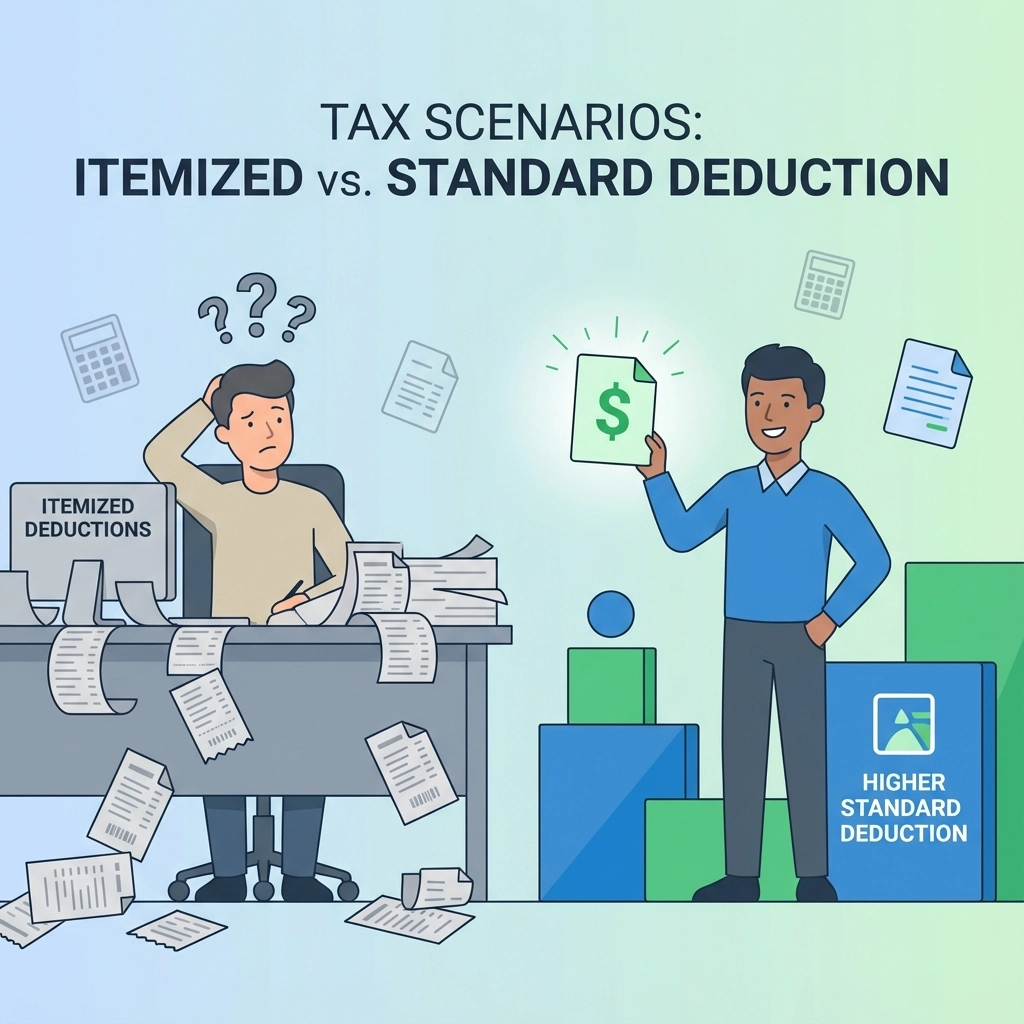
Mistake #1: Ignoring the Dramatically Higher Standard Deduction
The Problem: You’re still itemizing when you should be taking the standard deduction.
The standard deduction has jumped significantly for 2026. We’re talking $32,200 for married couples filing jointly, $16,100 for single taxpayers, and $24,150 for heads of household. That’s a massive increase from previous years.
Yet many taxpayers are automatically itemizing because “that’s what they’ve always done” without running the numbers.
How to Fix It:
- Calculate your total itemized deductions before assuming you should itemize
- Use Schedule A to add up your mortgage interest, state and local taxes, charitable contributions, and medical expenses
- If your total itemized deductions are less than your standard deduction amount, take the standard deduction instead
- Double-check this calculation: most taxpayers now benefit from the standard deduction
Mistake #2: Missing the New $6,000 Senior Deduction
The Problem: If you’re 65 or older, you’re leaving money on the table.
The new senior deduction allows taxpayers 65 and older to deduct an additional $6,000 in taxable income beyond their standard deduction. This is separate from and in addition to your standard deduction.
But there’s a catch: it phases out based on your modified adjusted gross income (MAGI). The phase-out begins at $75,000 MAGI for single filers and $150,000 for joint filers, and it’s completely eliminated at $175,000 (single) or $250,000 (joint).
How to Fix It:
- Verify your age on December 31, 2025: you must be 65 or older
- Calculate your MAGI to determine if you qualify for the full deduction, partial deduction, or no deduction
- If you’re close to the phase-out threshold, consider timing income or deductions to stay below the limit
- Claim this deduction in addition to your standard deduction: it’s not an either/or situation
Mistake #3: Misunderstanding the Expanded SALT Deduction Cap
The Problem: You’re not maximizing the higher state and local tax (SALT) deduction limit.
The SALT deduction cap has increased from $10,000 to $40,000 for tax years 2025 through 2029, with annual 1% increases through 2029. However, this deduction phases out for individuals with MAGI over $500,000.
Many taxpayers in high-tax states are still planning around the old $10,000 limit and missing significant savings opportunities.
How to Fix It:
- Track all state and local taxes paid: income taxes, property taxes, and sales taxes
- Consider prepaying property taxes in December to maximize your 2026 deduction
- If you’re over the $500,000 MAGI threshold, calculate how the phase-out affects your deduction
- Remember: this higher cap reverts to $10,000 in 2030, so plan accordingly for future years

Mistake #4: Overlooking the New Tip Income Deduction
The Problem: Service workers aren’t claiming up to $25,000 in tip income deductions.
If you work in hospitality, food service, delivery, or any industry where tips are common, you can now deduct up to $25,000 in tip income. This is a brand-new deduction that many eligible taxpayers don’t even know exists.
How to Fix It:
- Keep detailed records of all tips received throughout the year
- Save receipts, tip reports, and any employer documentation of tip income
- Report all tip income as required, then claim the deduction
- Work with a tax professional to ensure proper documentation and calculation
Mistake #5: Missing the New Charitable Deduction for Non-Itemizers
The Problem: You think you can’t deduct charitable contributions because you take the standard deduction.
This is huge: starting in 2026, non-itemizers can deduct up to $1,000 in charitable cash contributions ($2,000 for married filing jointly) in addition to their standard deduction.
This means you get the best of both worlds: the higher standard deduction plus a charitable deduction on top of it.
How to Fix It:
- Track all cash charitable contributions throughout the year
- Keep receipts and acknowledgment letters from qualified organizations
- Note: this applies only to cash contributions, not property donations
- Remember the 0.5% floor: only contributions above 0.5% of your income are deductible
- Maximize this deduction by bunching charitable contributions if you’re close to the limit

Mistake #6: Trying to Claim Personal Exemptions That No Longer Exist
The Problem: You’re still looking for personal exemptions for yourself, spouse, or dependents.
Personal exemptions have been permanently eliminated under the new tax law. You cannot claim exemptions for yourself, your spouse, or your dependents. Period.
Some taxpayers are still asking their preparers about these exemptions or trying to find them on tax software, wasting time and creating confusion.
How to Fix It:
- Stop looking for personal exemptions: they don’t exist anymore
- Focus on the significantly higher standard deduction instead
- Claim the enhanced Child Tax Credit for qualifying dependents
- Use the correct forms and software that reflect the current tax law
Mistake #7: Missing Income-Based Phase-Outs That Eliminate Your Deductions
The Problem: High-income earners aren’t accounting for phase-outs that reduce or eliminate new deductions.
Many of the new deductions come with income-based phase-outs that can gradually reduce or completely eliminate your tax benefits. If you don’t understand these thresholds, you might be planning around deductions you can’t actually claim.
Phase-out thresholds you need to know:
- Senior deduction: Phases out at $75,000 MAGI (single) or $150,000 (joint)
- Auto loan interest deduction: Phases out at $100,000 MAGI ($200,000 for joint filers)
- SALT deduction: Phases out at $500,000 MAGI
How to Fix It:
- Calculate your exact MAGI early in the year
- If you’re close to a phase-out threshold, consider timing strategies:
- Defer income to the following year
- Accelerate deductions into the current year
- Max out retirement contributions to reduce MAGI
- Work with a tax professional for complex income timing strategies

Don’t Navigate This Alone
The 2026 tax law changes are the most significant in decades. Tax professionals are already reporting 15-20% longer preparation times due to increased complexity and new forms.
Missing these opportunities or making these mistakes could cost you thousands. But getting them right could save you even more.
Take action now:
- Gather documentation for all new deductions
- Calculate your MAGI to determine which deductions you qualify for
- Start tracking tip income, charitable contributions, and qualifying expenses
- Consider working with a tax professional who understands the new laws
At Jose’s Tax Service, we’re already helping clients navigate these changes and maximize their tax savings. Don’t wait until April to figure this out: the time to plan is now.
Tags: 2026 tax laws, tax preparation, standard deduction, SALT deduction, senior deduction, tip income deduction, charitable deduction, tax planning, New Haven tax service, tax mistakes, tax law changes

Leave a Reply
You must be logged in to post a comment.