
7 Last-Minute Tax Planning Mistakes New Haven Business Owners Make (and How to Fix Them Before April 15th)
Category: News, Tax Planning
Location: New Haven, CT
Organization: Jose's Tax Service
Date: March 1, 2026
With only six weeks remaining before the April 15th filing deadline, the pressure is on for small business owners in New Haven. As of today, Sunday, March 1, 2026, many entrepreneurs are just beginning to compile their records. However, rushing through the process often leads to expensive oversights.
In 2026, the Internal Revenue Service (IRS) has implemented over 100 new tax law modifications. For local business owners: from the boutiques in Westville to the contractors in Fair Haven: staying compliant while maximizing savings has never been more complex. At Jose's Tax Service, we see the same patterns every year. Here are the seven most common last-minute tax planning mistakes New Haven business owners make and the specific steps required to fix them before the deadline.
1. Failing to Claim Eligible New 2026 Deductions!
The most common mistake we see at Jose's Tax Service is the failure to adapt to the 2026 tax code changes. Research indicates that the average New Haven taxpayer who claims all eligible 2026 deductions increases their refund by $1,200 to $2,800 compared to those who stick to outdated filing habits.
The Mistake: Relying on what was deductible in 2024 or 2025 without reviewing the new 2026 guidelines.
The Fix:
- Gather Documentation: Collect all records for potential deduction categories, including home office expenses, energy-efficient equipment upgrades, and modified employee benefit costs.
- Consult Official Guides: Review IRS Publication 2026-A for complete deduction guidelines.
- Professional Review: Work with a tax pro who understands the specific nuances of the 2026 tax year.

2. Submitting Returns with Disorganized or Missing Documentation!
The IRS has intensified its verification reviews for the 2026 filing season. Disorganized documentation is currently the leading cause of delayed refunds and audit triggers. If you cannot prove it, the IRS will not allow it.
The Mistake: Using the "shoebox method" or failing to keep digital copies of receipts for expenses under $75.
The Fix:
- Create a Master File: Organize your W-2s, 1099s, pay stubs, and bank statements chronologically.
- Digitize Records: Use scanning apps to back up physical receipts.
- Verify Totals: Ensure the amounts listed on your summary sheets match your source documents exactly.
Failure to provide organized documentation can lead to manual reviews that delay your refund by 60 to 90 days. Check our tax-update category for more news on IRS processing times.
3. Attempting Complex Returns Without Professional Assistance!
Many New Haven entrepreneurs operate "hybrid" businesses: side hustles, rental properties, or e-commerce stores on Etsy and Amazon. If your side hustle income exceeded $5,000 in 2025, you are facing higher IRS scrutiny this year.
The Mistake: Thinking a basic "do-it-yourself" software package can handle complex business structures.
The Fix:
- Assess Complexity: If you have multiple income streams or foreign assets, professional help is no longer optional; it is a necessity.
- Leverage Expertise: Professional tax preparation services have been shown to reduce error rates by 87% compared to self-prepared returns.
- Personalized Service: At Jose's Tax Service, we offer personalized service and competitive rates that often pay for themselves through the discovery of missed deductions.

4. Mixing Personal and Business Finances!
"Commingling" funds is a major red flag for the IRS. Many small business owners in New Haven still use a single bank account for both groceries and business supplies. This complicates record-keeping and significantly weakens your defense in the event of an audit.
The Mistake: Paying for personal bills out of a business checking account or vice versa.
The Fix:
- Establish Boundaries: Open dedicated business checking and savings accounts immediately if you haven't already.
- Use Dedicated Credit: Obtain a business credit card used exclusively for company expenses.
- Formalize Payments: Pay yourself a set salary or a formal "owner’s draw" rather than dipping into the business account for daily living expenses.
Maintaining clear separation demonstrates professional business operations and protects your limited liability status.
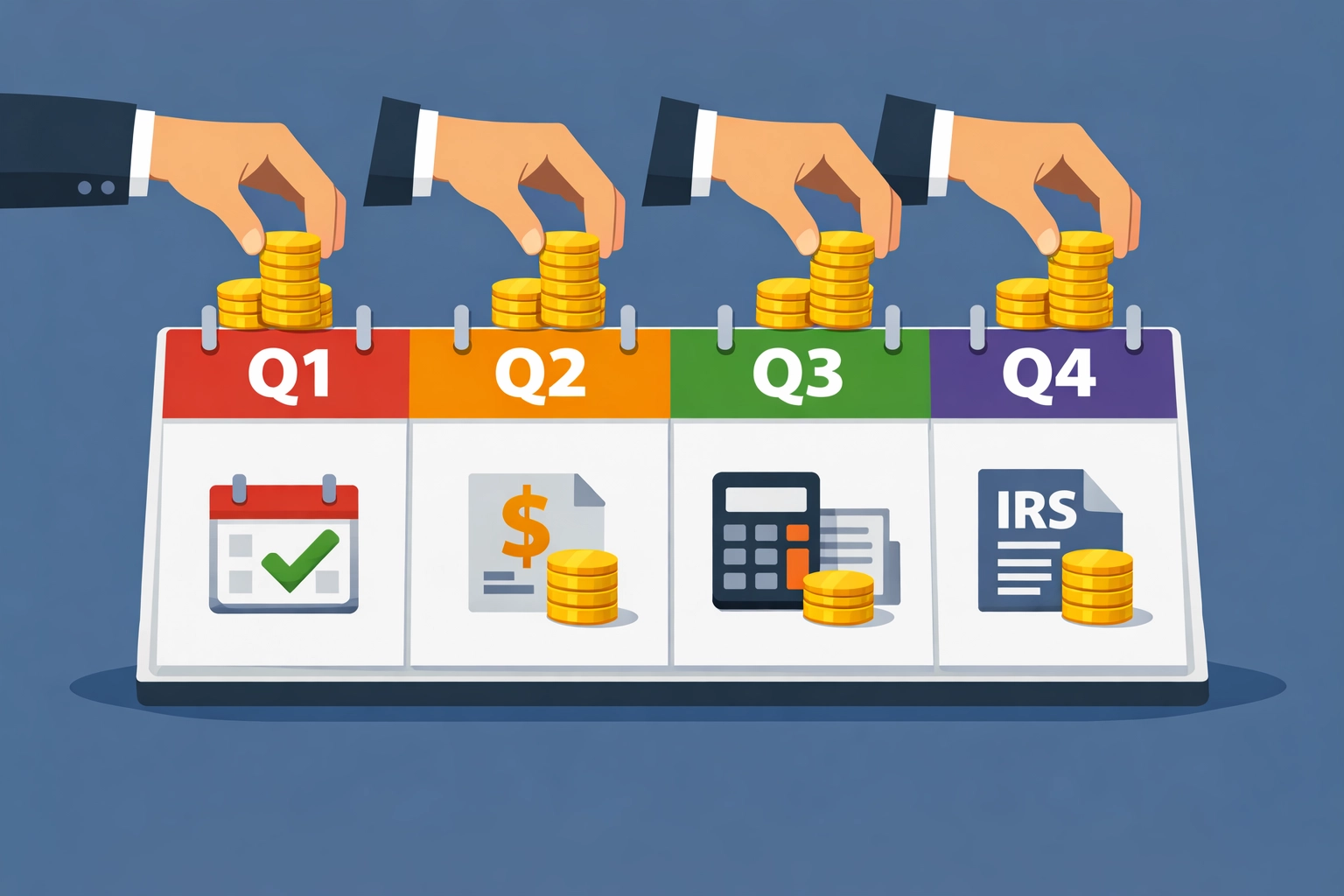
5. Underpaying or Missing Estimated Tax Payments!
Self-employed individuals and pass-through entities (LLCs, S-Corps) are often blindsided by the self-employment tax. In 2026, this tax covers Social Security and Medicare at a rate of 15.3% on top of your regular income tax rate.
The Mistake: Failing to make quarterly estimated payments or miscalculating the amount owed.
The Fix:
- Apply the 90/100 Rule: To avoid penalties, ensure you have paid at least 90% of your current year tax liability or 100% of your prior year liability.
- Use Form 1040-ES: Utilize IRS Form 1040-ES to calculate quarterly payments accurately.
- Adjust for Fluctuations: If your New Haven business saw a spike in revenue during the holiday season, your final estimated payment should have reflected that.
Underpayment penalties can easily reach $500 to $2,000, eating away at your hard-earned profits.
6. Making Preventable Data Entry Errors!
It sounds simple, but basic clerical errors are the most frequent reason for rejected returns. A single transposed digit in a Social Security Number (SSN) or a misspelled name can stop your filing in its tracks.
The Mistake: Rushing the final entry process and failing to double-check personal information.
The Fix:
- The Three-Step Verification Process:
- Verify all SSNs and legal names against government-issued ID.
- Match income amounts to the cent against your 1099 and W-2 forms.
- Confirm bank routing and account numbers for direct deposit.
- Check Filing Status: Ensure you are using the correct status (Head of Household, Married Filing Separately, etc.), as this dramatically affects your standard deduction.
7. Treating Tax Planning as a Once-a-Year Task!
This is the most damaging mistake of all. If you only think about taxes in March and April, you have already lost the opportunity to implement major tax-saving strategies like retirement plan contributions or equipment depreciation.
The Mistake: Waiting until the deadline to look at your financial health.
The Fix:
- Quarterly Reviews: Schedule a 15-minute check-in with your tax pro every three months.
- Monitor Thresholds: Keep an eye on income thresholds that might push you into a higher tax bracket.
- Act by March 1st: While it is late for 2025 planning, you can still make strategic adjustments before April 15th that affect your 2026 liability.
Immediate Action Required for New Haven Business Owners
The clock is ticking. If you are a business owner in New Haven, the time to organize is now.
- File an Extension if Necessary: If your documentation is incomplete, it is better to file an extension (IRS Form 4868) than to file an inaccurate return. Remember, an extension to file is not an extension to pay.
- Gather Your Forms: Ensure you have all 1099-K, 1099-NEC, and W-2 forms in hand.
- Schedule a Professional Consultation: Don't navigate the complex 2026 tax landscape alone.
At Jose's Tax Service, we specialize in helping local small business owners maximize their returns while staying fully compliant with the latest IRS regulations. We pride ourselves on providing personalized service and competitive rates that big-box software simply can't match.
Deadline Reminder: Your federal income tax return (or extension request) must be postmarked or electronically submitted by Tuesday, April 15, 2026.
For more information on filing requirements or to book an appointment, visit our homepage or explore our post archive for more tax tips.
Jose' Morales
CEO, Tax Pro, Owner
Jose's Tax Service

Leave a Reply
You must be logged in to post a comment.