
5 Steps How to Handle Your Tax Planning and Maximize Your Tax Refund Before April 15
NEW HAVEN, CT – JOSE’S TAX SERVICE – MARCH 3, 2026
Listen, New Haven. The clock isn’t just ticking; it’s basically screaming. We are officially in the thick of the 2026 tax season, and if you haven’t started your tax planning yet, you’re essentially leaving money on the table for the IRS to turn into paper airplanes. I’m Jose Morales, and at Jose’s Tax Service, we don’t like paper airplanes: we like big refunds and small tax bills.
Today is Day 3 of our 7-day tax marathon. If you missed Day 1 or Day 2, you missed out on some serious knowledge regarding direct deposits and those pesky payment apps. But today, we’re going deep. We’re talking about the meat and potatoes of your return: how to maximize tax refund results before the April 15 deadline hits.
Government forms are boring, but your bank account balance shouldn't be. Here is the authoritative 5-step guide to handling your 2026 tax update and planning like a pro.
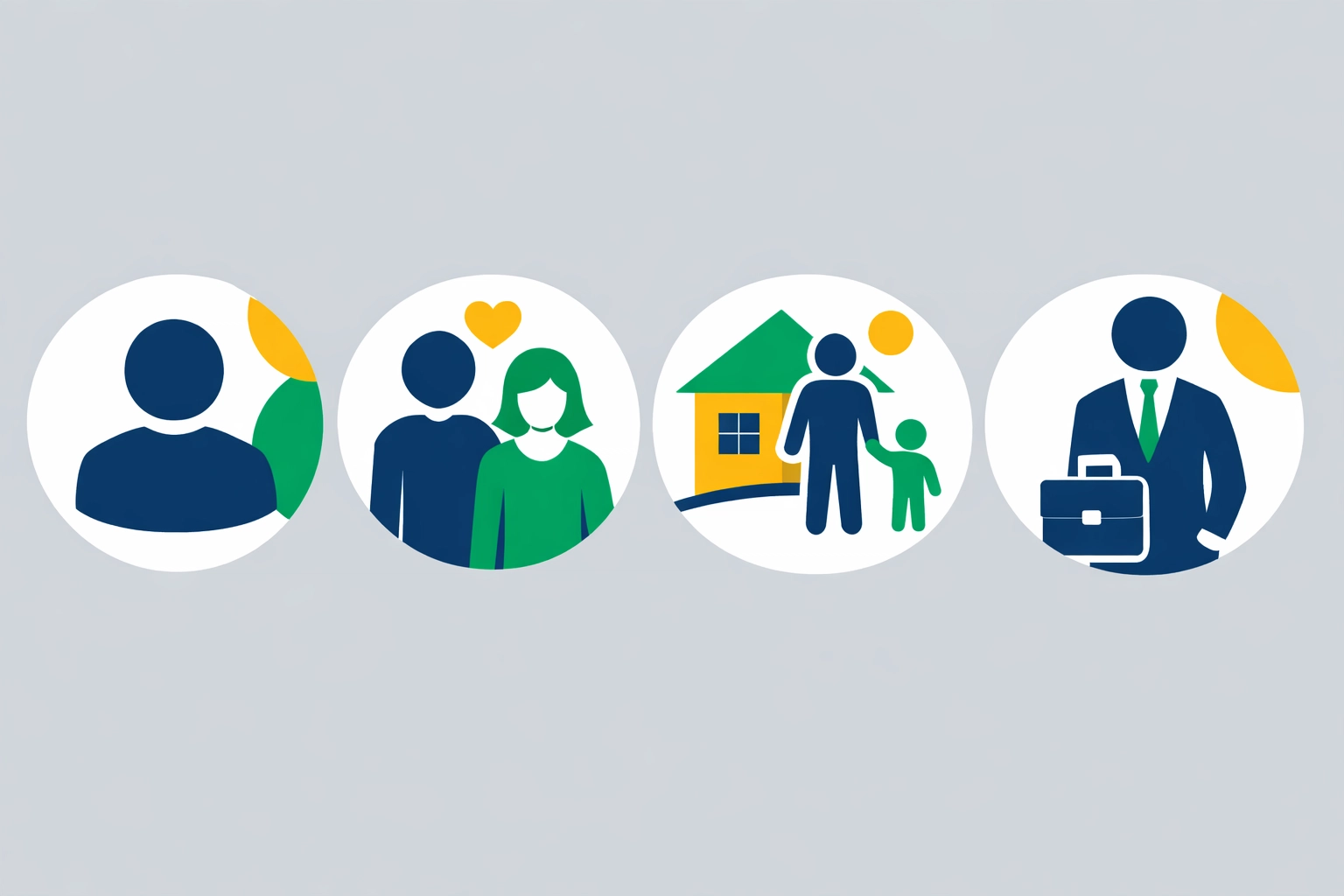
Step 1: Choose the Optimal Filing Status!
Your filing status is the foundation of your entire tax return. It determines your standard deduction, your tax brackets, and your eligibility for certain credits. Choosing the wrong one is like trying to fit a square peg in a round hole: it might work if you hammer it hard enough, but you’re going to break something (specifically, your wallet).
There are five official filing statuses recognized by the Internal Revenue Service (IRS):
- Single: Generally for those who are unmarried or legally separated.
- Married Filing Jointly (MFJ): Usually the most beneficial for couples.
- Married Filing Separately (MFS): Occasionally useful if one spouse has significant medical expenses or student loan issues, but often results in higher taxes.
- Head of Household (HOH): For unmarried individuals who pay more than half the cost of keeping up a home for a qualifying person. This offers a higher standard deduction than "Single."
- Qualifying Surviving Spouse: For those who have lost a spouse recently and have a dependent child.
Technical Note: For the 2026 tax year, the standard deduction for Head of Household has seen a significant adjustment. If you qualify for HOH, you must use it. Don't just default to "Single" because it’s easier to check the box. A quick consultation for tax preparation New Haven style can help you identify if you meet the support tests for HOH.
Step 2: Decide Between Standard or Itemized Deductions!
This is where the math gets real. You have two paths to lowering your taxable income. You can either take the "Standard Deduction" (the easy way) or "Itemize" (the "I kept every receipt" way).
For the 2026 tax year, the standard deduction amounts are:
- Single or Married Filing Separately: $16,100
- Married Filing Jointly: $32,200
- Head of Household: $24,150
Instruction: You should only itemize if your total deductible expenses exceed these amounts. To determine this, you must aggregate your expenses on Schedule A (Form 1040). These expenses include:
- State and Local Taxes (SALT): This includes CT income tax and property taxes (capped at $10,000).
- Mortgage Interest: On up to $750,000 of mortgage debt.
- Charitable Contributions: Don’t forget those donations to New Haven nonprofits!
- Medical Expenses: Only the portion that exceeds 7.5% of your Adjusted Gross Income (AGI).
If your total expenses hover around $15,000 and you are single, taking the $16,100 standard deduction is the mathematically superior move. However, if you bought a home in East Rock last year and have high mortgage interest, itemizing might be your ticket to maximize tax refund potential. Visit our tax planning category for deeper dives into these deductions.
Step 3: Claim All Eligible Tax Credits!
If deductions are a "discount" on your income, tax credits are "cash in your pocket." A $1,000 credit reduces your tax bill by exactly $1,000. It is the most powerful tool in your tax planning arsenal.
For the 2026 season, keep a sharp eye on these specific credits:
- Earned Income Tax Credit (EITC): This is for low-to-moderate-income working individuals and families. The IRS estimates that 20% of eligible taxpayers fail to claim this. Don't be that 20%.
- Child Tax Credit (CTC): Ensure you have the correct Social Security numbers for all dependents.
- Child and Dependent Care Credit: If you paid for daycare in New Haven so you could work or look for work, this credit is vital.
- American Opportunity Tax Credit (AOTC): For those first four years of higher education.
- Saver’s Credit: Form 8880. If you contributed to a 401(k) or IRA and your income falls within certain limits, the government will literally give you a credit just for saving for your own retirement.
Warning: Claiming credits without proper documentation can lead to delays or audits. Always maintain copies of Form 1098-T for tuition or provider IDs for childcare.
Step 4: Verify Tax Withholding and Estimated Payments!
Nothing ruins an April morning like finding out you owe the IRS $3,000 because you didn't pay enough throughout the year. As we move through this tax update, you must evaluate your "pay-as-you-go" accuracy.
If you are a W-2 employee, review your Form W-4. If you had a major life change in 2025: like getting married, having a baby, or getting a side hustle: your withholding might be off.
For our New Haven entrepreneurs and freelancers, you must ensure your estimated tax payments (Form 1040-ES) were sufficient. Failure to pay at least 90% of your current year tax or 100% of your prior year tax can lead to underpayment penalties. If you’re worried about this, come see us for a quote. We can run a pro forma return to see exactly where you stand before you hit "submit" on the final version.
Step 5: Gather Documentation and File Accurately!
You can't win the game if you don't have all your players on the field. Accuracy is the final step to ensuring you get your money fast. The IRS is using more AI and automated matching than ever before in 2026. If your 1099-NEC says $5,000 and you report $4,999, their system will flag it faster than a New Haven traffic cam.
Actionable Steps:
- Consolidate Forms: Collect all W-2s, 1099-INTs, 1099-DIVs, and 1099-K forms from apps like Venmo or PayPal. (Remember our Day 2 post about payment apps!)
- Verify Information: Check that your name and Social Security Number match your Social Security card exactly.
- Check Your Math: Or better yet, let us do it. Manual errors on paper returns are the #1 cause of delayed refunds.
- E-File: Use electronic filing. Paper returns are being phased out in terms of priority. To get that refund in 21 days or less, e-file and choose direct deposit.

Why New Haven Chooses Jose’s Tax Service
At Jose's Tax Service, we don't just "input numbers." We look at the whole picture. Are you a small business owner? Check out our Small Business Learning Center for tips on bookkeeping that can save you thousands. Are you just trying to get through the year without an IRS letter? We’ve got your back there too.
Tax planning isn't a one-and-done event; it's a strategy. By following these five steps, you aren't just filing a return: you're taking control of your financial life for 2026.
Practical Reminders:
- Deadline: Tuesday, April 15, 2026.
- Extension: If you can't file by the deadline, you must file Form 4868 for an automatic 6-month extension to file. Note: This is NOT an extension to pay.
- Appointment: Ready to get this done? Schedule your tax appointment with ease today.
Don't let the IRS keep your hard-earned money longer than they have to. Get organized, claim your credits, and let’s make 2026 your most profitable tax year yet!
Stay tuned for tomorrow’s post: Day 4: Do You Really Need an IRS Online Account? Here's the Truth (Plus Tax Update for 2026).
For more updates, visit our news section or sign up for our newsletter.
Jose Morales
CEO, Jose’s Tax Service
Your New Haven Tax Pro

Leave a Reply
You must be logged in to post a comment.