
2026 Tax Season Alert: 10 Reasons Your Current Tax Preparer Isn’t Working (And How to Fix It)
New Haven, CT – February 23, 2026 – The 2026 tax season brings unprecedented changes that many tax preparers are missing. If your current tax professional hasn't mentioned the One Big Beautiful Bill or how it affects your return, you may be leaving thousands of dollars on the table.
Here's what you need to know about whether your tax preparer is working for you: or against you.
1. They Didn't Ask About Your Tips Income
The new tips deduction allows eligible taxpayers to deduct up to $25,000 in tip income received during 2025. This provision became retroactive on January 1, 2025, and applies when filing your 2026 tax return.
The problem: Many tax preparers haven't updated their intake forms to capture this information.
How to fix it: Verify your tax professional specifically asks about tips income and understands the phase-out thresholds (Modified Adjusted Gross Income over $150,000 for single filers, $300,000 for joint filers). An estimated 5-10 million taxpayers qualify for this deduction.

2. They Ignored Your Overtime Pay
The overtime deduction provides up to $12,500 per taxpayer for overtime wages earned in 2025. With approximately 17 million taxpayers eligible for average tax cuts around $1,400, this isn't a minor oversight.
The problem: Your preparer may not have systems in place to separate regular wages from overtime wages on your W-2.
How to fix it: Bring documentation showing overtime hours worked. Request confirmation that your preparer will maximize this deduction using the proper calculations and phase-out limitations.
3. They Missed the Enhanced Seniors Deduction
Taxpayers aged 65 and older qualify for an additional $6,000 deduction in 2026. This provision benefits an estimated 24 million taxpayers with average tax cuts around $1,000.
The problem: Some preparers are applying outdated standard deduction amounts without incorporating this enhancement.
How to fix it: If you're 65 or older, explicitly confirm your tax preparer is including this additional deduction in your calculations. Document your date of birth and verify it's reflected in your return.
4. They're Using Old Standard Deduction Amounts
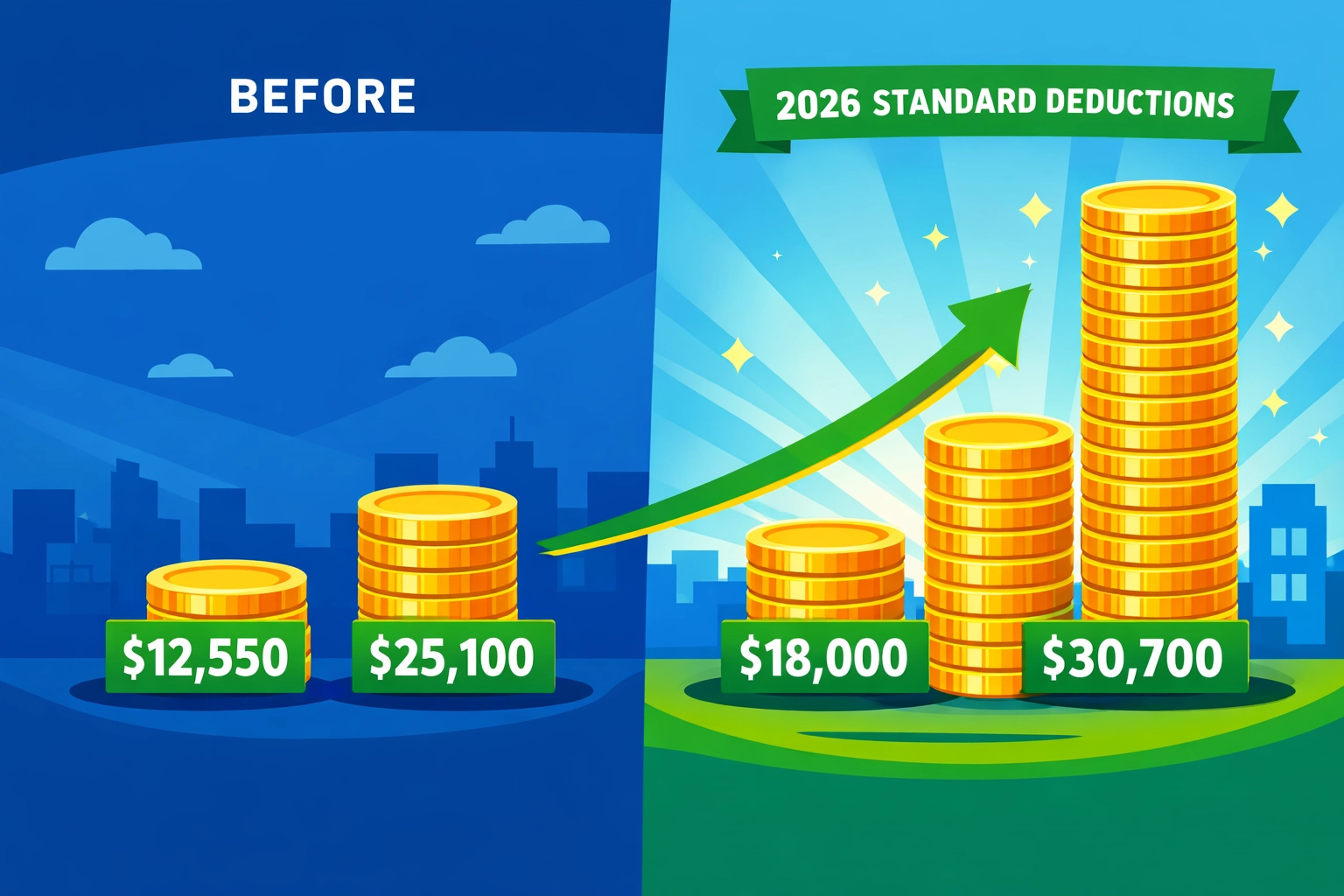
Standard deductions increased substantially for 2026: $15,750 for individual filers (up from $12,500), $31,500 for joint returns (up from $24,000), and $23,625 for heads of household (up from $18,000).
The problem: Tax software that hasn't been updated or preparers working from memory may apply 2025 figures.
How to fix it: Double-check your return shows the correct 2026 standard deduction amount. This error alone reduces your refund by hundreds of dollars.

5. They Didn't Mention the Higher SALT Cap
The state and local tax (SALT) deduction cap increased above the $10,000 limitation that restricted deductions from 2018-2024.
The problem: Preparers who itemize your deductions may artificially cap your SALT deduction at the old threshold.
How to fix it: If you're itemizing, request a detailed breakdown showing your full SALT deduction. For New Haven taxpayers with high property taxes, this change can significantly impact your tax liability.
6. They Overlooked the Child Tax Credit Increase
The Child Tax Credit increased from $2,000 to $2,200 for 2026 returns.
The problem: Mass-production tax preparation offices may use templates that don't reflect current credit amounts.
How to fix it: Verify each qualifying child generates a $2,200 credit on your return. Multiply the number of qualifying children by $2,200 and confirm that amount appears on your Form 1040.
7. They're Not Optimizing Your Business Income Deduction
The 20 percent qualified business income (QBI) deduction became permanent, with phase-in thresholds increasing from $50,000 to $75,000 (individual) and $100,000 to $150,000 (joint).
The problem: Small business owners in New Haven may not be receiving the full benefit of these expanded thresholds.
How to fix it: If you operate a business or receive 1099 income, request detailed calculations showing how your QBI deduction was determined. The higher thresholds mean more taxpayers qualify for the full 20 percent deduction.

8. They Lack Proactive Communication
Tax preparation shouldn't be a once-a-year transaction. Year-round tax planning identifies opportunities and prevents costly mistakes.
The problem: If your tax preparer only contacts you during tax season, you're missing strategic planning opportunities.
How to fix it: Consider concierge tax preparation services that provide ongoing communication. Look for professionals who reach out quarterly to discuss tax strategy and potential deductions.
9. They Don't Offer Virtual Capabilities
The 2026 tax landscape requires flexibility. Virtual tax preparation allows you to work with specialists regardless of location while maintaining security and compliance.
The problem: In-person-only preparers limit your options and may lack access to specialized expertise.
How to fix it: Evaluate whether your preparer offers secure virtual meetings, electronic document upload, and digital signature capabilities. Modern tax preparation new haven services combine local knowledge with virtual convenience.
10. They're Not Explaining Your Return
Understanding your tax return empowers better financial decisions throughout the year.
The problem: If your preparer hands you documents to sign without explaining deductions, credits, and strategies applied, you're not receiving full value.
How to fix it: Require a detailed review meeting where your preparer explains each section of your return, answers questions, and provides recommendations for the coming year.
The Bottom Line on Tax Preparation
The 2026 tax season represents approximately $91 billion in retroactive tax relief for American taxpayers. Missing even one of these new provisions can cost you hundreds or thousands of dollars.
Action steps to take now:
- Schedule a consultation with your current tax preparer and ask specifically about each deduction mentioned above
- Request documentation showing how new 2026 provisions were applied to your return
- Compare your 2026 refund to previous years: significant tax cuts should increase most refunds
- If your preparer can't address these provisions, consider switching to a professional who specializes in maximizing tax refunds
Deadlines to remember:
The standard filing deadline for 2025 tax returns is April 15, 2026. Extensions provide additional time to file but don't extend the payment deadline. Interest and penalties may apply to unpaid balances after April 15.
Finding the Right Tax Professional
Quality tax preparation combines technical expertise with personalized service. Look for professionals who:
- Stay current on tax law changes and continuing education requirements
- Communicate proactively throughout the year, not just during tax season
- Explain thoroughly rather than simply processing paperwork
- Offer multiple service options including virtual capabilities
- Specialize in your specific tax situation (small business, self-employment, investment income, etc.)

The difference between adequate tax preparation and exceptional tax preparation can mean thousands of dollars in your refund. With 2026's significant tax changes, ensuring your tax professional is maximizing every available deduction and credit isn't optional: it's essential.
If you're questioning whether your current tax preparer is delivering the results you deserve, contact Jose's Tax Service for a second opinion on your tax situation. Our concierge tax preparation approach ensures no deduction is overlooked and every opportunity is maximized.
Don't wait until after you've filed to discover you left money on the table. The 2026 tax season offers unprecedented opportunities for taxpayers who work with knowledgeable, proactive professionals.

Leave a Reply
You must be logged in to post a comment.